

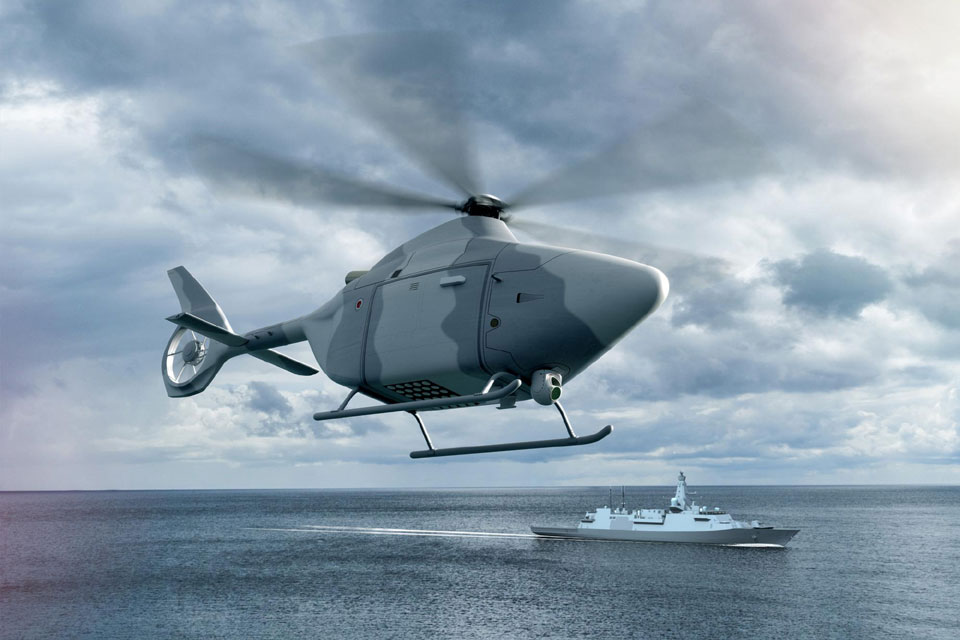
Proteus will serve as a testbed for cutting-edge rotorcraft technologies, demonstrating the feasibility of large uncrewed systems in maritime environments. With a modular payload bay at its core, the design allows for adaptability in mission roles, enabling commanders to swap payloads for fuel or specific equipment based on operational needs.
The demonstrator has drawn on components from Leonardo’s existing helicopter portfolio, reducing costs and accelerating development timelines. This approach reflects Leonardo’s extensive experience with uncrewed air systems (UAS) and aligns with the UK Ministry of Defence’s future capabilities innovation goals.
Leonardo is leveraging advanced digital design and manufacturing techniques in Proteus’ development, including the creation of a “digital twin” for synthetic testing. By using Artificial Intelligence (AI) and Machine Learning (ML), the company can simulate, test, and refine capabilities without relying on live trials, significantly cutting costs and speeding up the programme.
The rotorcraft incorporates more than 40 components made from advanced composite materials, including those produced via additive manufacturing. These techniques aim to improve sustainability, reduce through-life costs, and ensure manufacturing resilience across Leonardo’s supply chain.
The €71 million (£60 million) project has benefited from close collaboration between Leonardo, the Defence Equipment and Support (DE&S) Future Capability Innovation team, and the Royal Navy. Employing Agile methodologies, the team has emphasised iterative development and continuous engagement to ensure the programme remains on track for a maiden flight in mid-2025.