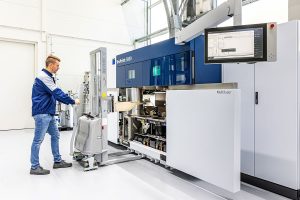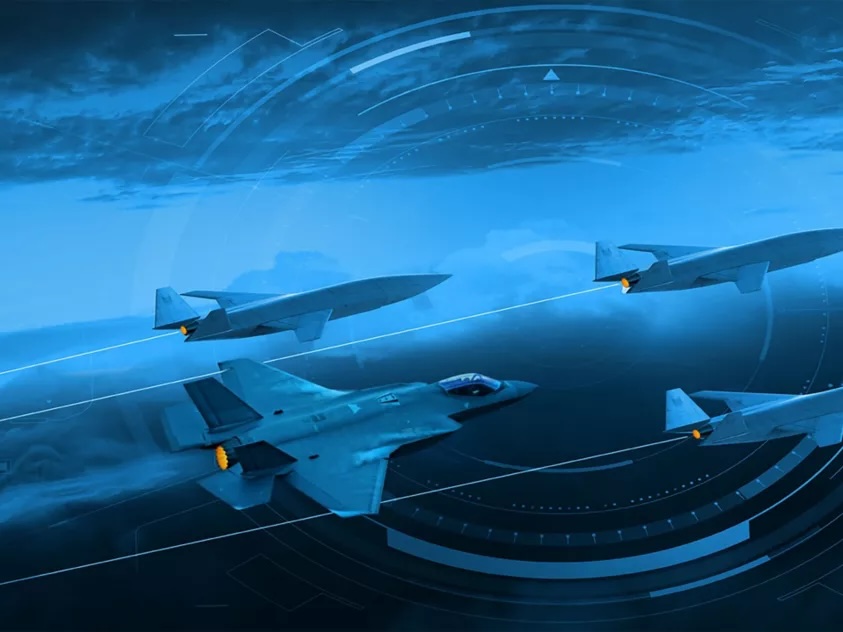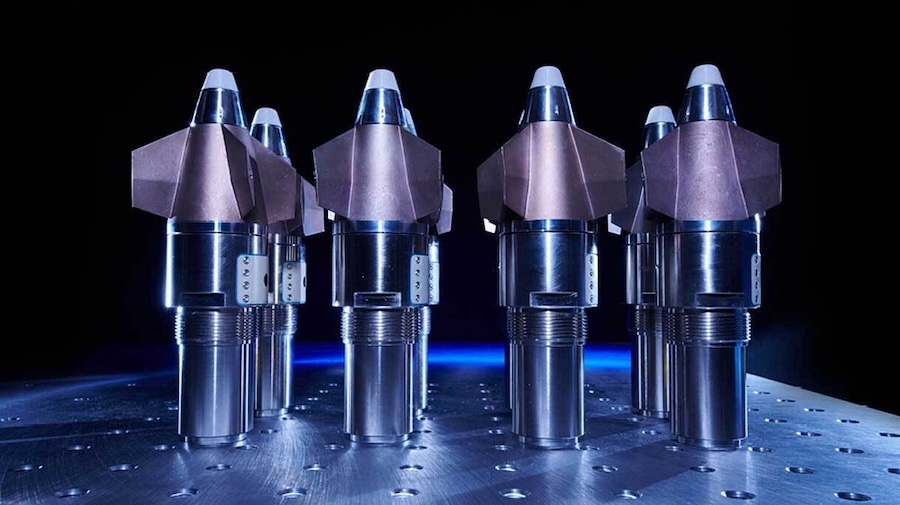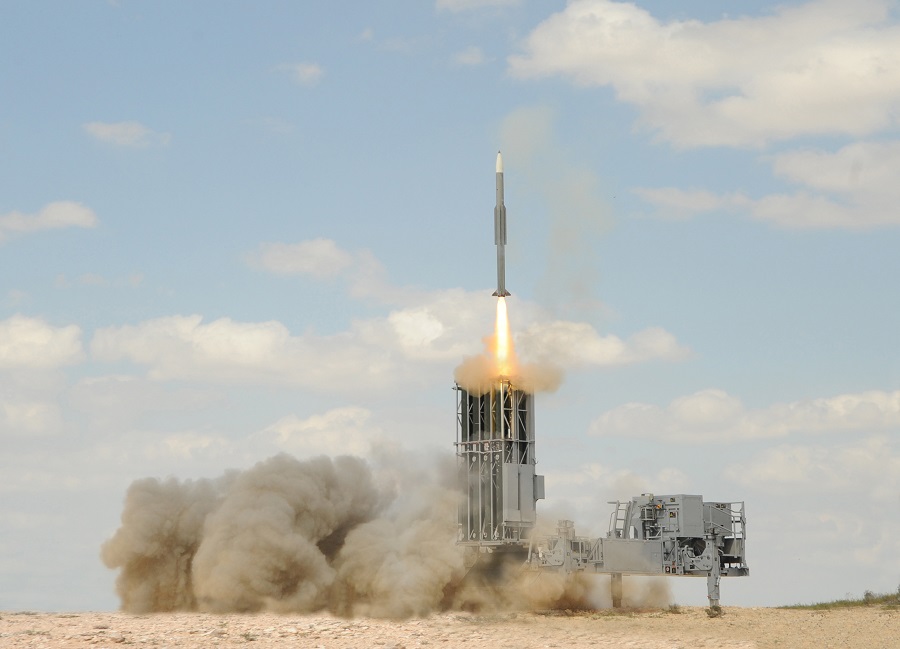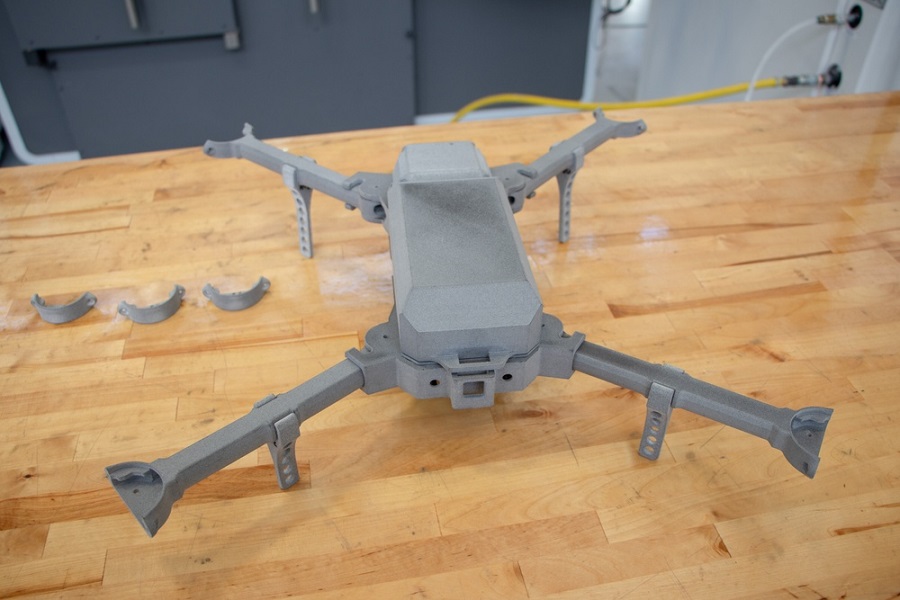
“The U.S. Army recognizes the changing dynamics of warfare and is fully committed to staying ahead of the curve,” said Col. David Guida, commander of RIA-JMTC. “We are investing heavily in our Organic Industrial Base, harnessing its agility and innovation to develop and field advanced capabilities like these 3D-printed drones.”
The initiative forms part of the Army’s broader modernisation programme, known as Transforming in Contact (TiC), which seeks to put emerging technologies directly into the hands of Soldiers. TiC enables rapid adaptation through in-field experimentation and feedback, ensuring practical and effective solutions for current operational environments.
RIA-JMTC is working closely with other key Organic Industrial Base (OIB) sites, including Tobyhanna Army Depot, to establish a networked production capability. This collaborative approach aims to accelerate the deployment of advanced UAS technologies at scale, maintaining the Army’s edge on future battlefields.
“This project is a testament to the enduring spirit of American ingenuity and the Army’s unwavering commitment to staying ahead of the technological curve,” Guida stated. “Our team at RIA-JMTC is dedicated to producing high-quality, on-time readiness solutions for the Warfighter.”
The programme was initially sparked by a joint proof-of-concept with the 101st Airborne Division (Air Assault), which demonstrated the potential of 3D printing for rapid prototyping of tactical drones. The collaboration validated RIA-JMTC’s production capabilities and highlighted the strength of coordinated efforts within the OIB.
“The history of the 101st Airborne Division is a testament to the courage, ingenuity and unwavering spirit of the American Soldier,” said Maj. Gen. Brett Sylvia, commanding general of the division. “These 3D printed drones are the beginning of a user-driven, division-enabled force multiplier.”
Following this, RIA-JMTC supported the 2nd Cavalry Regiment by producing simplified drone designs to further showcase rapid production capabilities. The facility is now preparing for full-scale manufacturing, aligned with the Army’s growing requirements for UAS across various mission sets.
To guide this process, RIA-JMTC is compiling Technical Data Packages (TDPs) from the Army to define exact specifications and quantities. This will ensure the final products are precisely tailored to meet operational demands while balancing capability, adaptability and cost-effectiveness.
“The OIB must support current unit readiness across the force, maintain the ability to surge and modernise and retool to sustain the next generation of equipment,” said Greg Lupton, deputy commander of RIA-JMTC. “This project demonstrates how Arsenals like RIA-JMTC directly respond to urgent Warfighter needs.”
A key partner in the project is Tobyhanna Army Depot, which provides technical expertise in electronics and sensor integration essential to the drone systems. Their contribution ensures the drones are equipped with advanced technologies to support battlefield superiority.
“This partnership with RIA-JMTC leverages Tobyhanna’s core strengths as the Department of Defense’s leading provider of C5ISR readiness for the joint Warfighter,” said Col. James L. Crocker, commander of Tobyhanna. “Our skilled workforce and state-of-the-art facilities are prepared to equip 3D printed drones with the advanced technological capabilities they need.”
RIA-JMTC’s collaboration with Tobyhanna and other OIB partners is central to ensuring readiness and scalability in drone production. These efforts are part of a broader strategy to future-proof Army capabilities through rapid adaptation and integrated development.
“This project is about investing in the future of the Army and ensuring that our Soldiers have the tools they need to succeed in any mission, on any battlefield,” Guida emphasised. “We are not just building drones; we are building the future of Army readiness.”
With a flexible, agile, and highly coordinated approach, the Army aims to maintain its technological edge in an era of rapidly evolving threats. “This is about the Army’s commitment to leveraging the full potential of the OIB to maintain its technological edge,” added Lupton. “The partnerships we are forging today will be essential to ensuring our nation’s security for decades to come.”