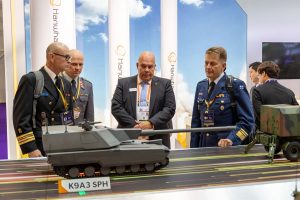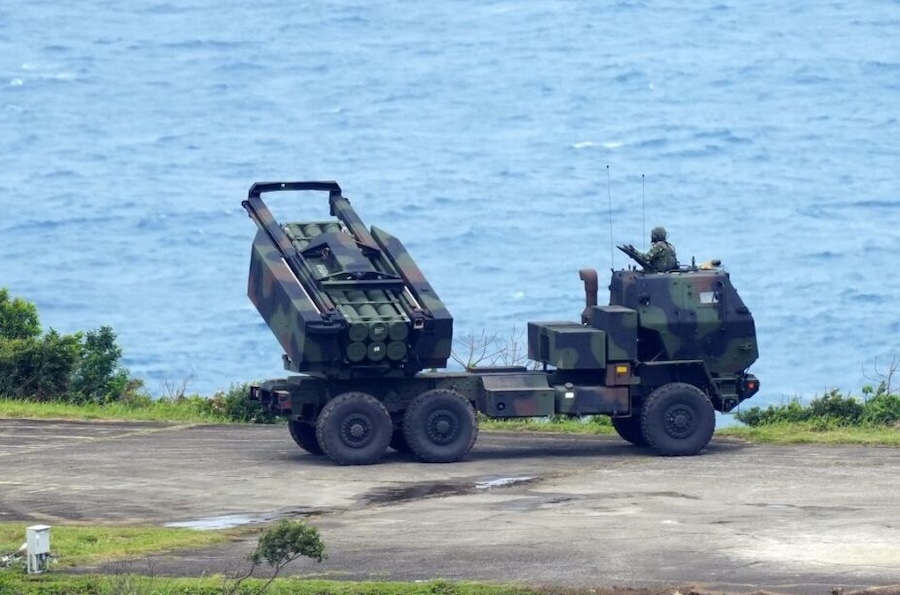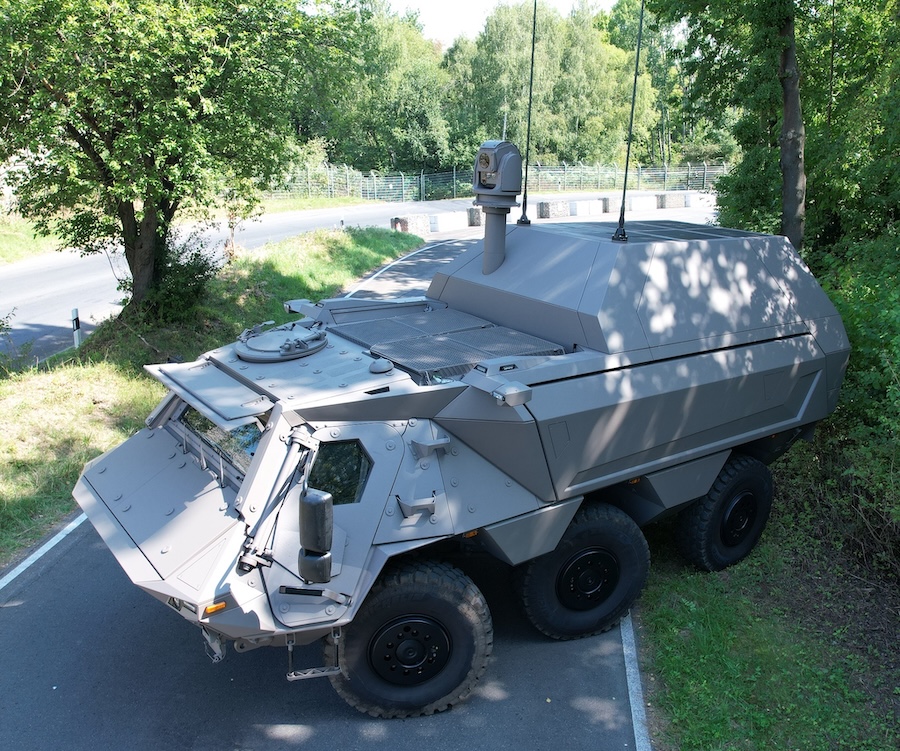
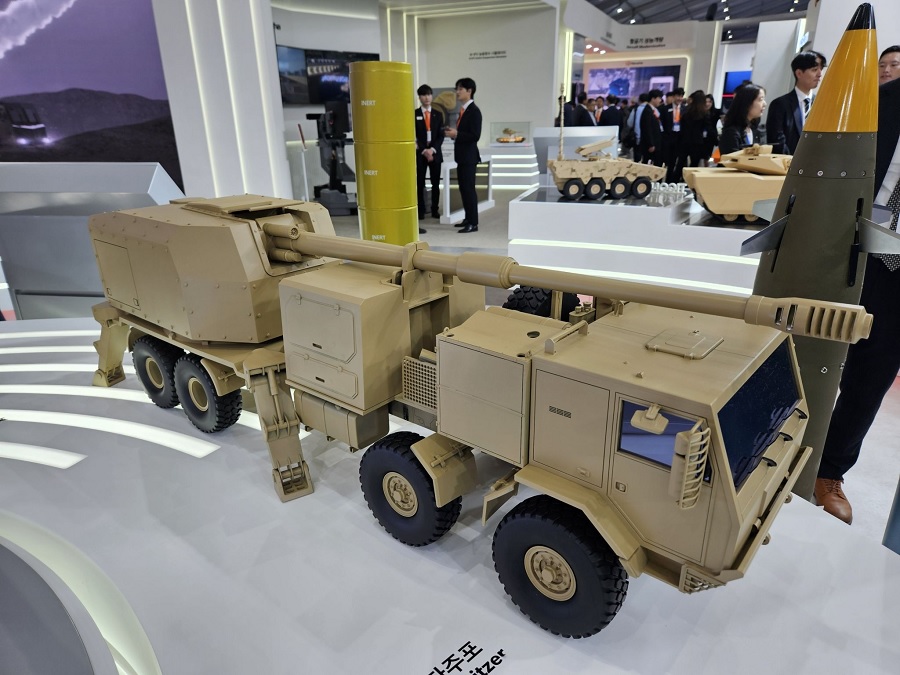
The company, a U.S. subsidiary of South Korea’s Hanwha Aerospace, is positioning the wheeled K9 as part of efforts to support the U.S. Army’s modernisation of its ageing 155mm howitzer fleet. “Hanwha Aerospace and Hanwha USA’s pride and joy is the K9,” Pak said. “It has garnered so much success globally. We know that it is a mature, proven, currently fielded 52-caliber system that could be a tremendous asset to the United States Army.”
To support this goal, Hanwha is “looking to establish a full-on vertical supply chain here in the United States as it pertains to the production of this capability,” Pak stated. He added, “We’re absolutely committed to U.S. jobs and capacity,” and outlined plans for “rapid initial [K9] delivery coming out of Korea if needed, and then that would be immediately followed by full production and sustainment in the U.S.”
Carl Poppe, Director of Business Development for Artillery Systems at Hanwha Defense USA, said the company is ready to meet the Army’s needs for mobile howitzers, “whether it needs to be all built, assembled here in the states, or if they need to take an early delivery to meet some tactical requirements, or anywhere in between.” He also noted that around 40 percent of the K9’s global supply chain is already based in the United States.
While systems for the U.S. Army will closely resemble the base K9 model, Hanwha is open to adjustments. “We have a history of meeting user nation requirements,” Poppe said, adding that the company expects to include a U.S.-specific fire control system but “we need more input from the government before we go down the road of making changes.”
Hanwha is currently responding to the Army’s request for information on mobile tactical cannon systems, offering details on the wheeled K9, as well as the already operational K9A1 and the K10 ammunition resupply vehicle. “We have the ability to fill gaps in capability for the U.S. Army,” Pak said.
Poppe added that once a user adopts the K9A1, it can be upgraded in future to more advanced variants, as seen in South Korea’s recent order for A2 upgrades to parts of its A1 fleet.
Source: National Defense Magazine.