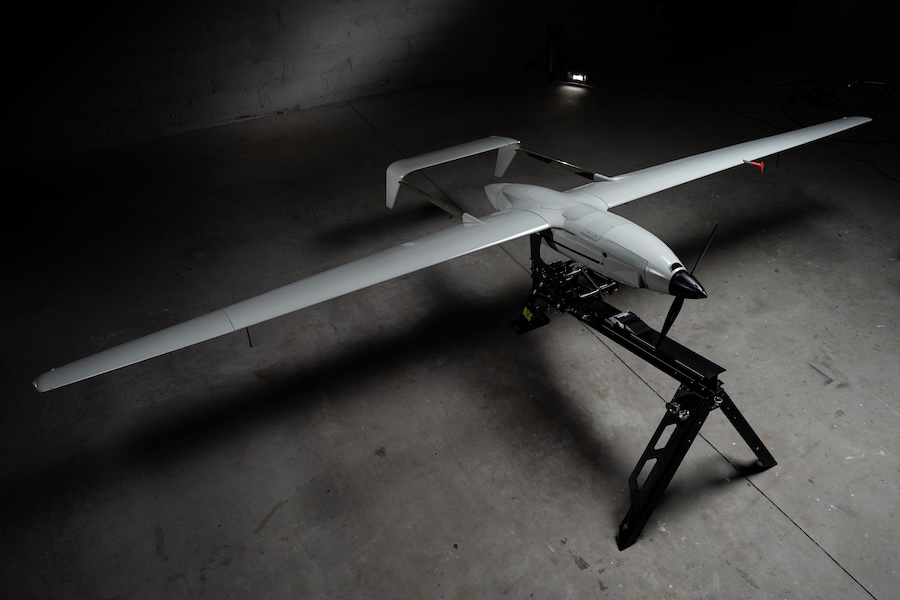

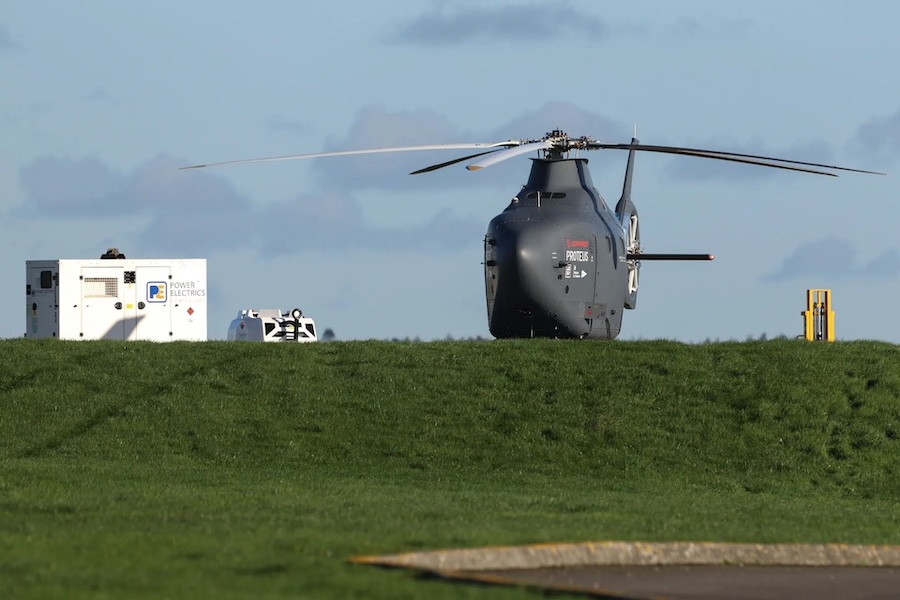
Designed and built by Leonardo in less than two and a half years, the Proteus Technology Demonstrator is part of a £60 million programme. The company believes it is among the world’s first full-scale autonomous helicopters in its weight class.
The trials mark the first step towards a fully autonomous Vertical Take-off and Landing aircraft that could form part of a future hybrid air wing. The project aims to help designers and the Royal Navy identify how similar systems should operate alongside both unmanned and crewed aircraft.
Senior Royal Navy and MOD personnel visited Leonardo’s Yeovil facility to observe the ground tests and hear about the technology, programming and Artificial Intelligence driving the platform. Captain David Gillett said: “It’s been a huge pleasure to work with Leonardo and across Defence, as one team, to deliver Proteus.”
He added: “It combines cutting-edge technology, the experience of recent conflicts and has enormous potential to shape the Royal Navy’s future hybrid air wing.” Leonardo’s Managing Director Helicopters UK, Nigel Colman, said: “Leonardo is leading the way globally in autonomy, supported by the Royal Navy.”
Colman continued: “Proteus is equipped with cutting-edge onboard software capabilities, carrying a suite of sensors and systems that allow it to sense its environment, make decisions and act accordingly. All of this processing is conducted onboard the aircraft, while operating in the most extreme environments, including high sea states and strong winds – just where the Royal Navy needs this kind of capability.”
With a payload capacity of up to one tonne, Proteus could eventually support missions such as airborne surveillance, search and rescue, logistics, weapon delivery and intelligence gathering. For now, the demonstrator is being evaluated for autonomous support to anti-submarine operations.
The aircraft will patrol assigned areas using information from allied ships, helicopters, submarines and detection systems to identify likely submarine positions. It will deploy sonobuoys to listen for acoustic signatures and report any findings to the mission commander.
By employing unmanned helicopters, the Navy hopes to expand its reach across wider ocean areas without increasing the burden on aircrews. Although Proteus flies without a pilot, an operator always remains in control within strict safety limits and rules of engagement.
Source: Royal Navy.