

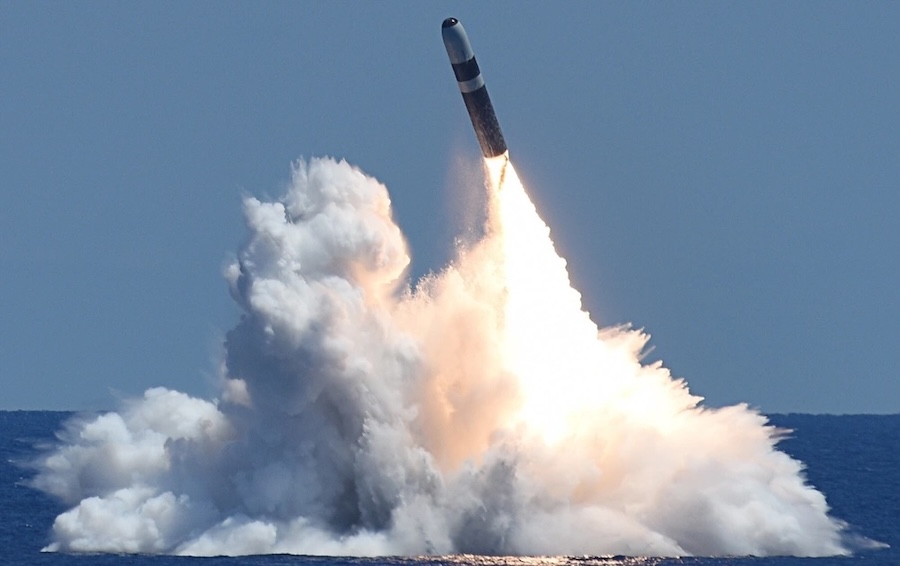
“Lockheed Martin has proudly supported the Fleet Ballistic Missile program for 70 years,” said Eric Scherff, vice president of the programme. “As we celebrate this milestone with our Navy partners, we build on decades of experience and dedication, and we will continue building that legacy of innovation to preserve strong deterrence and deliver peace through strength.”
The programme began in 1955 when Adm Arleigh Burke tasked Rear Adm William Raborn with creating a nuclear deterrent that could withstand a surprise strike. Lockheed, then Lockheed Aircraft Company, won the contract the same year and within five years delivered the first submerged Polaris launch from USS George Washington.
“The Navy needed a capability that would protect our homeland, aid our allies, deter adversaries, and give leaders valuable time to avoid conflict,” Scherff said. The breakthrough led to the establishment of a dedicated missile development campus in Sunnyvale, California, and the expansion of facilities nationwide.
Over the decades the programme produced six generations of submarine launched ballistic missiles, each advancing accuracy, range or reliability. “Every new generation of deterrence systems we deliver is a proactive step to stay ahead,” Scherff said. “We’ve never stopped adapting and we never will.”
Lockheed credits the engineers and partner companies that support propulsion, materials and software development for the system’s sustained reliability. “Their expertise ensures each missile meets the highest performance standards,” Scherff said. “Our partnerships amplify our engineering capabilities and keep the FBM system at the forefront of reliability and innovation.”
The company argues the system remains vital as adversaries modernise their nuclear forces, develop hypersonic systems and expand cyber capabilities. “Because this system can’t be seen, it forces our adversaries to plan for a threat they can’t detect,” Scherff said. “That’s the ultimate insurance policy. It works not by using force, but by making the cost of aggression too great. When adversaries wake up and ask, ‘Is today the day to attack the United States?’ we want the answer to be, ‘Not today,’ every day.”
Veteran engineer Charlie Barndt, who joined the programme in 1967, said safety and survivability became central to its design culture. “Every line on a drawing has to survive the toughest safety analysis, and that mindset has shaped the whole program,” he explained.
Barndt highlighted work with the United Kingdom’s Ministry of Defence on a D5 Performance Evaluation Missile fix, which improved propulsion engine management and strengthened mission safety. He said the cooperation showed how “shared technical rigor can cross borders or – in this case – oceans.”
He described the shift from hand drawn designs to digital engineering as a major transformation that enabled advances such as digital twins and AI supported verification. “The tools have changed, but the discipline of designing for longevity and survivability stays the same,” he said.
Lockheed Martin is now leading development of the Trident II D5 Life Extension 2 missile and the next generation Mk7 reentry system, which the company says will sustain the mission into the 2080s. “In many ways it feels like 1955 again,” Scherff said. “We are racing against the clock, innovating fast and building something that will serve the next generation the way Polaris, Poseidon, and Trident served ours.”
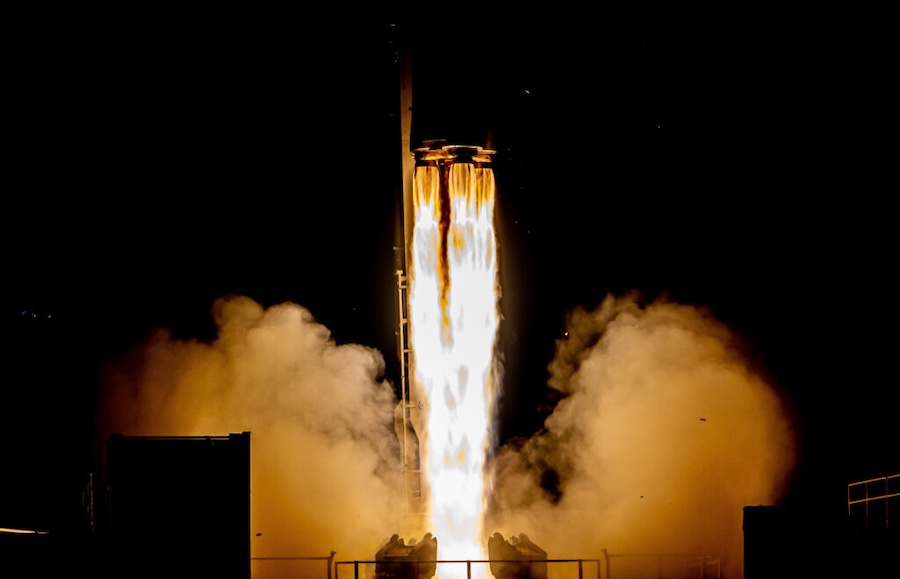
Sixty five years after the first underwater launch, the system remains designed to deter rather than fire, with each test intended to demonstrate readiness. “This is a legacy of peace through strength,” Scherff said. “We are honored to carry it forward for the next six decades and beyond.”
Source: Lockheed Martin.