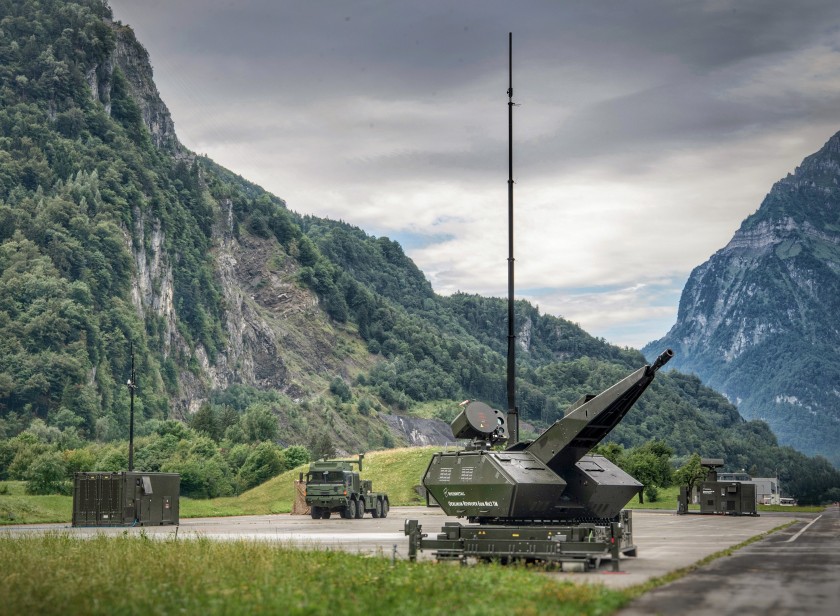
The system is particularly intended to counter drones, which have become increasingly significant in modern conflicts, including urban warfare. The handover follows an order placed in January 2025 by Rheinmetall Italia S.p.A. for a first system valued at €73 million, with options for three additional systems worth €204 million.
Italy is the first NATO member state to introduce the Skynex air defence system, including the 35mm Revolver Gun Mk3. Rheinmetall views the order as a key step in establishing a new international standard for cannon-based air defence.
Skynex is designed for close-range protection where guided weapons are less effective, using programmable Ahead ammunition that is resistant to electronic countermeasures. The Revolver Gun Mk3 offers a firing rate of 1,000 rounds per minute and an effective range of up to four kilometres, with lower operating costs than comparable missile-based systems.
The system separates airspace surveillance from effectors and, in the Italian configuration, is paired with Rheinmetall’s XTAR 3D radar, capable of monitoring airspace up to 50 kilometres away. Its modular architecture allows integration of various sensors, effectors and existing air defence systems into a single command-and-control network.