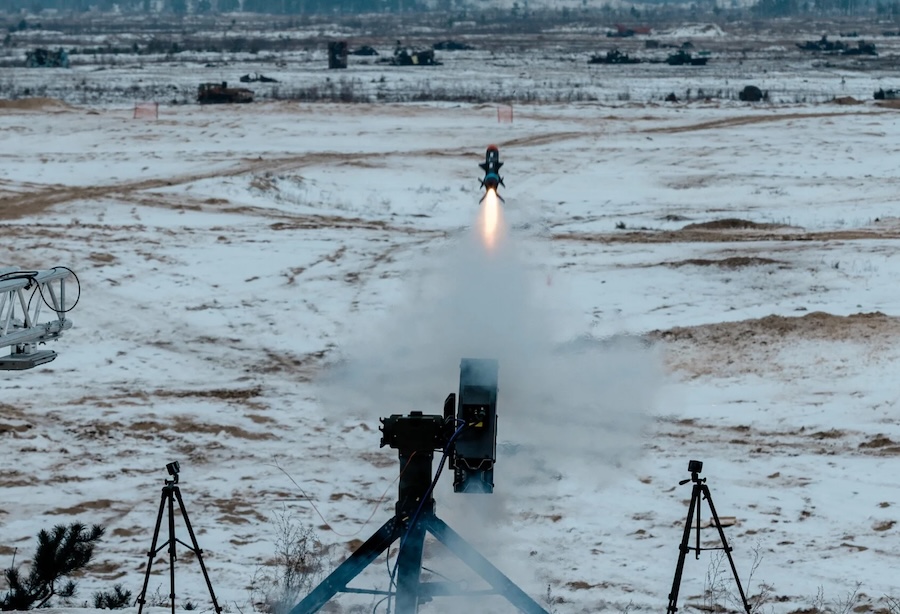



According to Moscow, this was the second operational use of the intermediate-range Oreshnik missile, which Putin has claimed cannot be intercepted due to speeds exceeding ten times that of sound. While the missile is capable of carrying nuclear or conventional warheads, there was no indication that the weapon used in the overnight attack carried anything other than a conventional payload.
The Russian Defence Ministry said the strike targeted Ukraine’s critical infrastructure and involved attack drones as well as high-precision long-range land- and sea-based weapons. In a statement, it said: “The strike’s targets were hit. The targets included facilities producing unmanned aerial vehicles used in the terrorist attack (allegedly against the Putin residence), as well as energy infrastructure supporting Ukraine’s military-industrial complex.”
Ukraine dismissed the allegation that its drones had attempted to strike a Putin residence in Russia’s Novgorod region in late December. Donald Trump also said he did not believe such a strike had occurred, adding that “something” unrelated had happened nearby.
The governor of Ukraine’s western Lviv region earlier reported that Russian attacks had hit an infrastructure facility, which unverified social media accounts described as a large underground gas storage site. Ukraine’s air force later confirmed that Russia had launched an Oreshnik missile from the Kapustin Yar test range near the Caspian Sea.
Russia first used the Oreshnik missile in November 2024 against what it described as a Ukrainian military factory, though Ukrainian sources said it carried dummy warheads and caused limited damage. Despite Putin’s assertion that the missile’s destructive power rivals that of a nuclear weapon even with a conventional warhead, some Western officials have questioned its battlefield impact, with one U.S. official saying in December 2024 that it was not viewed as a game-changer.
Source: Reuters.