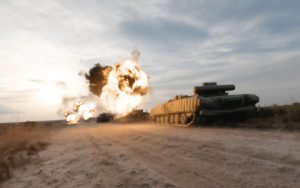
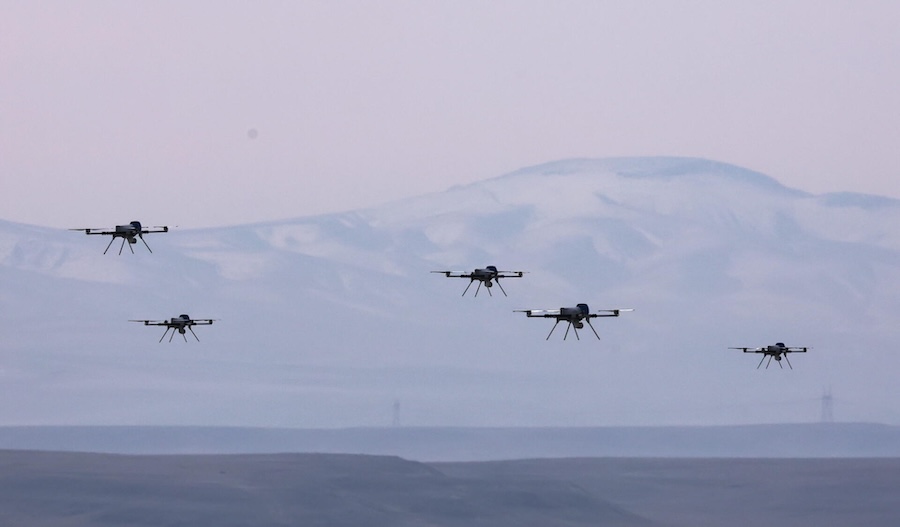
During the test, the KARGU swarm operated under the control of a single operator using fully indigenous swarm intelligence algorithms and a distributed architecture. After take-off, the UAVs autonomously reached the mission area, split into sub-swarms assigned to three targets, and carried out a simultaneous attack on a single command.
The exercise was observed by senior military authorities, including the Secretary of Defence Industries of the Republic of Türkiye and senior Land Forces commanders, who gave full marks to STM’s swarm attack capability. The KARGU systems, equipped with anti-personnel warheads, demonstrated coordinated engagement, precision and operational reliability while maintaining communication among themselves during live-fire conditions.
Türkiye’de bir İLK! 🇹🇷
STM imzasını taşıyan sürü İHA teknolojisi, 20’li KARGU vurucu İHA sürüsüyle gerçek patlatmalı testte hedeflerini tam isabetle vurdu.
Bu tarihi başarıyla, milli mühendisliğimizin, sürü zekâsı ve otonom harp kabiliyetlerimizin sahadaki gücünü bir kez daha… pic.twitter.com/b7LE8xCeY3
— STM (@STMDefence) January 27, 2026
STM General Manager Özgür Güleryüz said the test had both technical and strategic importance, stating: “Swarm UAV technologies have become one of the most critical game-changers on the modern battlefield.” He added: “At STM, we are proud to have proven our swarm intelligence architecture—developed entirely with indigenous software and algorithms—through a live ammunition test conducted under real operational conditions.”
Güleryüz further said: “The coordinated engagement carried out by swarm-enabled KARGU systems using live ammunition clearly demonstrates the level Türkiye has reached in autonomous systems, artificial intelligence, and swarm warfare concepts.” He concluded: “With this achievement bearing the signature of STM engineering, we once again reaffirm our determination to position Türkiye among the world’s leading nations in swarm intelligence.”
According to STM, the successful test places Türkiye among a limited number of countries with proven live-ammunition swarm UAV capabilities. The company said its distributed control-based architecture ensured mission continuity and flexibility, even when individual elements of the swarm became inoperative during the operation.