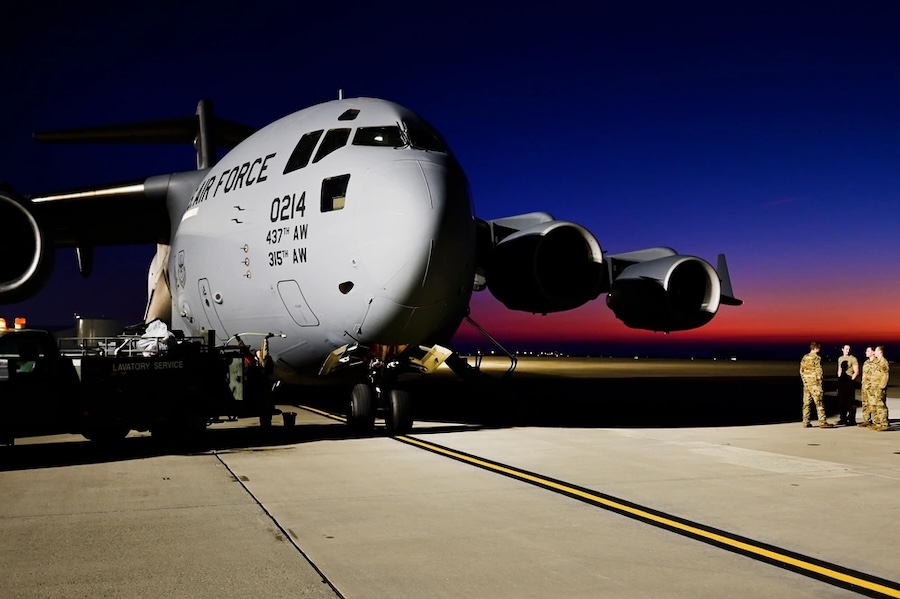
The program will replace critical avionics and mission-essential equipment with a modern, modular open systems architecture that allows plug-and-play enhancements. Boeing said the approach will enable the fleet to adopt new capabilities rapidly and affordably while addressing avionics obsolescence.
“The C 17A has been the backbone of global air mobility for over three decades,” said Travis Williams, vice president of United States Air Force Mobility & Training Services at Boeing. “With the U.S. Air Force requirement to keep the C-17A viable through 2075, we already have a clear and achievable roadmap to support their needs, and the needs of our international partners around the globe.”
“By resolving avionics obsolescence and introducing MOSA, we’re preserving a proven, highly dependable, heavy airlifter and keeping it at the forefront of performance and efficiency for decades to come,” Williams said. Boeing delivered 275 C-17A aircraft between 1993 and 2015, with 222 received by the Air Force and 53 by international partners across nine nations in a fully integrated virtual fleet support system.