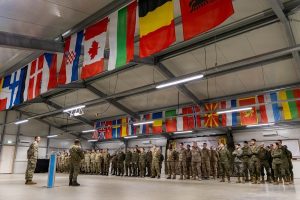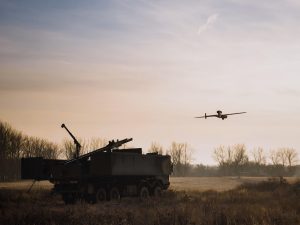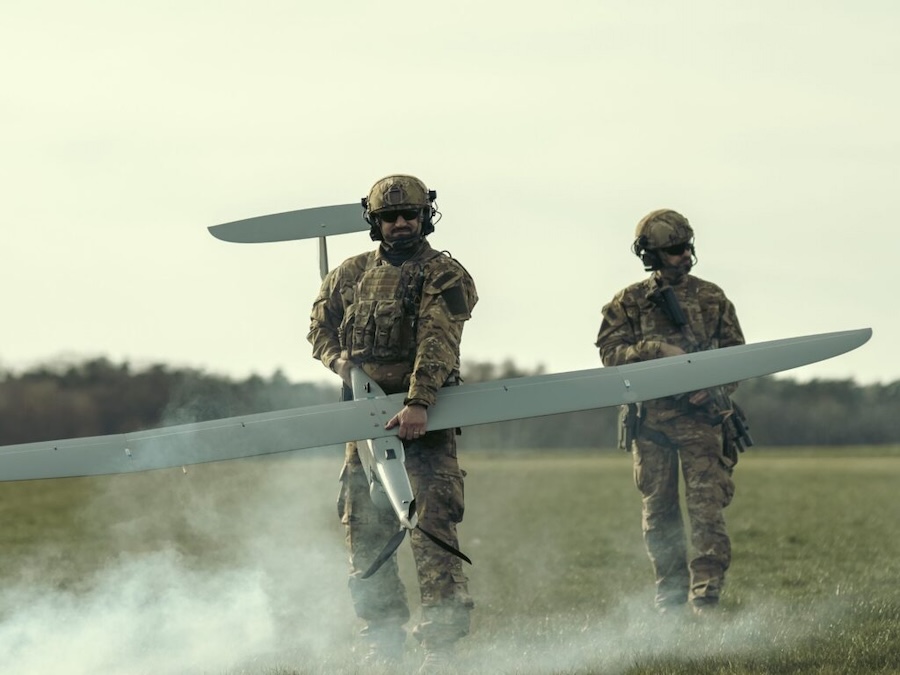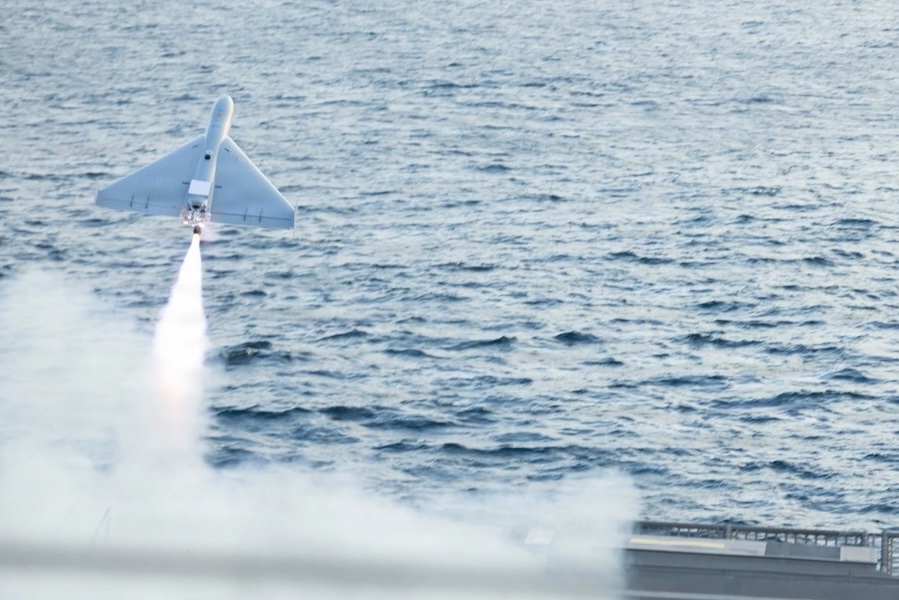


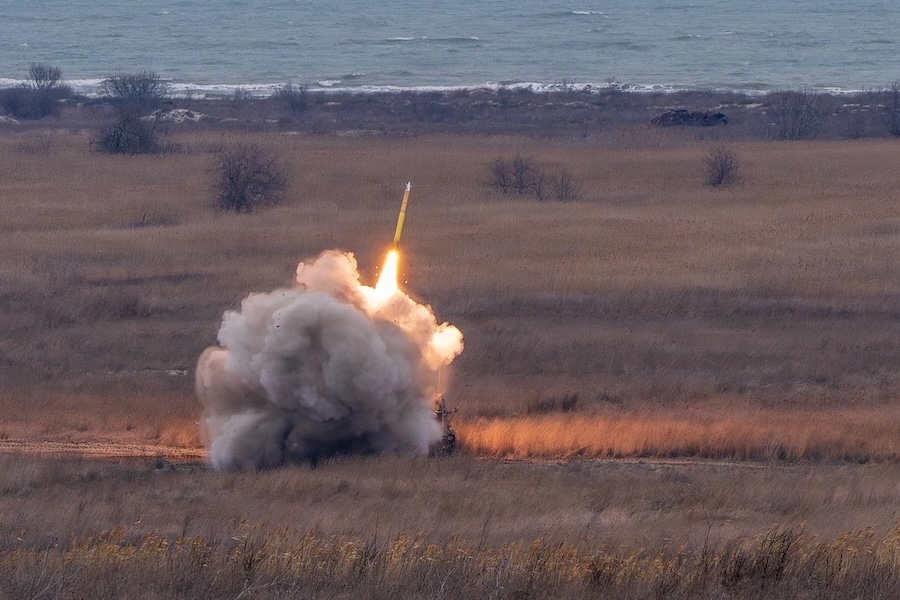
Dynamic Front 26 rehearsed NATO regional plans and trained units to integrate lethal and nonlethal effects across a distributed battlefield, with this year’s iteration emphasizing command and control and simulation while maintaining live fire events across multiple Allied nations. The design reflected modern warfare conditions in which forces operate across distances, national boundaries, and domains while maintaining initiative, speed, and precision.
Long-range fires remained central to the exercise, while air defense demonstrated its role in delivering effective and lethal defensive fires and rapidly providing accurate data from radars and sensors. Capt. Trevor Shackleton, commander of Alpha Battery, said the unit deployed from Ansbach, Germany, with two mission objectives aligned to the exercise focus.
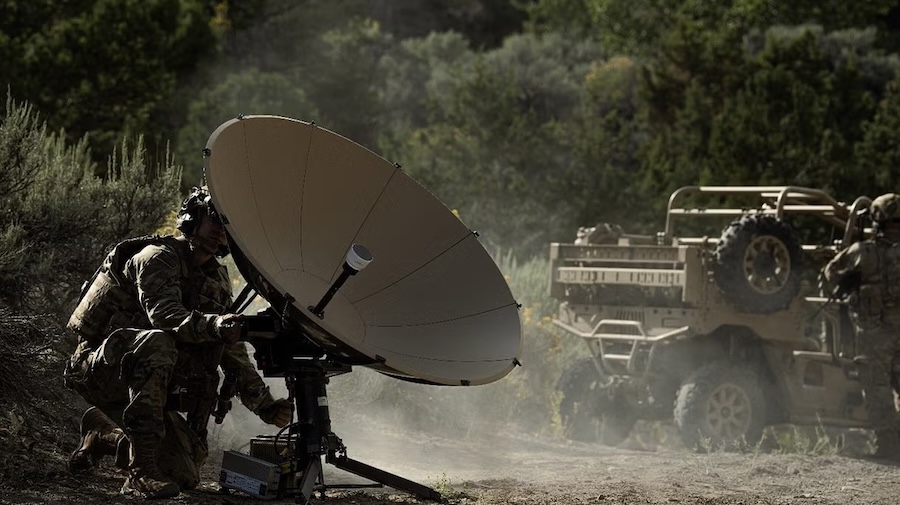
“Alpha Battery 1-57 was aligned with Exercise Dynamic Front 26 with two major lines of effort for our mission objectives,” Shackleton said. “LOE one was to establish organic beyond line of sight data communications to be able to push our radar air pictures all the way back to USAREUR-AF level from location routing through our battalion in Ansbach, Germany.”
Shackleton said the unit established connectivity upon arrival and routed data through mission networks to share the air picture with higher echelons, improving situational understanding and supporting commanders synchronizing offensive and defensive fires. The second objective centered on crew certification and gunnery proficiency.
“LOE two was for the battery to conduct Avenger gunnery tables eight, nine, and 10 out here to get our crew certified on their assigned weapon systems,” Shackleton said. He noted the battery began its gunnery glide path in early December and progressed through required gates before deploying to Romania.
Once in theater, the battery integrated deployment operations, logistics, and range execution into a single effort. “In addition to that, all of the mission planning, logistical support, and the deployment operations to actually move our equipment and personnel across Europe, over here to Romania,” Shackleton said.
On the range, crews employed the Avenger short-range air defense platform and Stinger missiles during live iterations, executing gunnery in stages from table eight events to live aerial engagements. “Upon arriving here on ground, we were able to receive our ammunition with the support of 21st TSC, and be able to start actually executing our gunnery tables,” Shackleton said. “Starting with table eights with the Avenger weapon system and the M3P .50 caliber machine gun.”
Crews later transitioned to Stinger engagements against aerial targets, validating engagement procedures and crew drills on a live range. Shackleton said repetition and disciplined execution underpinned the communications objective.
“The biggest lessons we’re learning for our first line of effort with the data transfer and providing our air picture up to higher comes down to just reps and sets,” Shackleton said. He added that while building the architecture required time, once established the battery could provide the air picture quickly.
He also underscored maintenance discipline as essential to delivering defensive fires. “Maintenance is key,” Shackleton said. “Preventive maintenance, validating our PMCS, is identifying faults before they become critical. So that way, when we come out here to the gun line, we’re able to just upload ammo and execute.”
Dynamic Front 26 strengthened interoperability through daily interaction with Allies and partners at Capu Midia, where U.S. forces trained alongside multinational units. “Here at Dynamic Front, specifically at Capu Midia, we have us as the U.S. Army representatives participating alongside Italian MLRS, French MLRS, and French short-range air defense personnel as well,” Shackleton said.
He added that German counterparts embedded with the U.S. element supported operations, while Romanian hosts coordinated range activities and liaison support. Dynamic Front 26 marked the final iteration under its current construct and will merge next year with Arcane Thunder to form Arcane Front as the Army continues to adapt training for large-scale, multi-domain operations.
For Alpha Battery, the deployment enhanced crew-level air defense proficiency while contributing to the broader integration of fires across the Alliance. The unit improved its ability to share an air picture with higher headquarters, certified crews through live-fire events, and reinforced the role of defensive fires in enabling the combined force to operate and win.