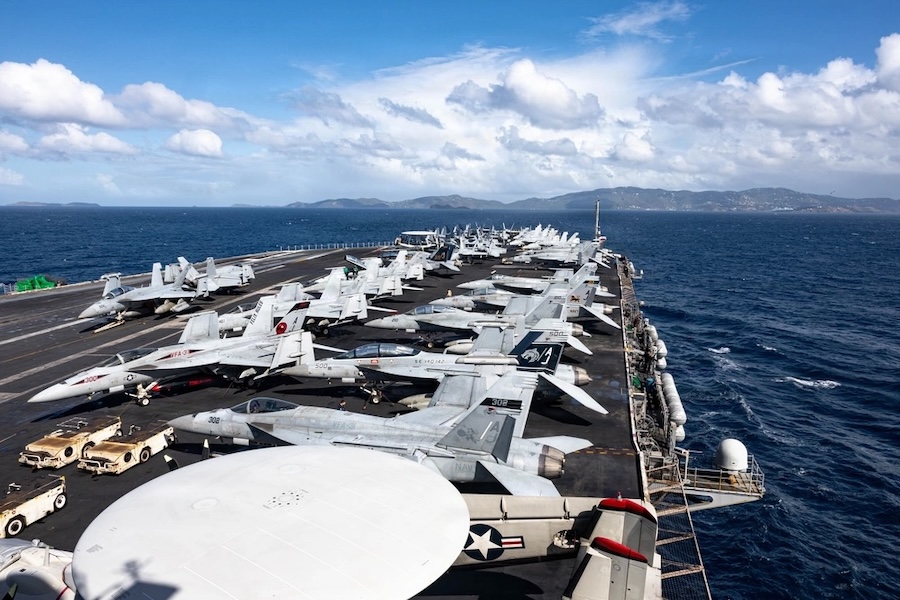
Gerald R. Ford has been operating in the Caribbean Sea since mid-November as the U.S. amassed naval power in the region before conducting an early January raid in downtown Caracas that resulted in the capture of former Venezuelan President Nicolás Maduro. The carrier deployed in June from Naval Station Norfolk, Virginia, and its mission was extended to include sailing to the Middle East amid evolving strategic requirements and regional tensions.
The decision to send Ford toward the Middle East coincides with the Iranian government’s crackdown on protesters across the country, reflecting broader geopolitical pressures surrounding U.S.–Iran relations. The redeployment is taking place against the backdrop of renewed negotiations and significant military positioning in the region.
If Ford remains deployed until mid-April, it would break the post-Vietnam War record of 294 days for aircraft carrier deployments, a benchmark set by USS Abraham Lincoln in 2020, according to U.S. Navy deployment data. Should the carrier stay at sea into early May, its deployment would rival the 300-plus day missions carriers conducted during the Vietnam War era.
USNI News notes that its carrier deployment data reflects only operational deployments focused on national tasking and does not include training exercises or other qualification underways. The ongoing mission highlights the extensive demands placed on U.S. carrier forces as they sustain naval presence in critical regions.
During 2020, USS Nimitz was underway for just under a year due to restrictions related to the COVID-19 pandemic, although that extended time did not count as national tasking in the same way. The current extension of Gerald R. Ford’s deployment underscores the operational strains resulting from extended global commitments and strategic priorities.
The last time the United States had two carriers simultaneously operating in the Middle East was last summer, when USS Nimitz and USS Carl Vinson briefly overlapped in the Arabian Sea following U.S. strikes on Iranian nuclear facilities. The ongoing deployment of large naval assets like Ford and Lincoln reflects continuing prioritization of regional deterrence and readiness.