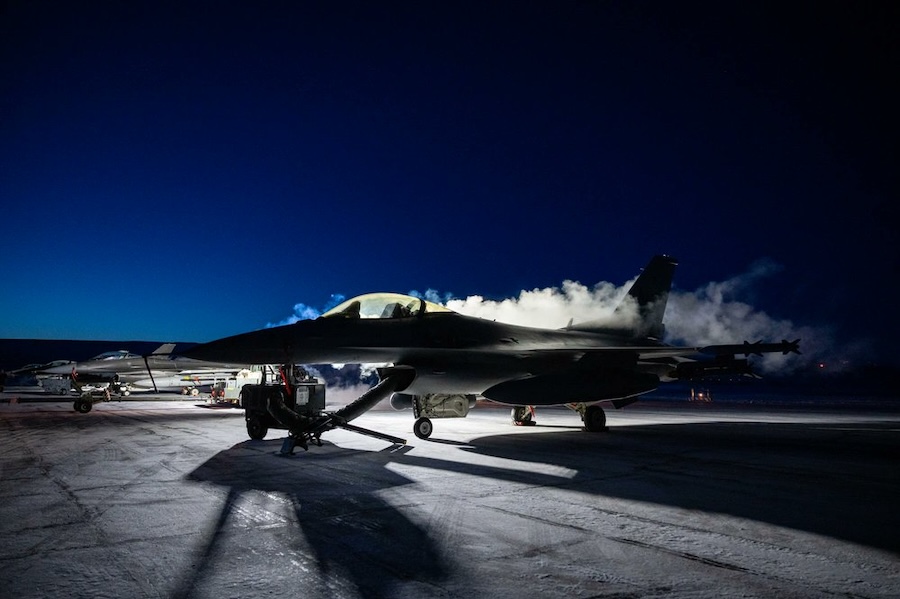
In a statement from Peterson Space Force Base, Colorado, NORAD said it identified two Tu-95 bombers, two Su-35 fighter jets and one A-50 airborne early warning aircraft. The command launched two F-16s, two F-35s, one E-3 airborne warning and control aircraft, and four KC-135 refueling aircraft to “intercept, positively identify, and escort the aircraft until they departed the Alaskan ADIZ.”
NORAD said the Russian military aircraft remained in international airspace throughout the encounter. They did not enter American or Canadian sovereign airspace.
An ADIZ begins where sovereign airspace ends and is described as “a defined stretch of international airspace that requires the ready identification of all aircraft in the interest of national security.” The zone serves as an early warning buffer to help protect North America.
“This Russian activity in the Alaskan ADIZ occurs regularly and is not seen as a threat,” the command said. NORAD added that it “remains ready to employ a number of response options in defense of North America.”
The binational command employs what it calls a layered defense network to monitor activity near the continent. NORAD said it uses satellites, ground-based and airborne radars, and fighter aircraft to detect and track aircraft and to inform appropriate actions.




![CENTCOM chief says U.S. forces remain ready after ‘generational’ defeat of Iran despite fragile ceasefire [VIDEO]](https://defence-industry.eu/wp-content/uploads/2026/04/centcom-chief-says-us-forces-remain-ready-after-generational-defeat-of-iran.jpeg)
![Team Lynx details XM30 infantry fighting vehicle concept as U.S. Army program nears key decision [VIDEO]](https://defence-industry.eu/wp-content/uploads/2026/04/team-lynx-details-xm30-infantry-fighting-vehicle-concept.jpeg)