

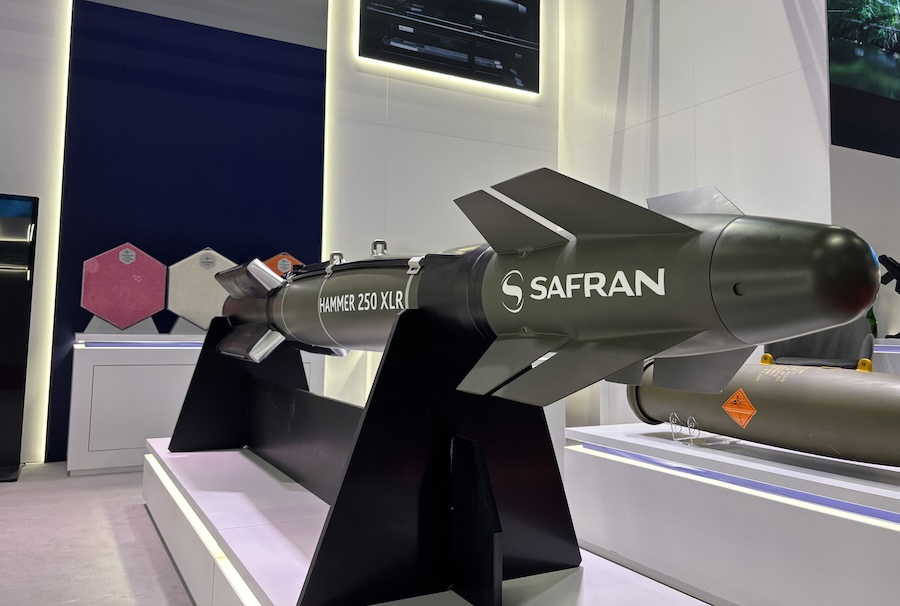
Compared with the previous year, Safran increased AASM Hammer production in 2025 by around 30 per cent. This corresponds to an estimated 1,100 to 1,200 units manufactured during the year, representing the highest numerical increase in recent years.
For comparison, in 2024 Safran stated it had produced approximately 830 AASM Hammer bombs. That figure already exceeded initial industrial plans of around 600 units, after production efforts were intensified beyond expectations.
The year 2024 marked the first tangible shift from small production batches to large-scale deliveries capable of meeting the needs of both the French armed forces and Ukraine. By contrast, although output rose in 2023, it remained significantly lower than in the following two years.
No full official figures were made public for 2023, but industrial analyses suggest production may have reached just under 500 units. That year nevertheless marked an important stage, as the effects of decisions to expand manufacturing capacity following the outbreak of the war in Ukraine became visible.
In 2022, when production levels still reflected the period before Russia’s full-scale invasion of Ukraine, output of AASM Hammer systems was described by industry data as symbolic. Annual volumes were estimated at between 200 and 250 units.
Across the four-year period, a clear upward trend can be observed, from relatively small batches in 2022 to accelerated growth in 2023, a rise to around 830 units in 2024, and a jump to more than 1,000 bombs in 2025. The increase reflects changes in French and NATO defence policy as well as significant investment in production capacity by Safran, including upgrades at its Montluçon facility.
In 2024, the French parliament committed the government to regular deliveries of 600 AASM Hammer bombs per year to Ukraine. Initially, due to the difficult situation on the front line, assistance involved urgent transfers from French military stockpiles.
Only the increased production levels achieved in 2024 and 2025 have made it possible to supply Ukraine on an ongoing basis while simultaneously replenishing French inventories. The rise in output can also be viewed in the broader context of financial and political adjustments within NATO following reductions and delays in certain United States military aid packages for Ukraine.
As delays and reductions emerged in U.S. assistance, European NATO members faced the need to assume a greater share of the financial and material burden of supporting Kyiv. In France, strategic autonomy has long been a pillar of defence policy, and expanding AASM Hammer production aligns with that approach.
Rather than purchasing American JDAM kits or other systems, Paris aims to finance and develop domestic solutions that can be freely exported and adapted to various platforms, including the Soviet-era MiG-29, Su-25 and Su-27 aircraft used by Ukraine. European governments, facing higher defence spending, are seeking to ensure such expenditure strengthens their own industrial base and technological capabilities.
On 12 February 2026, France and Norway jointly announced new funding for AASM Hammer deliveries to Ukraine. Norway pledged €365 million for this purpose, while France will provide an additional €260 million in loans.
Exceeding the threshold of 1,000 AASM Hammer bombs per year marks a new phase in the history of the programme. The figures illustrate the scale of organisational and industrial transformation that has taken place within the European defence sector in recent years.