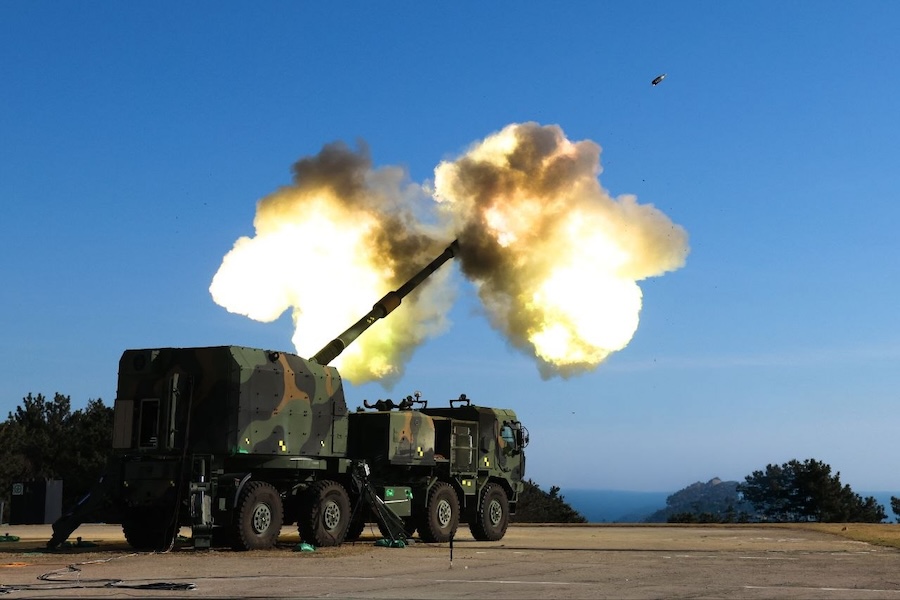


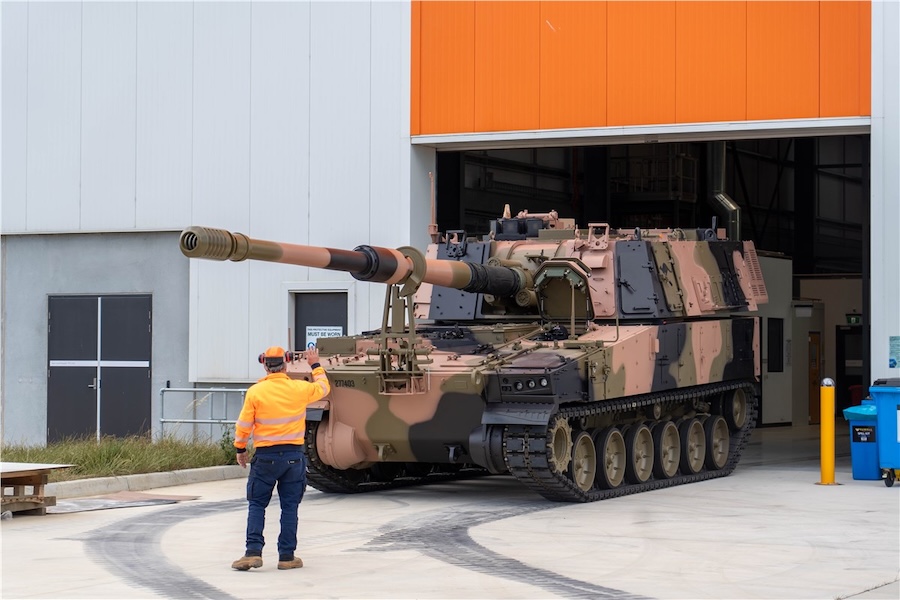
The three howitzers follow Batch 1, comprising two AS9s and one AS10 produced in South Korea and announced in February last year. The newly built vehicles will undergo further testing and training as the capability moves towards entry into service, supported by HDA’s network of local and international suppliers.
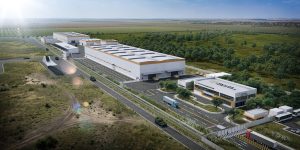
HDA is working with soldiers from the Australian Army at the H-ACE training wing to prepare operators and maintainers. “Seeing the first Australian made AS9s come off the production line and drive their first laps around our test track is a milestone that we’re all very proud of,” said HDA and UK/Europe CEO Mr Ben Hudson.
“This program will see a game changing capability introduced to the Australian Army underpinned by a strategic partner in Hanwha Defence Australia,” Mr Hudson said. “With the K9 User Community now 11 nations strong, the AS9 variant pushes the boundaries of the platform.”
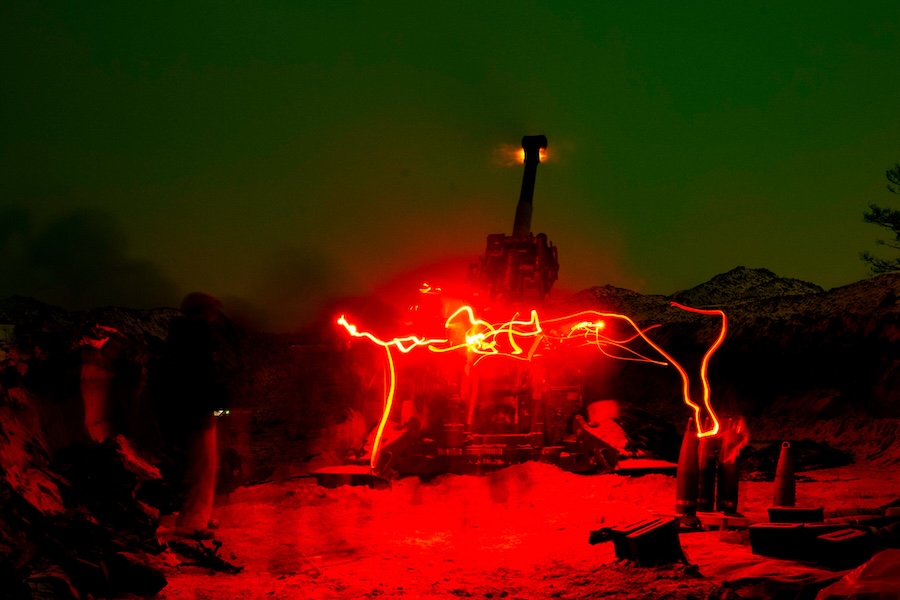
Batch 1 vehicles have undertaken driver and maintainer training over the past 12 months, alongside testing and verification activities including firing trials to familiarise operators with the systems. Additional vehicles are being incorporated into the training programme as they become available.
The AS9 and AS10 Huntsman variants incorporate operational experience from a global fleet of more than 2,400 K9 and K10 systems, described as the most widely used self-propelled howitzers worldwide. The AS9 Huntsman is equipped with a 52-calibre 155mm gun system in service with multiple nations, including members of the NATO alliance.
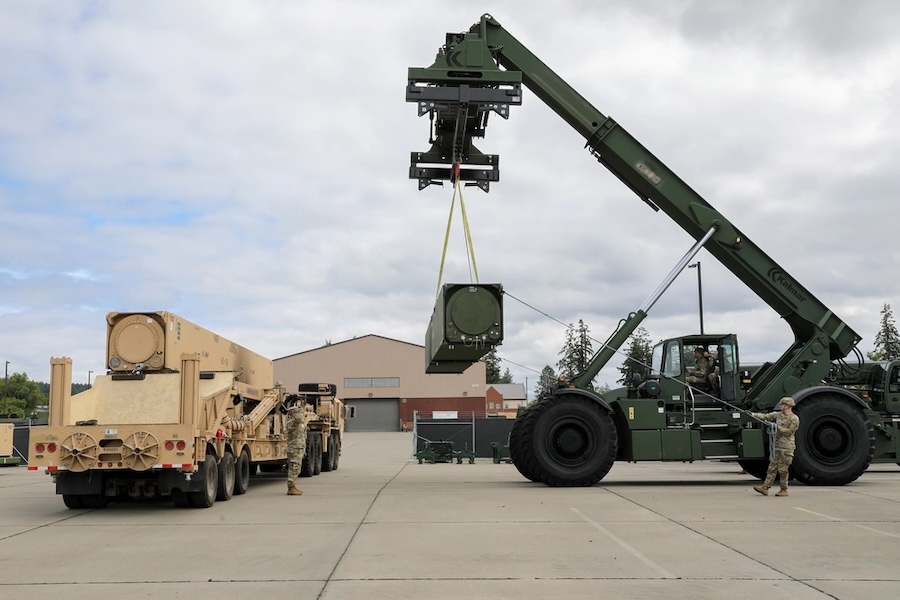
The AS10 Huntsman Armoured Ammunition Resupply Vehicle is designed to provide high levels of protection and manoeuvrability, with a loading system intended to reduce soldiers’ exposure to enemy fire and protect their long-term health. Production involves Australian supply chain partners including AME, Aurizn, Axalta, Bisalloy Steel, CBG Systems, Defcon, DVR, Elphinstone, Eylex, HIFraser, Kongsberg Defence Australia, Maser, MMCLD, Redline Engineering, Rojone, Safran Electronics and Defence Australasia, Stahl Metal, TEi, Thales Australia and Thomas Warburton, working alongside international suppliers.
Hanwha said it has made a significant ongoing investment in the Australian market through the programme. “The technology transfer on the LAND 8116 program between South Korea and Australia has been a pilot program in many ways, demonstrating the deepening relationship between the two nations,” Mr Hudson said.
“This experience provides the foundation to succeed on our other Defence vehicle programs,” he added. “Celebrating this milestone with our government, Defence, supply chain partners and our own exceptional team in our purpose-built facility is an honour.”
The first Australian-made AS10 is scheduled to come off the H-ACE production line this year.