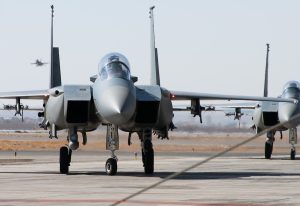
The aircraft has evolved across multiple generations since its introduction. The original F-15A and B models were delivered in 1974, followed by the F-15C and D models entering service in 1979, establishing the foundation of its air superiority role.
In 1988, the F-15E Strike Eagle was first delivered to the U.S. Air Force as a long-range interdiction fighter. It introduced a focused ground-attack capability while retaining air-to-air prowess.
Tailored versions of the F-15 were also developed for allies, including Israel, Japan, Qatar, Saudi Arabia, South Korea and Singapore. Boeing notes that these aircraft strengthened partnership interoperability and regional deterrence.
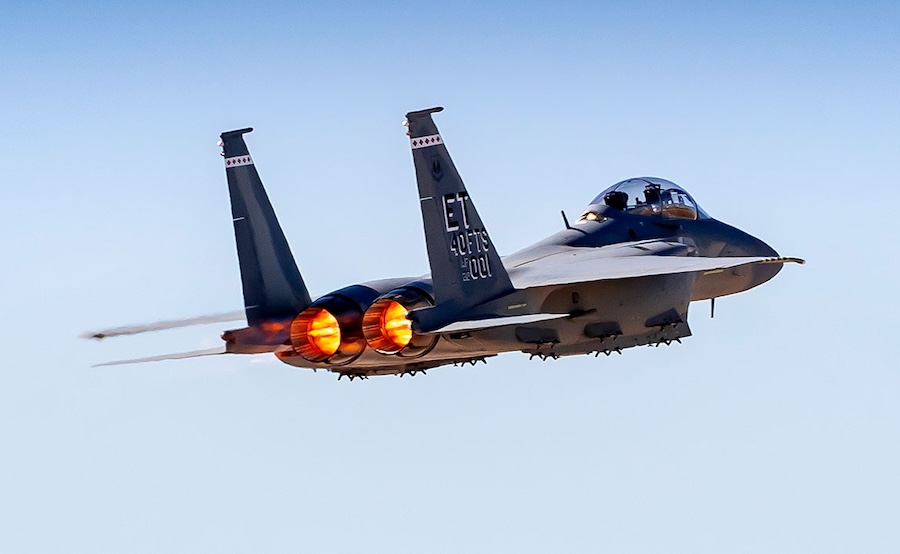
The latest version, the F-15EX Eagle II, extends the effective range of air-to-air weapons and incorporates advanced avionics, digital flight controls, open mission systems architecture and enhanced payload. According to Boeing, some of the F-15EX’s capabilities outpace all other fighters currently on the battlefield.
Boeing describes the F-15 as sitting at an intersection between generations, having evolved from a pinnacle of air superiority into variants that blur generational lines. With extended payload capacity and incremental advances in avionics, radar and mission systems, the aircraft continues to adapt to new operational demands.
The F-15 has long been regarded as one of the most successful and durable fighters, earning the moniker “the workhorse.” Its robust airframe life, high thrust-to-weight ratio, advanced radar and avionics, and generous fuel and payload capacity enable it to attain and maintain air superiority across a wide range of theaters over decades of service.
Publicly reported data credits the F-15 family with more than 100 air-to-air victories and, notably, no losses in air-to-air engagements. Boeing presents this record as a testament to the aircraft’s design and capabilities.
The F-15 is described as a key asset in the Pacific due to its long range, large fuel and payload capacity and powerful sensors. Boeing also sees it as a critical player in the evolving next-generation homeland defense shield because of its high speed, advanced radar and flexible loadout.
Operated by multiple allied air forces, the F-15 performs missions ranging from air superiority to long-range strike operations. Continued procurement by the U.S. Air Force and partner nations reflects what Boeing calls the unique value the platform brings and institutional trust in extending its service life.
The introduction of the F-15EX reflects what the company describes as a pragmatic approach to retaining and modernizing a proven platform. It is intended to complement other fighters and collaborative combat aircraft in contested environments while leveraging commonality and rapid fielding for urgent capability needs.
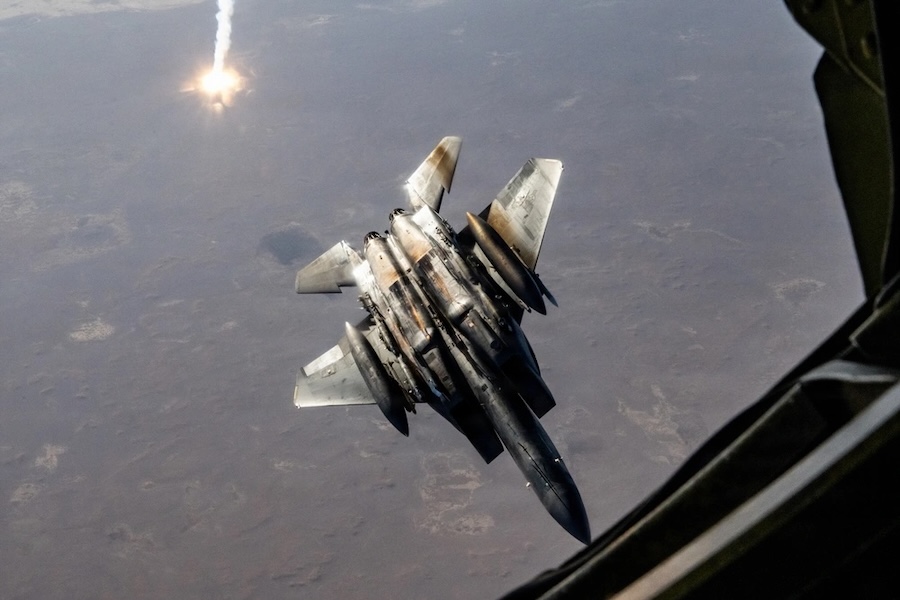
The F-15EX combines the proven strengths of the original Eagle family—speed, payload capacity and durability—with 21st century avionics and sustainment improvements. It extends the effective range of air-to-air weapons and systems by pairing longer on-station endurance, increased fuel and expanded payload capacity that allows it to carry more and larger missiles farther from target areas.
High-performance engines enable weapons employment at greater standoff distances, while a roadmap to open architecture avionics and modular mission systems supports rapid technology insertion. This approach allows next-generation sensors, datalinks, missile types and software upgrades to be fielded quickly.
Boeing states that the F-15EX’s 20,000-hour airframe life delivers superior value by providing substantially more operational hours and mission-capable years for each acquisition dollar. The company says this reduces lifecycle cost per flight hour and enables fleets to amortize upgrades and sustainment over a longer service life.
The F-15EX includes a modernized avionics suite with sensor fusion, a new electronic warfare system, what Boeing calls “the world’s most powerful radar,” an advanced cockpit system, expanded weapons carriage capacity and a growth path to advanced beyond line-of-sight communications and open mission systems computing architecture. Together, these attributes—longer unrefueled range, the ability to host more and mixed loads of modern air-to-air ordnance and fast upgrade cycles—are presented as keeping the F-15EX a flexible, high-capacity “workhorse” capable of sustaining air superiority missions and integrating evolving capabilities across the force.
As defense forces assess long-term investment decisions, Boeing positions the F-15 as a case study in adaptation. The company states that the aircraft’s service record, continued upgrades and global presence ensure its imprint on military aviation will endure long after its final squadron stands down.
Source: Boeing.