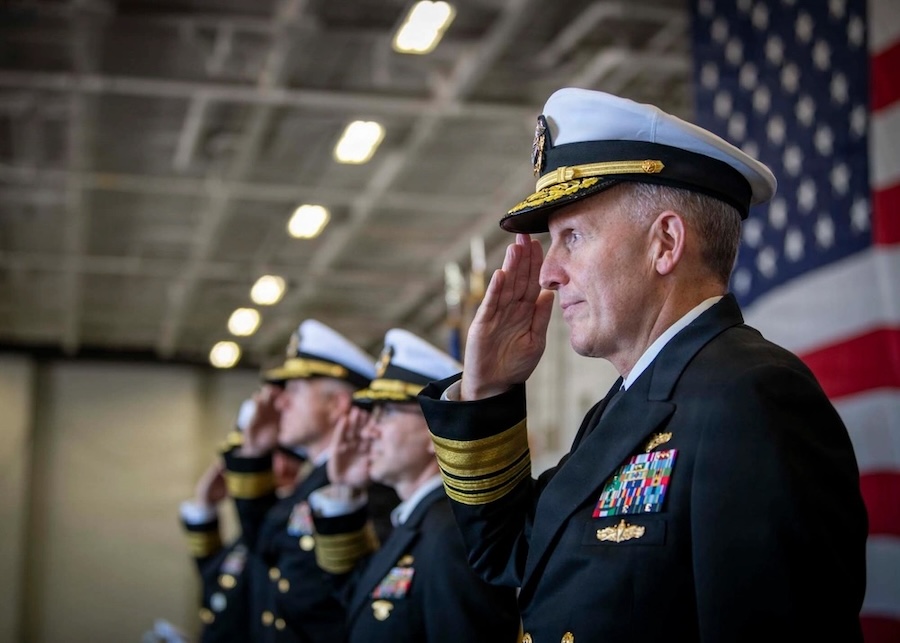
“This work is just beginning and will continue,” Chairman of the Joint Chiefs of Staff Air Force Gen. Dan Caine told reporters at the Pentagon on March 2. Administration officials said key objectives include destroying Iran’s missiles, naval forces and residual nuclear facilities.
“Two days ago, the Iranian regime had 11 ships in the Gulf of Oman, today they have ZERO,” U.S. Central Command wrote in a March 2 social media post, one day after President Donald Trump said the U.S. had sunk nine Iranian ships. Officials have indicated regime change would be welcome but is not required for the operation’s success, while the administration described eliminating Iran’s missile capabilities as vital to deterring future nuclear efforts.
Caine said the Pentagon is continuing to add forces even as it reports early successes, including what he described as “local air superiority.” “The flow of forces continues today,” Caine said. “We have more tactical aviation flowing into theater.”
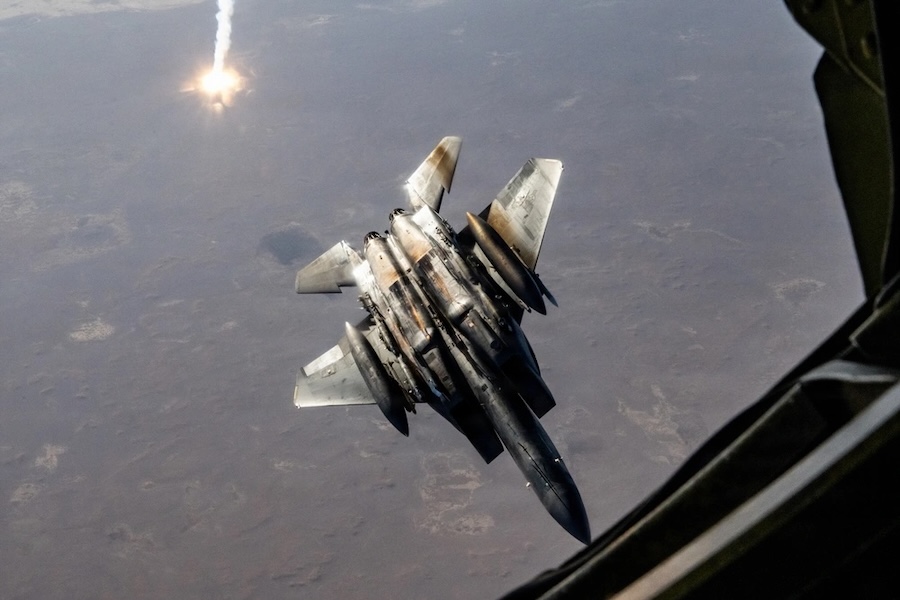
On March 2, seven F-15E Strike Eagles departed RAF Lakenheath in the United Kingdom en route to the Middle East, having staged there from U.S. bases in North Carolina and Idaho. The aircraft were observed departing by local spotters, and aerial refueling tankers accompanying them were tracked heading toward the region.
Caine said thousands of service members, “hundreds of advanced fourth- and fifth-generation fighters” and “dozens of refueling tankers,” along with the Lincoln and Ford Carrier Strike Groups and other aircraft, have been deployed. “We’re just about where we want to be in terms of total combat capacity and total combat power,” he said.
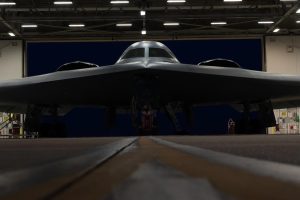
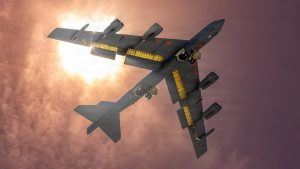
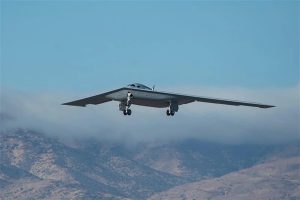
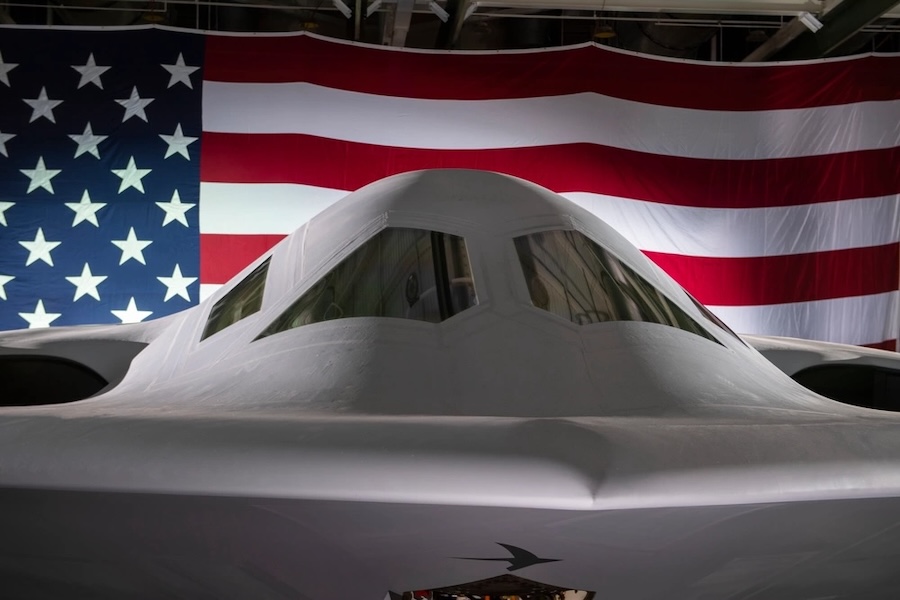
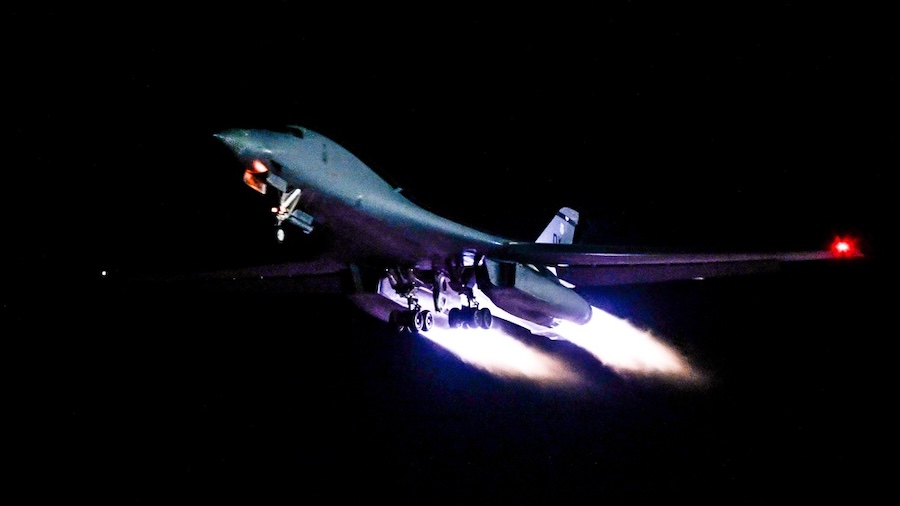
Overnight, three B-1B Lancer bombers conducted long-range strikes against Iranian ballistic missile facilities, according to U.S. Central Command. The mission followed a similar strike by B-2 Spirit stealth bombers a day earlier, with flights originating from the United States and lasting up to 37 hours.
British officials said Prime Minister Keir Starmer has reversed an earlier refusal and will now allow U.S. forces to use bases in Diego Garcia and RAF Fairford for bombing missions. The change follows an Iranian drone strike on a U.K. air base in Cyprus and is expected to reduce flight times and tanker workload.
U.S. Central Command said more than 1,250 targets were struck in the first 48 hours of the campaign, including command and control facilities, air defenses, ballistic missiles, Islamic Revolutionary Guard Corps assets and naval forces. Retired Marine Corps Gen. Kenneth F. McKenzie Jr. said, “What you’re seeing is the unfolding of a CENTCOM operational concept that’s been refined for over 20 years,” speaking at an event hosted by the Middle East Institute.
Caine said the campaign was approved at 3:38 p.m. Eastern Time on Feb. 27 and began at 1:15 a.m. Eastern Time on Feb. 28. Secretary of State Marco Rubio told reporters the action followed an “imminent threat” from Iran, while officials said Israeli forces killed Iranian Supreme Leader Ayatollah Ali Khamenei on the opening day with U.S. intelligence support.
Last night, U.S. B-1 bombers, struck deep inside Iran to degrade Iranian ballistic missile capabilities. As the President stated, “we’re going to destroy their missiles and raze their missile industry to the ground.” pic.twitter.com/tIkIo5ugWv
— U.S. Central Command (@CENTCOM) March 2, 2026
President Trump said the operation could extend beyond initial estimates. “Whatever the time is, it’s OK, whatever it takes,” Trump said at a White House event March 2. “Right from the beginning, we projected four to five weeks, but we have the capability to go far longer than that.”
So far, six U.S. troops have been killed in an Iranian retaliatory strike on a U.S. facility in Kuwait. “War is hell and always will be,” Defense Secretary Pete Hegseth said. “You have air defenses and a lot’s coming in, and you get most of it. … Every once in a while, you might have one, unfortunately, we call it a squirter, that makes its way through, and in that particular case, happened to hit a tactical operation center.”
Caine said additional losses are expected as operations continue. “We expect to take additional losses,” he said. “This is major combat operations.”
On March 2, three F-15Es were shot down by Kuwaiti air defenses in a friendly fire incident while responding to Iranian aerial threats, according to the U.S. military. All six aviators ejected and survived.
Rubio said further escalation is possible. “The hardest hits are yet to come from the U.S. military,” he said before briefing lawmakers. “The next phase will be even more punishing on Iran than it is right now.”
“We have objectives,” Rubio added. “We will do this as long as it takes to achieve those objectives.”
Source: Air & Space Forces Magazine.