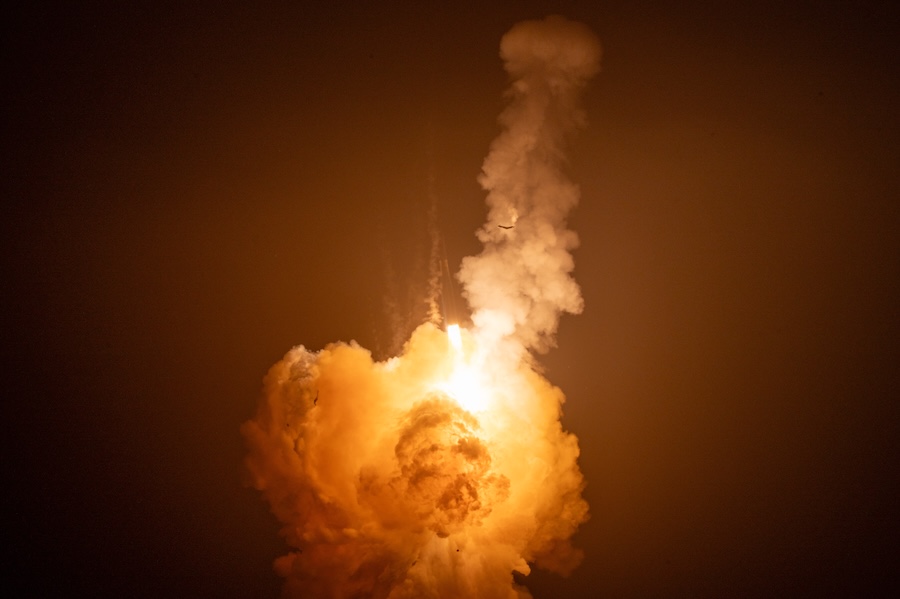
The launch, designated GT 255, had been scheduled years in advance and was not related to current world events. It forms part of a long-running, data-driven testing program that has included more than 300 similar launches to validate the performance of the weapon system.
“GT 255 allowed us to assess the performance of individual components of the missile system,” said Lt. Col. Karrie Wray, commander of the 576th Flight Test Squadron. “By continually assessing varying mission profiles, we are able to enhance the performance of the entire ICBM fleet, ensuring the maximum level of readiness for the land-based leg of the nation’s nuclear triad.”
The test also examined the performance of the missile’s multiple reentry vehicles, which are used to increase missile effectiveness and help overcome potential enemy defenses. The evaluation aimed to confirm the ability of the system to deploy several payloads accurately.
“It is critical to test all aspects of our ICBM force, including our ability to deliver multiple, independently targeted payloads with absolute precision,” said Gen. S.L. Davis, commander of Air Force Global Strike Command. “This test validates the intricate synchronization of the weapon system, from the initial launch sequence to the flawless deployment of each reentry vehicle.”
During the launch, the missile’s two reentry vehicles traveled thousands of miles to a predetermined target at Kwajalein Atoll in the Marshall Islands. The long-range flight enabled engineers and weapons specialists from the 377th Test and Evaluation Group to collect data on the missile’s accuracy and reliability.
The 377th Test and Evaluation Group provides data from such launches to several stakeholders, including the Department of War, the Department of Energy, and U.S. Strategic Command, to support comprehensive force development evaluations. The program’s primary objective is to assess the operational capability of the Minuteman III and ensure the United States maintains a dependable weapon system.
“Test launches are the most visible and vital way we verify our capabilities and validate the performance of our systems,” said Col. Dustin Harmon, commander of the 377th Test and Evaluation Group. “The men and women of our missile community represent some of the most highly trained professionals in our nation’s defense. These tests confirm their unmatched ability to support this critical mission and provide crucial data that ensures our systems remain ready and reliable.”
The launch followed months of preparation involving multiple government partners. Airmen from the 91st Missile Wing at Minot Air Force Base, North Dakota, provided maintenance support, while operators from across all three missile wings initiated the launch.
“The data we gather ensures our long-range strike capabilities are not just a theoretical concept, but a proven, reliable, and lethal force, ready to defend the nation at a moment’s notice,” Davis said. As the Minuteman III remains on alert, the Air Force is working toward its replacement, the LGM-35A Sentinel, which is intended to modernize the land-based leg of the U.S. nuclear triad.