

The company said the funding will support operations across more than 30 communities in 17 states. GE Aerospace also plans to hire 5,000 additional U.S. workers in manufacturing and engineering roles during the year.
The hiring plan follows the company’s recruitment of another 5,000 employees last year. Officials say the workforce expansion will help meet growing demand from both commercial and defense customers.
“Maintaining U.S. aerospace leadership requires sustained investment in our people, our facilities, and the technologies that will define the future of flight,” said H. Lawrence Culp, Jr., Chairman and CEO of GE Aerospace. “This investment is for our customers, our communities, and our country.”
The 2026 investment marks the company’s second consecutive $1 billion commitment to U.S. manufacturing. Since 2024, GE Aerospace has announced plans to invest more than $2.5 billion across domestic production sites and its supplier base.
Approximately $600 million of that total has been directed to facilities producing defense engines over the past three years. The company also invests nearly $3 billion annually in research and development.
Part of the new investment will be used to expand capacity at facilities that manufacture and assemble commercial and military engines. These upgrades are intended to help accelerate production and delivery schedules.
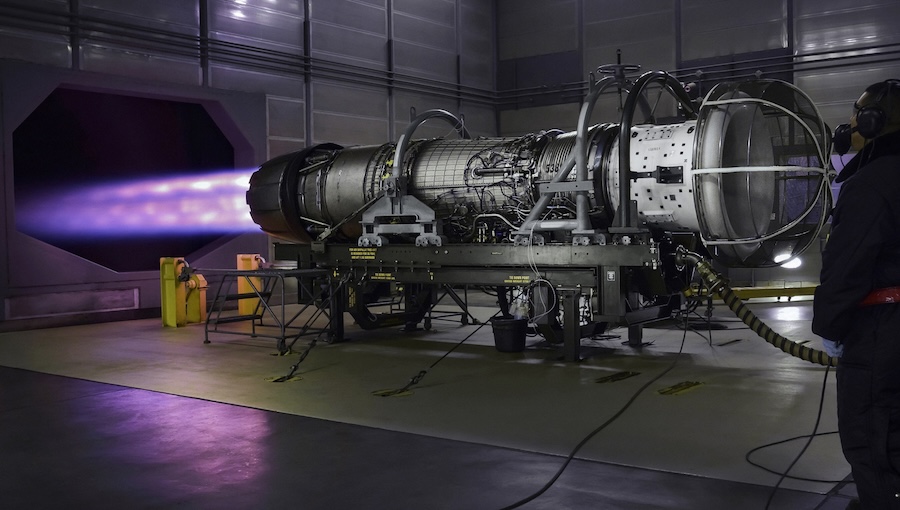
A total of $115 million will be invested in Cincinnati, Ohio, where GE Aerospace maintains its headquarters. The funding will modernize infrastructure, increase engine test cell capacity, and expand advanced 3D metal printing capabilities.
More than $275 million of the investment will be allocated to sites producing defense engines and components. The company said the goal is to strengthen the U.S. defense industrial base and support evolving operational requirements.
Facilities in Lynn, Massachusetts, will receive more than $40 million to refresh machinery, expand test cell capacity, and upgrade buildings. An additional $10 million will be invested in Madisonville, Kentucky, for new machines, inspection equipment, tooling, and facility improvements.
The investment also includes expanding commercial engine production capacity. Particular attention will be given to the CFM LEAP engine, which powers Boeing 737 MAX and Airbus A320 aircraft families.
GE Aerospace plans to invest $200 million to expand manufacturing capacity for LEAP high-pressure turbine durability kits. These kits are designed to more than double engine time-on-wing in hot and demanding operating environments.
The investment will also support production of the reverse bleed system. According to the company, this system reduces the need for on-wing maintenance.
Additional investments include $20 million in Durham, North Carolina, for specialized tooling, engine assembly systems, and building upgrades. A further $7 million will be invested in Lafayette, Indiana, for tools, equipment, and facility improvements that support engine assembly and narrowbody engine deliveries.
GE Aerospace will also allocate more than $100 million to strengthen its supplier network. The funding will provide tooling and equipment to external suppliers to stabilize production schedules and meet delivery commitments.
The company said these investments, combined with its proprietary FLIGHT DECK lean operating model, have already improved supply chain performance. Material input from priority suppliers increased by more than 40 percent last year compared with the previous year.
The improved supply chain performance contributed to higher production output. Commercial engine deliveries rose by 25 percent in 2025, while defense engine deliveries increased by 30 percent compared with the previous year.
The hiring initiative is also connected to broader workforce development plans. Last fall, the GE Aerospace Foundation launched a $30 million program to train 10,000 workers by 2030 with manufacturing skills that support the aerospace industry.