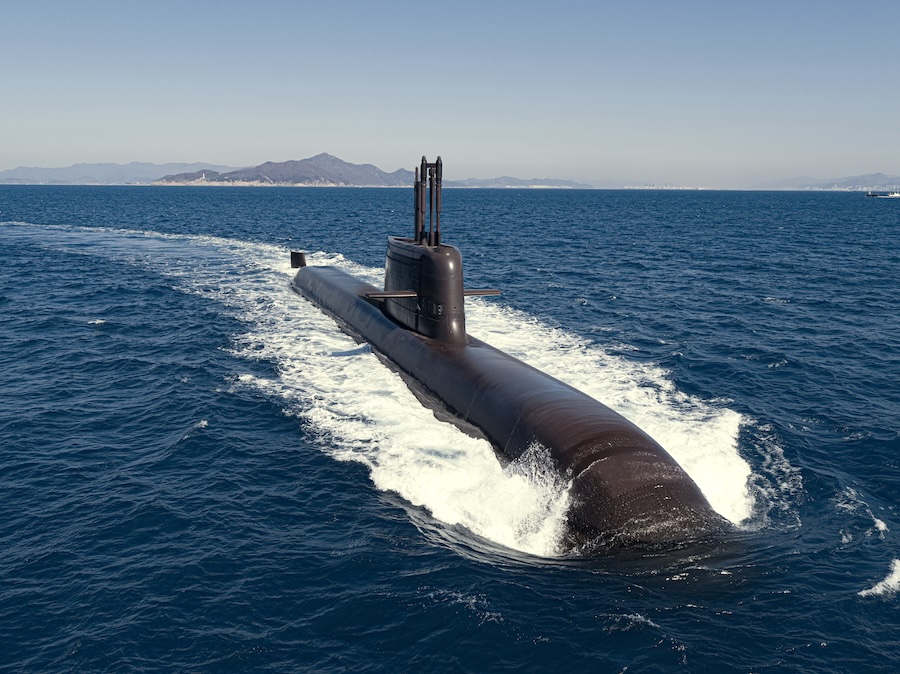


Commandos from specialist units of the UK Commando Force surfaced aboard the German attack submarine U-35 roughly 200 miles inside the Arctic Circle. From there they launched inflatable raiding craft to conduct a reconnaissance and strike-support mission before returning to the submarine undetected.
The operation was designed to simulate a stealth infiltration behind enemy lines in a harsh Arctic environment. Marines observed opposing force positions and relayed targeting information to allied warships for naval gunfire support before withdrawing.
The mission involved specialist elements of the Royal Marines Commando Force, including the Surveillance and Reconnaissance Squadron (SRS), Shore Reconnaissance Troop (SRT) and 148 Commando Forward Observation Battery. These units are trained to conduct covert reconnaissance and support strike operations ahead of larger allied forces.
A senior officer from the SRS highlighted the importance of submarine-based insertion in the High North’s demanding conditions. “In the High North’s harsh and unforgiving domain, where extreme climatic conditions and adversary vigilance dominate, the ability to covertly insert reconnaissance teams ashore via Inflatable Raiding Craft (IRC) launched from a submarine is indispensable.”
The officer explained that such capabilities allow NATO forces to penetrate contested areas and gather critical intelligence. “It delivers the stealthy edge needed to penetrate denied areas, deny the enemy sanctuary, collect vital intelligence on subsurface and littoral threats and shape the operational environment before any escalation.”
He also stressed the strategic importance of this capability in Arctic operations. “This insertion capability from below the waves provides critical initiative to NATO in one of the planet’s most strategically contested regions.”
During the exercise, the reconnaissance teams observed an enemy radar installation positioned along Norway’s rugged coastline. Information gathered by the Marines enabled NATO destroyers to deliver naval gunfire that simulated the destruction of the radar facility.
Specialists from 148 Commando Forward Observation Battery coordinated the targeting support. The unit is trained to control artillery, naval gunfire and air strikes in support of the Commando Force and UK Special Forces.
A team leader from 148 Battery said the training reinforced key operational skills used in joint operations. “We regularly train with NATO Special Operations Forces partners to practise naval fire support, but it’s been great getting re-qualified in this insertion method.”
He added that the exercise reflects the unit’s long-standing operational role within the Royal Marines. “Serials like this are similar to our historical roots dating back to the Falklands where 148 delivered naval gunfire prior to the retaking of the islands.”
The team leader also emphasised the importance of combining maritime strike capabilities with covert reconnaissance. “Combining naval gunfire support with this is a key skill to support operations in the high north.”
The Arctic exercise forms part of a wider UK military deployment to northern Norway. Around 1,500 Royal Marines have been operating in the region since January in preparation for Cold Response 26.
These operations are intended to strengthen NATO’s ability to defend its northern flank in the strategically important Arctic region. Training in Norway’s demanding terrain and climate enables allied forces to rehearse operations in one of the world’s most challenging operational environments.
Source: Royal Navy.