


The joint effort showed how unmanned systems can detect, analyze and respond to electromagnetic threats in real time without human intervention. According to the companies, the demonstration represents a milestone in the development of autonomous electronic warfare operations.
The test involved a real-time hardware-in-the-loop simulation designed to replicate operational conditions. During the scenario, multiple unmanned aircraft systems collected threat data across the electromagnetic spectrum.
The DiSCO system processed and fused the collected information to generate a common operating picture of the electromagnetic environment. This data was then used by Hivemind-powered unmanned aircraft to autonomously determine safe operating areas and execute tactical maneuvers.
Lauren Barnes, President of Spectrum Superiority, Communications and Spectrum Dominance at L3Harris, said the demonstration illustrates how artificial intelligence can accelerate modern electronic warfare capabilities. “This demonstration validates our ability to rapidly deliver the AI-driven, multi-domain solutions our warfighters need now.”
She emphasized that combining autonomy with advanced battle management tools supports emerging operational requirements. “By integrating autonomous decision-making with advanced battle management technology, we’re answering the Pentagon’s urgent call for coordinated command and control of multiple unmanned systems.”
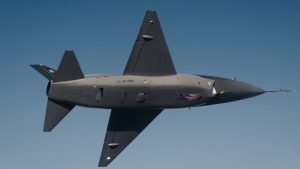
The demonstration also included additional electronic warfare technologies integrated into the test environment. Among them was the L3Harris Green Wolf electronic warfare vehicle equipped with electronic attack and detection capabilities.
A software-defined radio payload was also used to provide electronic support functions during the scenario. Shield AI’s Hivemind software operated alongside a communications relay platform designed for unmanned aircraft systems.
Christian Gutierrez, Vice President of Hivemind Solutions at Shield AI, said autonomy is becoming increasingly critical in the electronic warfare domain. “Electronic warfare moves at machine speed, and operational advantage depends on autonomy.”
He noted that the integration demonstrates the ability of unmanned platforms to operate across the electromagnetic spectrum. “Our integration with DiSCO shows that unmanned systems can sense and act across the electromagnetic spectrum in real time and we’re excited to build on this momentum with L3Harris and expand across the electronic warfare mission set.”
Both companies plan to continue developing the technology following the simulation-based demonstration. Live flight testing is scheduled for later this year using real radio-frequency emitters, platforms and payloads.
The planned tests are intended to further validate coordinated electronic warfare operations using autonomous systems. According to the companies, the effort aims to expand multi-domain capabilities for future military operations.