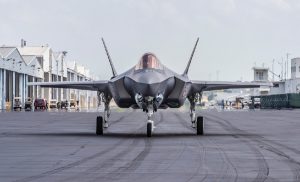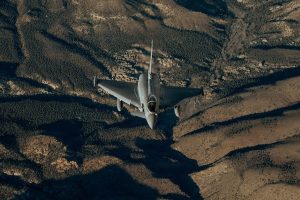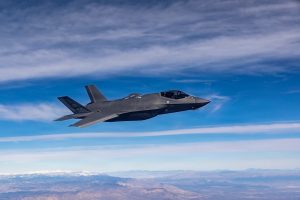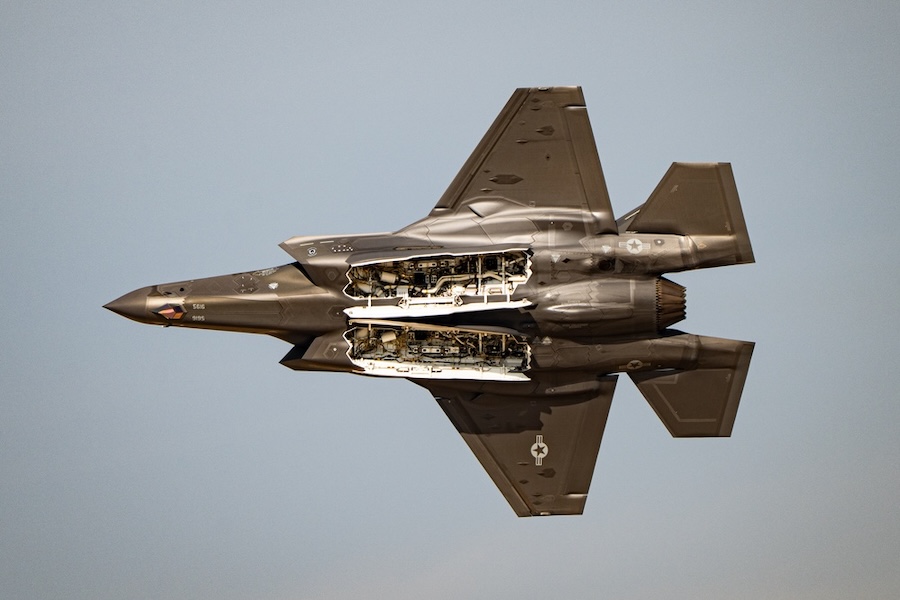

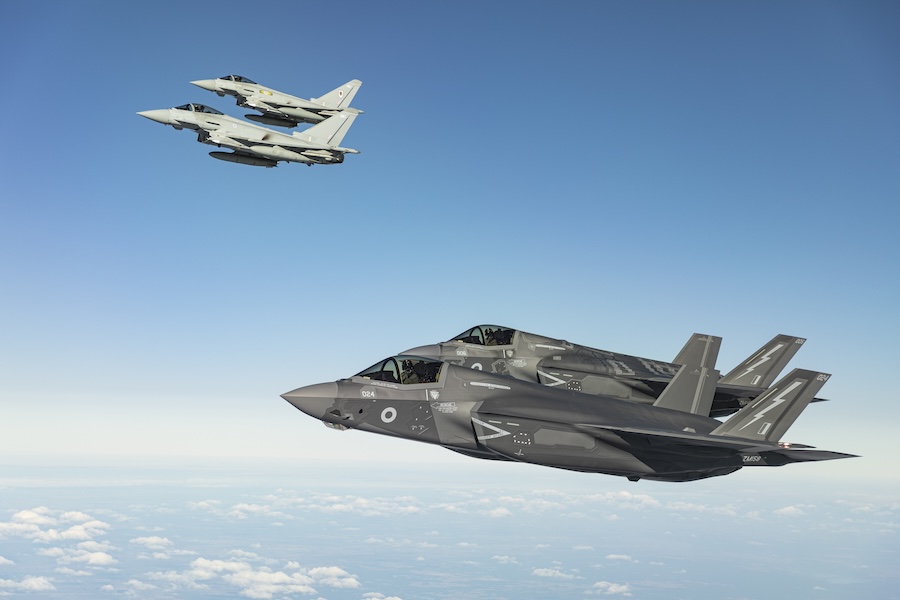
Under the UK’s integrated air power structure, both aircraft operate under a single command. Each platform brings distinct strengths that complement one another during operations.
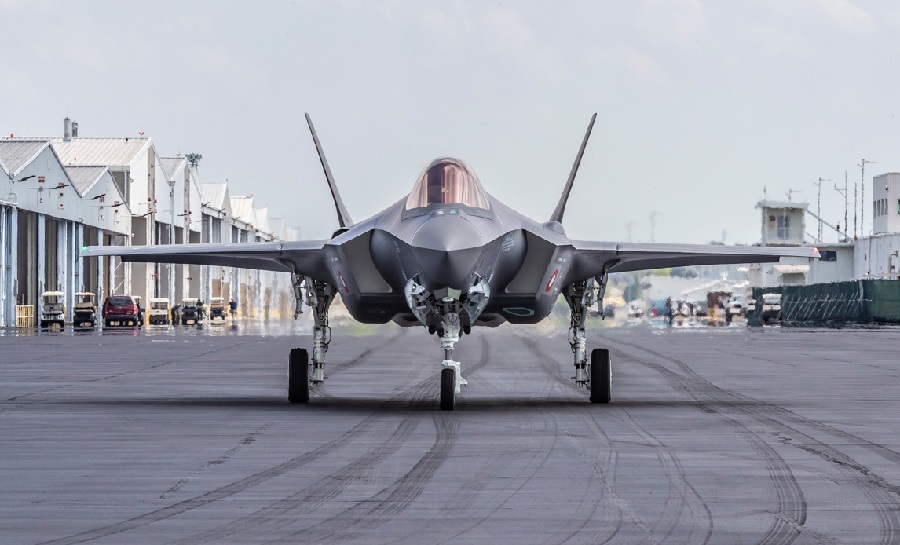
Typhoon serves as a fast and highly manoeuvrable air superiority fighter capable of carrying a large weapons load. The F-35B, by contrast, is designed around stealth and advanced sensor fusion, allowing it to detect and track threats earlier than conventional aircraft.
Lieutenant Colonel Mike Carty, Royal Marines, Officer Commanding 617 Squadron and an F-35 pilot, emphasised the benefit of operating both aircraft together. “When you combine them, the result is far more potent than either aircraft operating in isolation.”
The squadron’s aircrew operate as a joint team consisting of ten pilots split evenly between the Royal Navy and the RAF. They are supported by specialists from cyber, supply and security units who enable the aircraft to conduct operations effectively.
The aircraft’s cooperation reflects the different characteristics of fourth- and fifth-generation fighters. Typhoon relies primarily on powerful radar systems, advanced weapons and manoeuvrability, while the F-35B adds stealth and sensor fusion to build a clearer and wider picture of the battlespace.
The F-35’s radar and sensors allow it to identify aircraft, drones or missile launches at longer range while remaining difficult to detect. Once a target is located, the information is transmitted through secure datalinks to other aircraft, including Typhoons.
Lieutenant Colonel Carty explained the value of the aircraft’s technology in this process. “The highly advanced radar in the F-35, along with sensor fusion, provides longer-range detection and the ability to share information.”
This shared data enables Typhoon pilots to position themselves for interception or attack. In many situations, one aircraft identifies a threat while the other delivers the weapon.
The partnership becomes particularly effective during targeting operations. The F-35’s sensors can monitor a wide area of airspace, while Typhoon carries a broader selection of weapons and a powerful optical and infrared targeting pod capable of visually identifying targets at long range.
Lieutenant Colonel Carty described how these capabilities complement one another. “Typhoon brings more weapons with slightly different capabilities which are complementary. Its optical and infrared targeting pod allows visual identification at longer range.”
During air defence missions, the aircraft typically carry advanced air-to-air missiles. The F-35B is equipped with the Advanced Medium Range Air to Air Missile (AMRAAM) and the Advanced Short Range Air to Air Missile (ASRAAM), while Typhoon carries Meteor and ASRAAM missiles.
When the decision was made to deploy RAF aircraft to RAF Akrotiri in Cyprus, preparations began quickly within 617 Squadron at RAF Marham. Lieutenant Colonel Carty recalled the speed of the deployment process.
“For us it moved at pace,” he said. “I briefed the Squadron… on a Monday morning. By Thursday evening they were on coaches heading to RAF Brize Norton.”
Within days, the squadron and its Lockheed Martin F-35B aircraft were preparing to integrate into a multinational air defence effort in the eastern Mediterranean. The deployment saw the F-35 operating alongside Typhoon aircraft to maintain regional air security.
To maximise their combined strengths, the aircraft operate in mixed formations during missions. This approach blends the stealth, sensors and data fusion of the F-35 with Typhoon’s speed and missile capacity.
Achieving this level of cooperation requires extensive training and shared tactics between pilots. Exercises and simulation, including events such as Exercise Red Flag, allow aircrew to refine their methods before operational deployment.
Prior to the mission, the squadron rehearsed various operational scenarios in simulators. These preparations helped crews refine tactics that would later be used during live operations.
Lieutenant Colonel Carty said the first sortie of a deployment often brings significant pressure. “Integrating into a multinational campaign is always incredibly complex.”
“There are myriad rules, regulations and orders you have to read and understand inside out,” he added. Drawing on previous operational experience in Afghanistan, Iraq and Syria, he noted that the early phase of a deployment can be challenging.
“It’s a high-pressure situation and therefore quite nerve-wracking in the early stages,” he explained. “But once the squadron understands the mission and the operating environment, everything begins to flow.”
Operating from RAF Akrotiri, the squadron now conducts regular defensive counter-air patrols. The unit has already flown more than 220 hours during the deployment while maintaining readiness to respond to emerging threats.
The RAF detachment is integrated into a broader multinational effort that includes European partners such as Greece, France and Germany. Through this coalition approach, participating nations share radar coverage, intelligence and operational responsibilities to build a wider defensive network.
The Combat Air Force is also linked with other RAF capabilities, including Air Mobility aircraft, intelligence and surveillance platforms and ground-based air defence units from the RAF Regiment. Together, these elements provide a layered and responsive air defence capability.
For the personnel of 617 Squadron, the deployment demonstrates how rapidly the UK can respond to international crises. Lieutenant Colonel Carty said the mission reflects the core purpose of the Combat Air Force.
“The Combat Air Force delivers a highly agile, survivable and lethal capability that can respond rapidly at home or overseas. We are carrying out a vital role here at RAF Akrotiri to protect UK personnel and our regional partners. This is what we joined to do- and we’re proving that F-35B and the wider Combat Air Force are fundamental to UK defence.”
Source: Royal Air Force (RAF).