

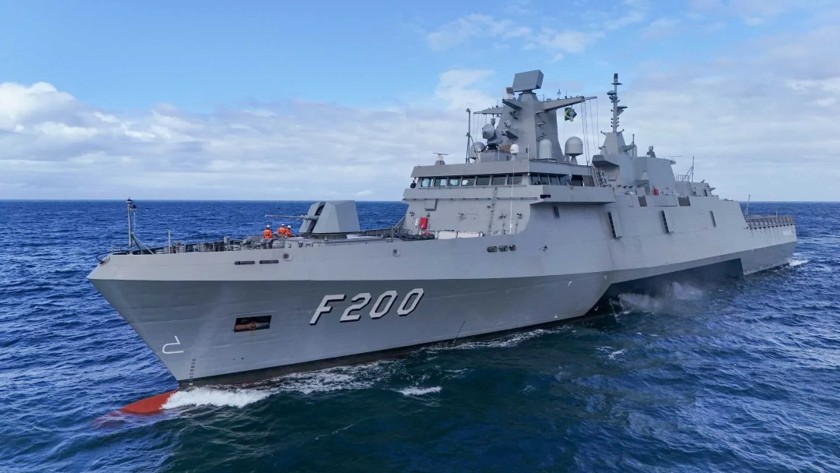
The frigate is the first of eight ships planned under the PFCT (Programa Fragatas Classe Tamandaré) programme, launched in 2017 to renew Brazil’s ageing surface combatants. The initiative follows the earlier PROSUPER programme, introduced in 2008 with the aim of significantly expanding and modernising the Brazilian Navy’s surface fleet before being suspended in 2016.
Under the PFCT programme, the new ships are intended to replace the long-serving Niterói-class frigates, five of which have been in service since 1977. They will also replace the frigate Rademaker (F49), formerly HMS Battleaxe, which has served in the Brazilian Navy since 1997.
The project was developed through an international competition launched in 2017 that included four consortium finalists. The winning proposal was submitted by the German shipbuilding company thyssenkrupp Marine Systems, which offered a design based on the MEKO A100 platform adapted to Brazilian requirements.
The selection of the German design was announced on 28 March 2019. A contract valued at approximately €2 billion was subsequently signed on 6 March 2020 to begin construction of the new class of frigates.
To implement the programme, the Águas Azuis consortium was established, bringing together thyssenkrupp Marine Systems, Embraer Defense & Security and Atech. The keel of the future Tamandaré was laid on 24 March 2023, while the ship was christened and launched on 9 August 2024.
The Tamandaré-class frigate has a full displacement of around 3,500 tonnes and measures 107.2 metres in length, with a beam of 16 metres and a draught of 5.2 metres. Its propulsion system follows a CODAD configuration with four MAN V12 28/33D diesel engines, each producing 5,460 kW of power and driving two shafts through reduction gearboxes.
This propulsion arrangement enables the vessel to reach a maximum speed of 25.5 knots. At an economical speed of 14 knots, the ship has a range of approximately 5,500 nautical miles.
Electrical power is generated by four Caterpillar C32 generator sets rated at 1,417 kW each. The ship’s combat management system is the ATLAS Naval Combat System supplied by Atlas Elektronik.
The main radar sensor is the Hensoldt TRS-4D three-dimensional radar operating in the G-band with a rotating antenna configuration. Fire control is provided by the Thales STIR 1.2 Mk2 system, while underwater detection is supported by the Atlas Elektronik ASO 713 hull-mounted sonar.
Electronic protection is provided by the Omnisys MAGE Defensor ET/SLR-1 Mk3 electronic warfare system along with Terma C-Guard decoy launchers. These systems contribute to the vessel’s defensive capabilities against various threats.
The frigate’s main gun armament consists of a single Leonardo 76 mm/62 Super Rapid naval gun. Additional close-range armament includes one Rheinmetall Sea Snake 30 mm remote weapon station and two FN Herstal Sea DeFNder 12.7 mm systems.
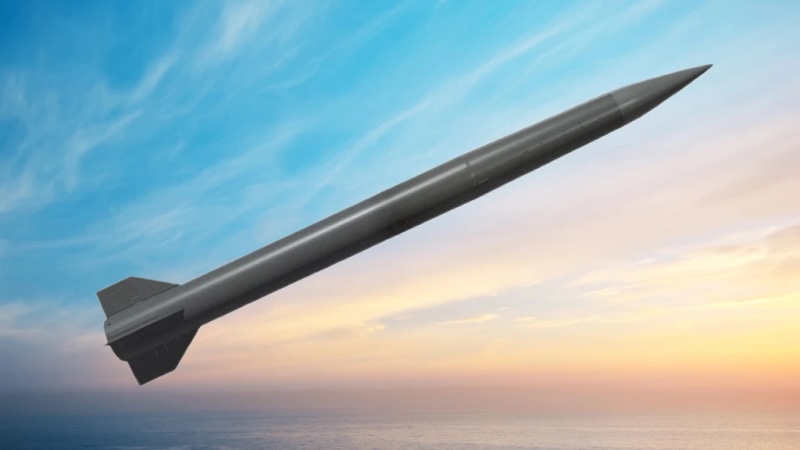
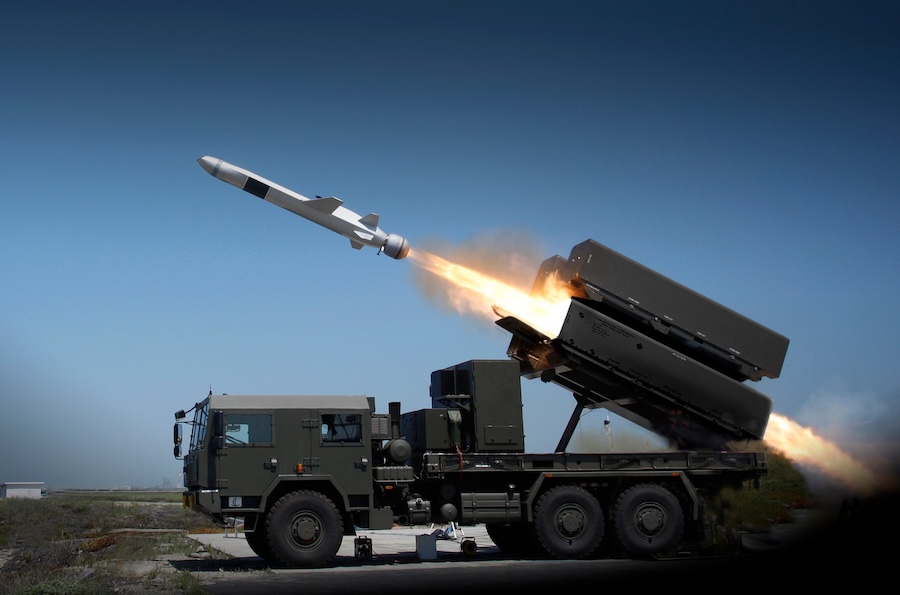
The ship’s primary offensive capability is provided by MANSUP-ER anti-ship missiles, also known as AV-RE40, with eight launch containers installed behind the main mast. Air defence will be provided by MBDA Sea Ceptor missiles launched from a 12-cell vertical launch system.
Anti-submarine warfare capabilities include two triple SEA TLS-TT torpedo launchers firing 324 mm lightweight torpedoes. For operations at greater distances, the ship will operate a medium helicopter such as the Leonardo Super Lynx Mk21B or the Lockheed Martin S-70B Seahawk.
The Tamandaré-class frigate will operate with a crew of approximately 130 personnel. Its commissioning represents a key step in Brazil’s long-term effort to modernise the Marinha do Brasil and strengthen its maritime security capabilities.