

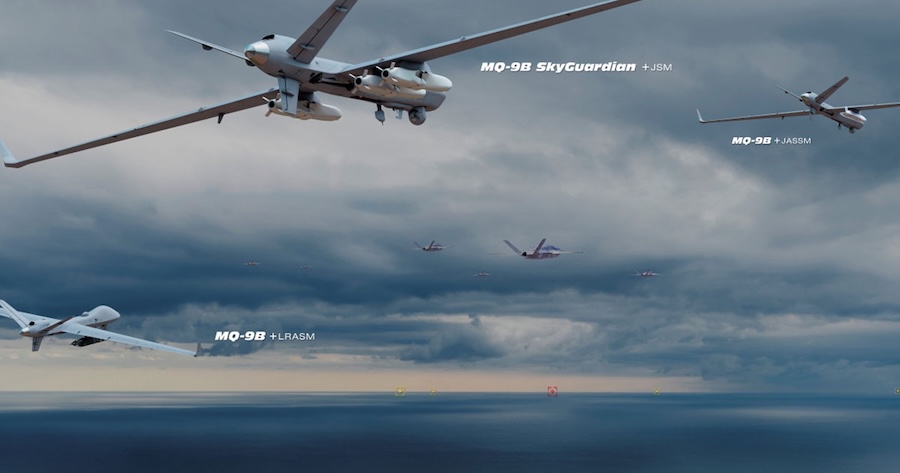
The company said the new capability responds to growing demand from air and naval forces for platforms able to strike targets over wide operational areas. This requirement is particularly relevant across large maritime and air domains such as those found in the Western Pacific.
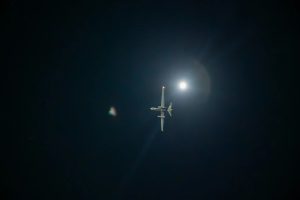
GA-ASI engineers have begun adapting the aircraft’s payload capacity, stability and range to support the integration of long-range standoff weapons. The work focuses on enabling the MQ-9B platform to carry a new generation of precision munitions while maintaining endurance and operational persistence.
GA-ASI President David R. Alexander said the aircraft’s performance has already demonstrated strong operational value. “MQ-9B continues to impress in the field and we keep adding to our global customer list.”
Alexander also highlighted the company’s intention to broaden the platform’s mission profile. “We want to continue to build value in the aircraft by expanding into more missions.”
He noted that the aircraft’s payload capacity supports the addition of new weapon systems. “MQ-9B features extraordinary payload capacity, so it only makes sense to add to our mission sets with the ability to carry long-range weapons.”
According to the company, performance analysis has already confirmed that the aircraft can carry long-range weapons while maintaining endurance and persistence over extended distances. Engineers are continuing to refine technical integration and operational concepts for the system.
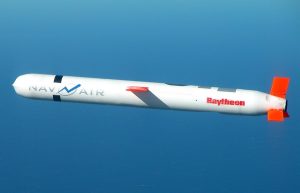
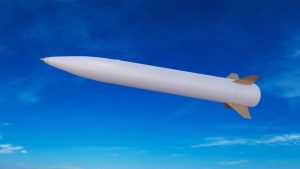
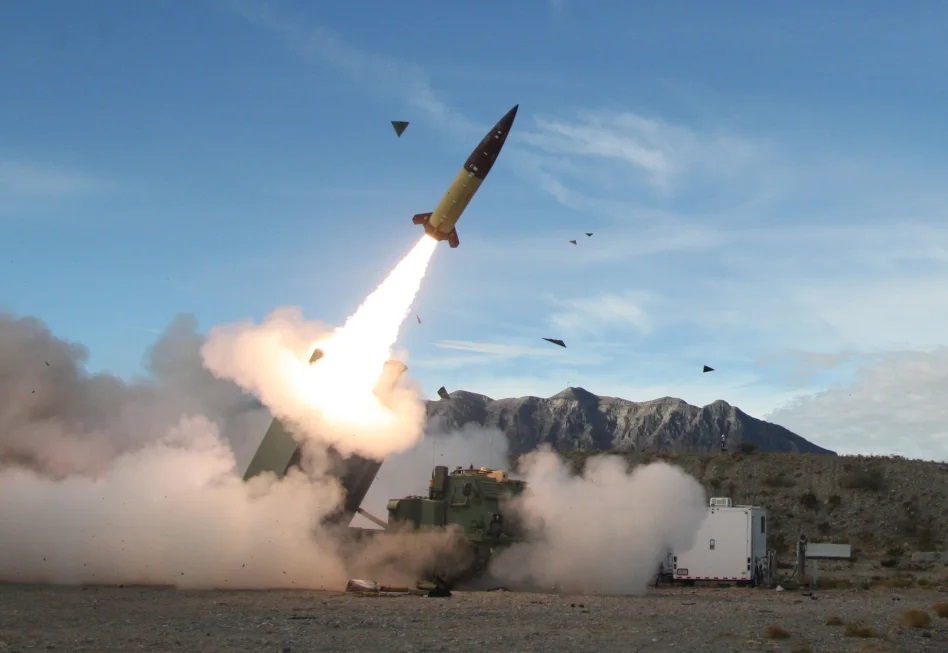
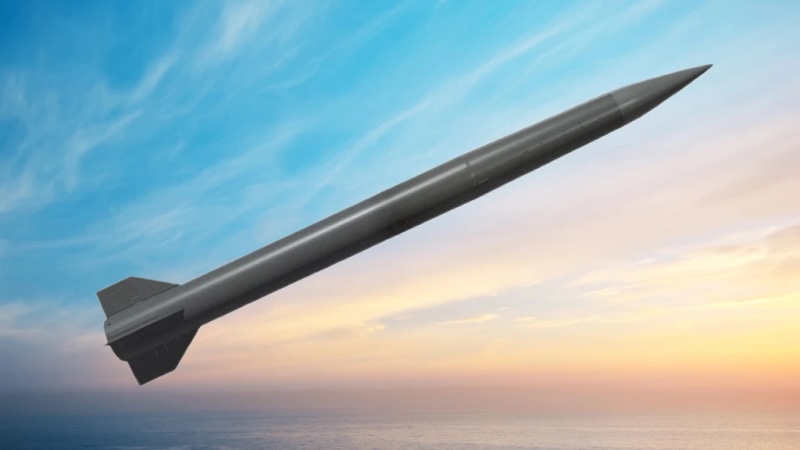
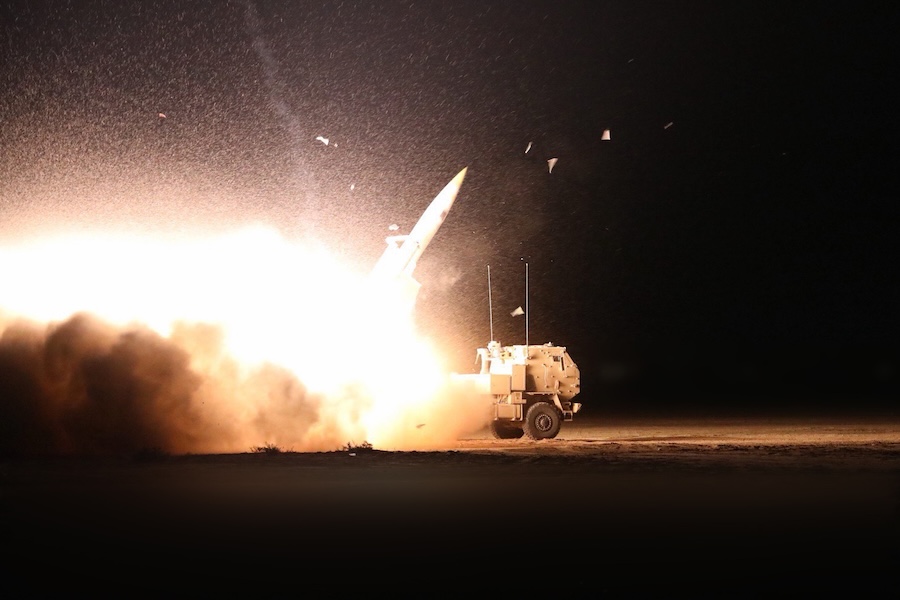
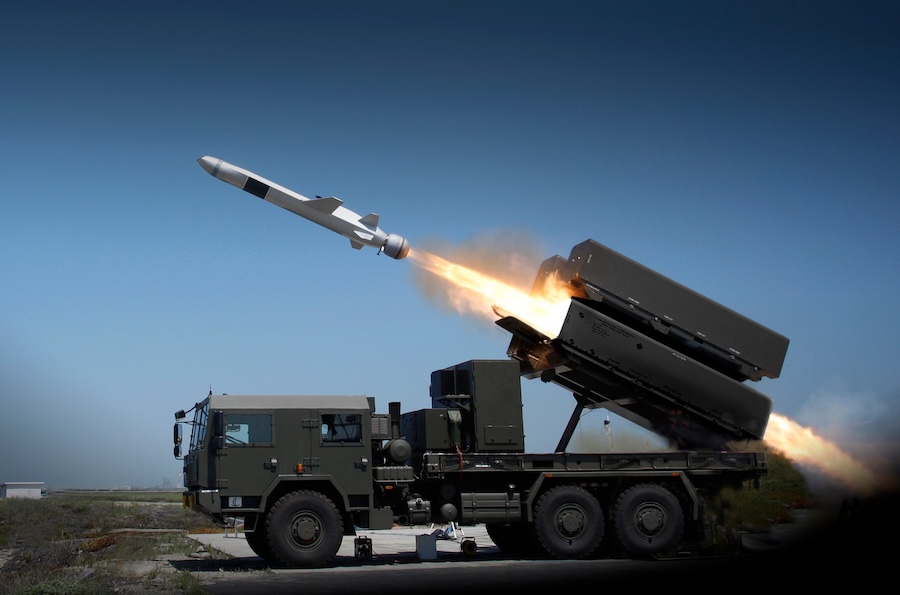
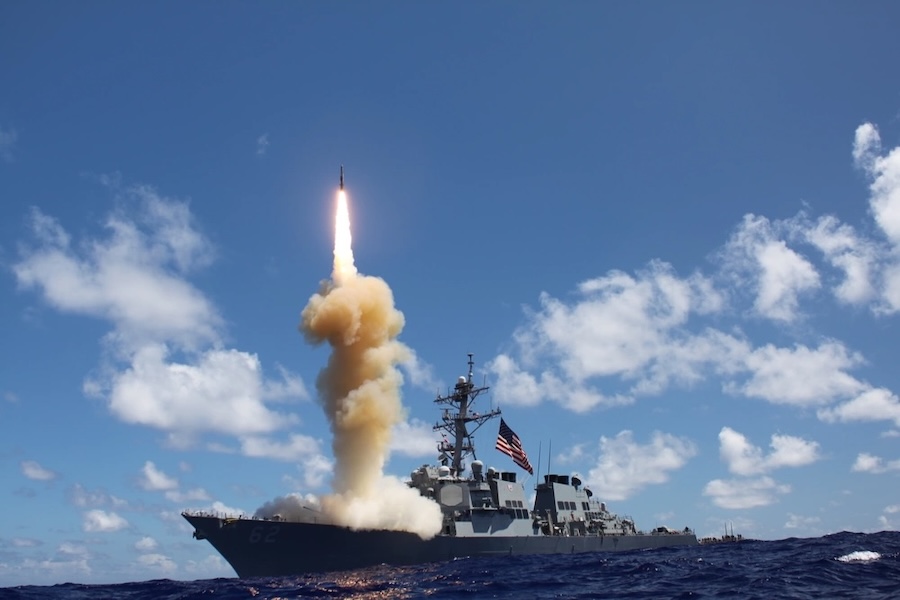
Potential weapons under consideration include the Lockheed Martin Joint Air-to-Surface Standoff Missile (JASSM), the Long-Range Anti-Ship Missile (LRASM), and the Joint Strike Missile developed by Kongsberg and Raytheon. These weapons are designed to engage land and maritime targets from long distances.
GA-ASI said at least one of the weapons could be flight tested on the MQ-9B platform as early as 2026. Such testing would validate the aircraft’s ability to operate with extended-range precision strike capabilities.
A potential mission profile could involve MQ-9B aircraft launching from friendly bases across the Western or Southern Pacific. The drones could then fly to a holding position outside an adversary’s engagement zone and remain on station until tasked to launch weapons in coordination with U.S. or allied operations.
The MQ-9B family includes the SkyGuardian and SeaGuardian models, as well as the Protector RG Mk1 currently being delivered to the Royal Air Force. The platform has also secured procurement contracts with Belgium, Canada, Denmark, Germany, India, Japan, Poland, Taiwan and the U.S. Air Force in support of Special Operations Command.
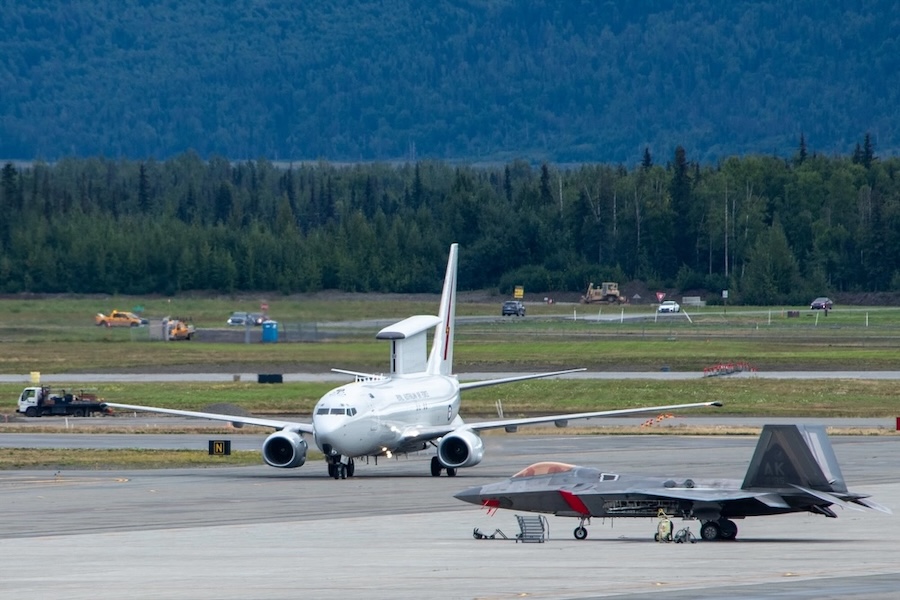
The aircraft has also participated in several U.S. Navy exercises, including Northern Edge, Integrated Battle Problem, RIMPAC and Group Sail. These activities demonstrate the platform’s growing role in joint and multinational operations.