

Rep. Rob Wittman, chairman of the House Armed Services Committee’s tactical air and land forces subcommittee, raised the issue during remarks at the McAleese Defense Programs Conference on March 17. He said maintaining current aircraft will be essential until the new systems become available.
“The question then becomes, what do we do in the meantime?” Wittman said. “We have to maintain a fleet of [Navy] F-18s, and then we have to maintain the F-22 [Raptors]. … That’s the only way we create that bridge to the sixth-generation aircraft.”
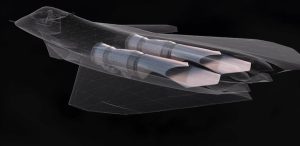
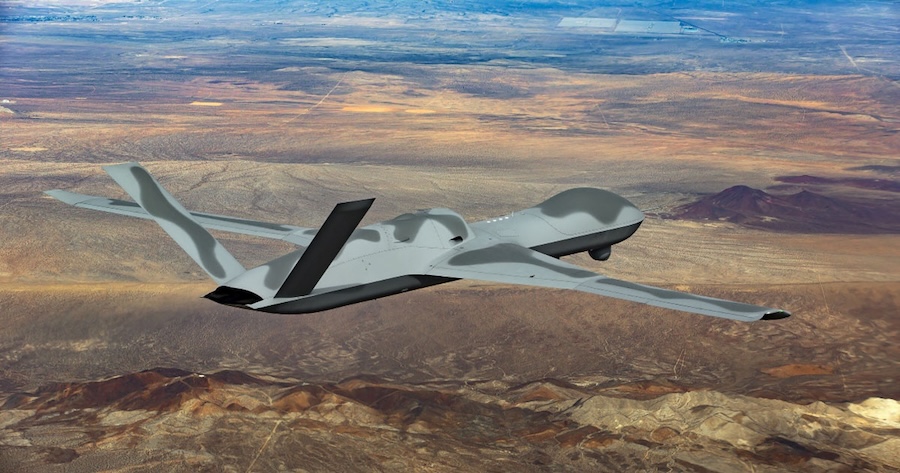
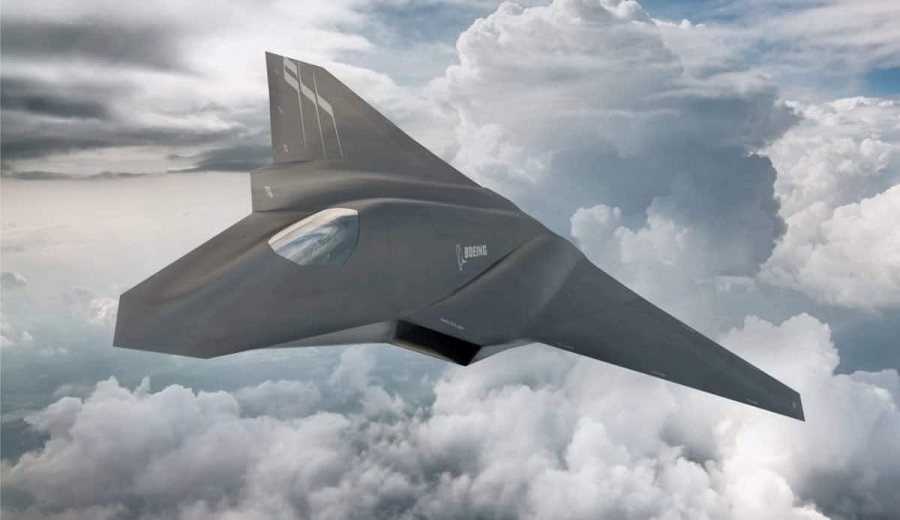
The Boeing-developed F-47 is intended to replace the Air Force’s fleet of roughly 185 F-22 Raptor fighters sometime in the next decade. The aircraft is expected to feature advanced stealth characteristics, a combat radius exceeding 1,000 nautical miles, speeds above Mach 2 and the ability to operate alongside semi-autonomous Collaborative Combat Aircraft drones.
Air Force leaders have previously stated an ambitious goal of conducting the F-47’s first flight by 2028. That would occur roughly three years after Boeing received the contract to develop the aircraft in March 2025.
By comparison, the F-35 Joint Strike Fighter first flew in 2006, five years after Lockheed Martin won the development contract. The earlier program timeline highlights the accelerated schedule the Air Force hopes to achieve with the F-47.
Air Force Gen. Dale White, who oversees several major weapons programs as Direct Reporting Portfolio Manager for Critical Major Weapon Systems, declined to discuss the expected development stage of the aircraft in the mid-2030s. However, he said the planned 2028 first flight objective remains unchanged.
White expressed confidence in the overall progress of the program. He also noted that the Air Force is taking a more active role in shaping the government reference architecture for the aircraft.
A government reference architecture serves as a framework guiding design, development, production and sustainment processes. According to White, this approach is intended to ensure greater flexibility and competition during the program’s lifecycle.
“We needed to bring the government back into engineering,” White said. “We had outsourced engineering for so long. And so being able to do that, actually have a government reference architecture in partnership with industry … allowed us to have more continuous competition, avoiding vendor lock.”
“But at the same time, we now have a contract by which we can evolve capability,” he added. The shift toward a government-controlled architecture reflects lessons learned from earlier acquisition programs.
Former Air Force Chief of Staff Gen. David Allvin told lawmakers in May 2025 that the service sought greater control over mission systems and critical data during the F-47 program. The move was partly aimed at avoiding issues experienced during the F-35 acquisition, when the prime contractor retained control of key technical data.
White said industry collaboration played an essential role in developing the architecture supporting the aircraft. The resulting framework may also benefit other defense programs in the future.
“That’s going to be the foundation of our future,” White said. “The architecture we use on CCA, we use on F-47, [and] the other services are leveraging it. So you’re going to see more of it.”
Source: Air & Space Forces Magazine.