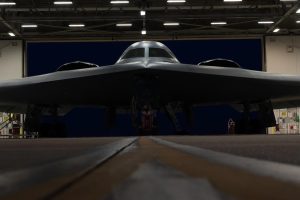
Adm. Richard Correll, head of U.S. Strategic Command, told lawmakers that investments are already being made to boost production rates. He said a decision on a second production line has not yet been taken but remains under consideration.
“There are, of course, investments that have been made to increase the production rate and to potentially open a second production line,” Correll told the House Armed Services Committee’s subcommittee on strategic forces. “That decision has yet to be made, but clearly the B-21 represents a really significant capability both from a conventional and a nuclear perspective.”
U.S. Strategic Command continues to support expanding the planned fleet of B-21 bombers to 145 aircraft. This position aligns with earlier recommendations from Air Force leadership and has gained backing from members of Congress.
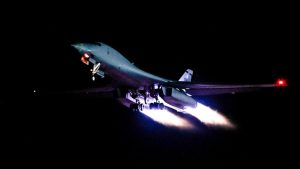
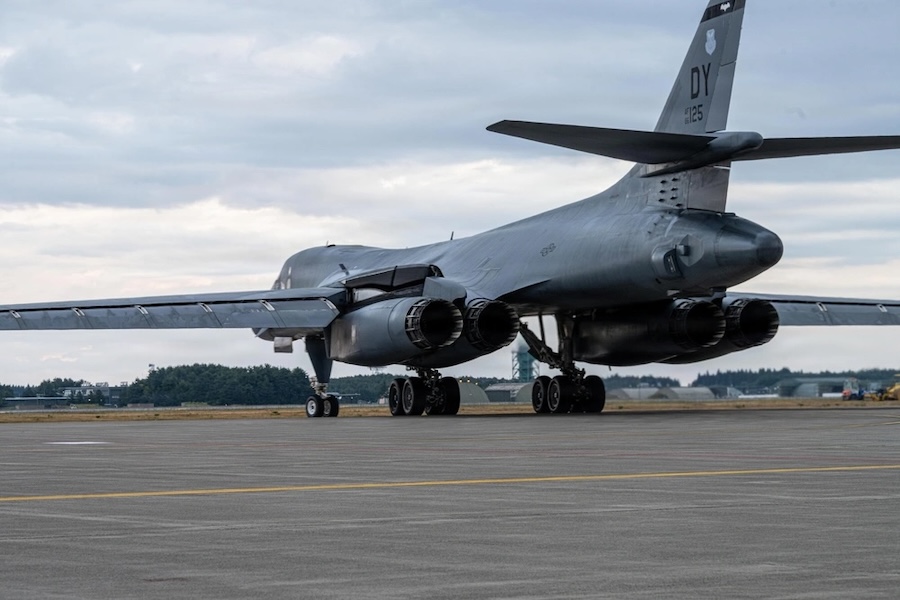
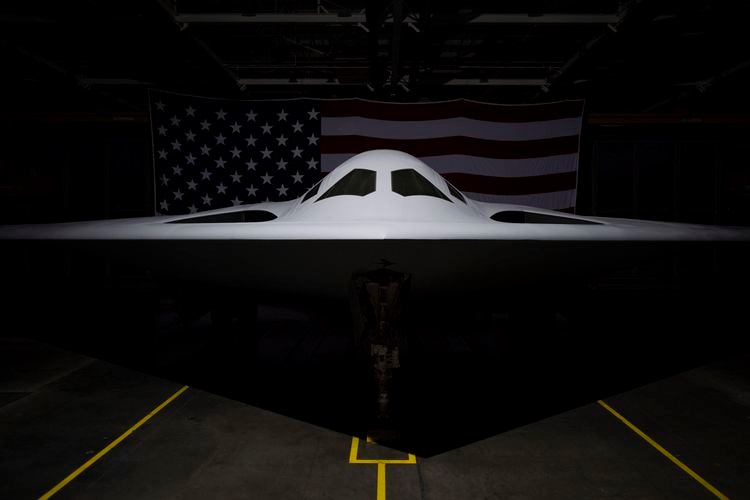
The current Air Force program of record calls for at least 100 B-21 aircraft, which are being built by Northrop Grumman at Air Force Plant 42 in Palmdale, California. The bombers are intended to replace aging B-1 Lancer and B-2 Spirit fleets in the 2030s.
Two B-21 aircraft are currently undergoing flight testing at Edwards Air Force Base in California. The first operational aircraft is scheduled for delivery to Ellsworth Air Force Base, South Dakota, in 2027.
The U.S. Air Force recently announced a 25 percent increase in B-21 production capacity using funding provided under last year’s One Big Beautiful Bill Act. However, officials have not specified when this increased capacity will translate into higher production output.
Gen. Dale White, the Air Force’s Direct Reporting Portfolio Manager for Critical Major Weapon Systems, said the service remains committed to its baseline fleet size while maintaining flexibility. “Allow us that decision space that we didn’t have before,” White said, referring to the increased production capacity.
White described the $4.5 billion investment as “a very sound investment [that] keeps the program moving in the right direction.” He did not comment on the potential establishment of a second production line.
Support for expanding the B-21 fleet has also emerged in Congress, with lawmakers from both parties endorsing the need for up to 145 aircraft. The debate reflects broader concerns about maintaining long-range strike capabilities in an evolving security environment.
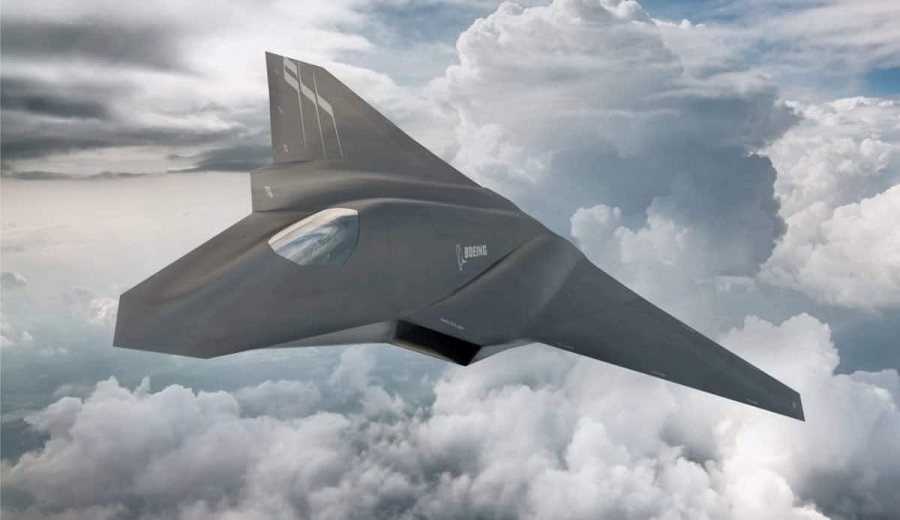
Correll emphasised the strategic importance of the B-21’s advanced capabilities, including its ability to operate in contested environments and deliver both conventional and nuclear payloads. “For the joint force, it’s a sixth-generation stealth capability with … stand-off precision distance strike, or stand-in precision strike, and the ability to maneuver within a contested electromagnetic spectrum,” he said.
He added that accelerating deployment of the aircraft would strengthen the United States’ ability to respond to a range of threats. “The sooner we field that capability and the sooner we ramp up in delivery of that capability, the stronger position that puts the joint force in, to address the strategic environment, from deterrence to any spectrum of conflict that we would contemplate.”
Source: Air & Space Forces Magazine.