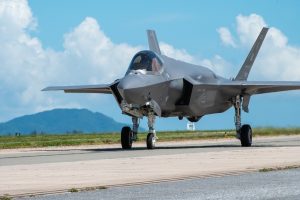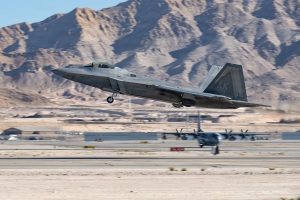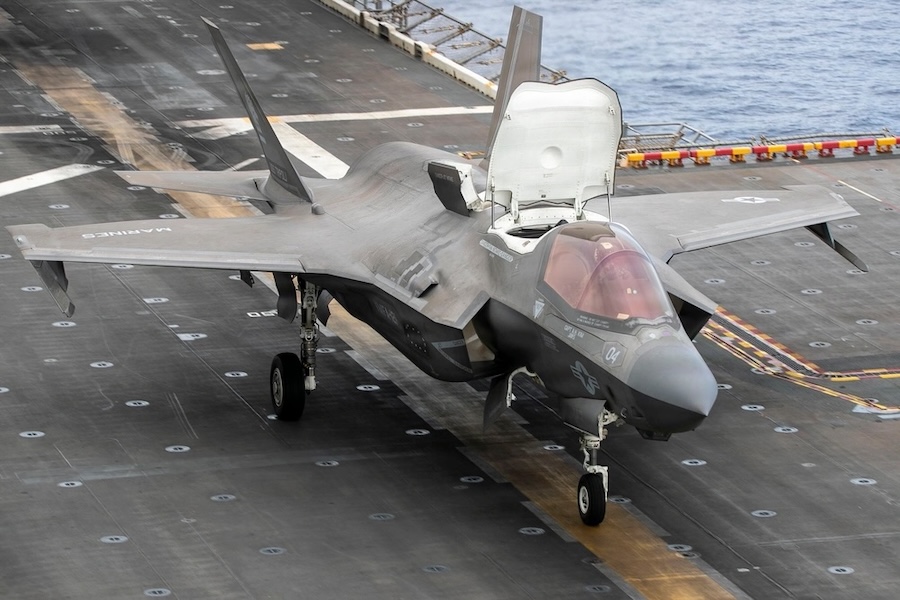

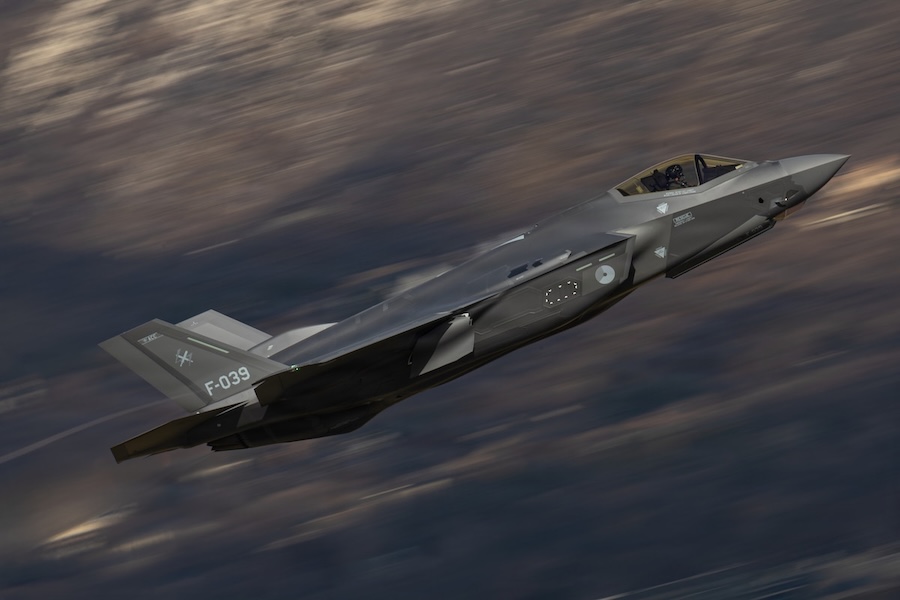
The exercise is focused on improving combat readiness in a realistic and contested environment. It also aims to deepen operational integration between NATO allies operating the F-35 platform.
“The primary goals for the exercise are to practice in a realistic threat environment, in close cooperation with our U.S. partners to prepare for complex combat operations,” said Lt. Col. “Swinger,” commander of 313 Squadron. “There is a high emphasis on having the U.S. and Dutch F-35s fly in an integrated fashion.”
Training takes place over the Utah Test and Training Range, which provides advanced threat simulations and terrain conditions not available in the Netherlands. The range allows pilots to fully employ the aircraft’s capabilities against realistic scenarios.
“The range complex out here provides an excellent replication of the threat systems that we are primarily designed to take out,” Swinger said. “Our pilots are being punished for their mistakes if they do something wrong. That combination makes it very useful, because it’s both a confidence builder but also a reality check on which margins we actually have and why we fly our tactics.”
Both U.S. and Dutch units are conducting high-tempo operations, generating two lines of sorties daily with a mix of live and inert munitions. The exercise is designed to test personnel, aircraft and support systems under sustained operational pressure.
“Are people ready? Do we have the proper material in place? Are the jets able to keep up with that pace? It’s a very steep learning curve for our squadron to be able to accomplish that in a month,” Swinger said.
The deployment also provides valuable experience for less-experienced pilots within the Dutch contingent. Officials said the scale and intensity of the exercise are intended to accelerate skill development.
“I think when they return from this exercise, they will have a huge confidence boost in both the platform as well as their individual skills,” Swinger said. “The complexity, that pacing, is imperative to get our young guys up to the right level to be ready for full-scale combat operations.”
A key focus of the exercise is achieving full operational integration rather than simply coordinating flights. The shared F-35 platform enables joint planning, execution and debriefing among allied units.
“We plan together, we brief together, we fly together, and then we come back home, and then we debrief together,” Swinger said. “What we are achieving over here is we are flying Dutch and U.S. jets combined in this complex environment, and we are bringing effects to the fight together.”
U.S. officials said the presence of allied aircraft enhances the realism and scale of training for American units. The integration benefits both sides by exposing pilots to different tactics and operational approaches.
“It is a huge win for the Dutch to come out here,” said Maj. Cody Bown, deputy commander of the 388th Operations Group. “While it is a big effort for both the 75th Air Base Wing and the 388th to support another unit’s deployment, it has also been a phenomenal help to our Airmen as well, because now our training includes more aircraft, different pilots.”
“We’re getting more realistic scenarios that helps all of the pilots from both the Dutch side and the U.S. side be better prepared,” Bown added.
Dutch officials said the deployment aims to ensure their forces can sustain high-tempo operations and integrate seamlessly with key allies. They also highlighted the level of support provided by U.S. personnel during the exercise.
“To me, it’s been second to none,” Swinger said. “I’ve done a lot of international deployments, and I’ve never seen the level of support that we’ve received here. I am very impressed and very grateful.”