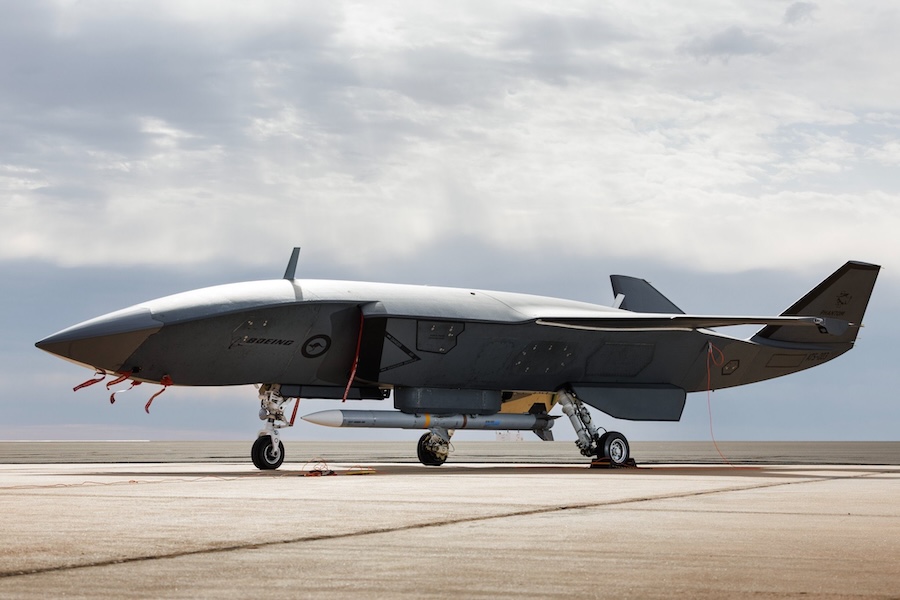
The MQ-28 Ghost Bat, developed by Boeing in Australia, has completed more than 150 flights and is designed for use alongside crewed aircraft. It is intended to act as a force multiplier by providing additional combat mass in contested airspace.
The aircraft features autonomous capabilities and a modular design that supports a range of missions. These include reconnaissance, electronic warfare and the integration of weapons systems.
Under the agreement, Rheinmetall will act as system integrator for the MQ-28 in Germany. The company will oversee integration into existing and future Bundeswehr command and weapon systems, as well as adaptation to national requirements.
Rheinmetall will also be responsible for operational, maintenance and logistical support. The partnership is expected to establish an industrial base in Germany and Europe to support the programme.
“With Boeing Defence Australia as a partner, we are laying the groundwork to optimally tailor the MQ-28 to the Bundeswehr’s requirements,” said Armin Papperger.
“As a system integrator, we ensure that integration, operation, and further development come from a single source while simultaneously strengthening industrial value creation in the form of an industrial hub in Germany and Europe,” he added.
“We see revenue potential for Rheinmetall in the range of three-digit millions of euros,” Papperger said.
The companies said the partnership is designed to ensure a high level of national value creation and supply security in Germany. It will also support the development of a domestic digital environment for testing and validating new capabilities.
Engineers from Germany and Australia are expected to collaborate on software and hardware development. The open and modular system architecture of the MQ-28 allows for continuous upgrades and rapid capability evolution.
“This is not just a partnership between our companies but between two great countries, Germany and Australia, who share a similar strategy for integrating collaborative combat aircraft into their air forces,” said Brendan Nelson.
“Our partnership will see Germany’s industrial base leverage years of Australian innovation and investment to field and evolve MQ-28 for the Bundeswehr,” he added.
Officials said the collaboration is expected to reduce the time required to deploy a collaborative combat aircraft capability. The programme also aims to increase German industrial participation on the platform over time.
The MQ-28 has been developed over eight years and is described as a mature collaborative combat aircraft solution. It has already demonstrated operational capabilities, including the autonomous engagement and destruction of an airborne target.
Rheinmetall said the partnership supports broader efforts to modernise Germany’s air capabilities. The programme is aligned with the Bundeswehr’s plans to introduce advanced unmanned systems into its force structure by the end of the decade.