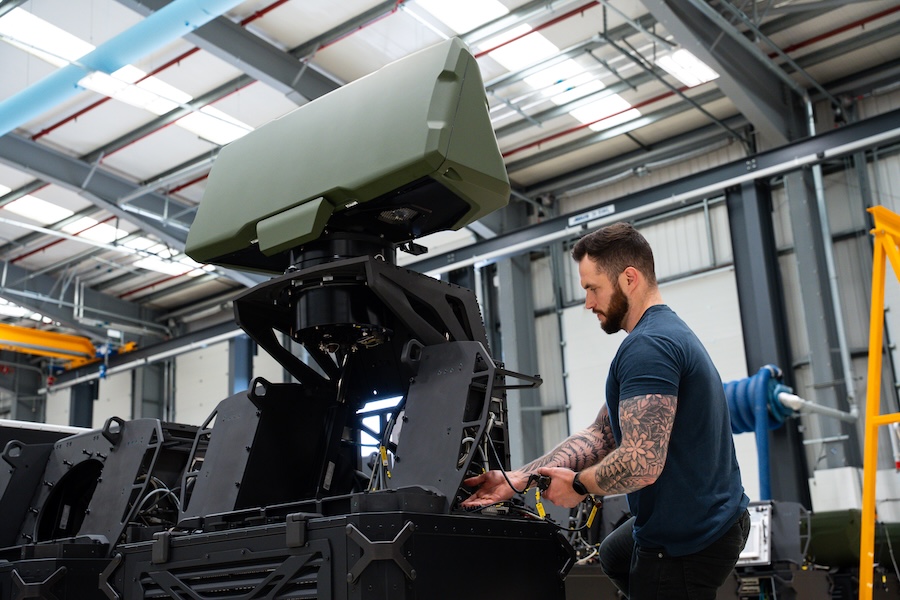


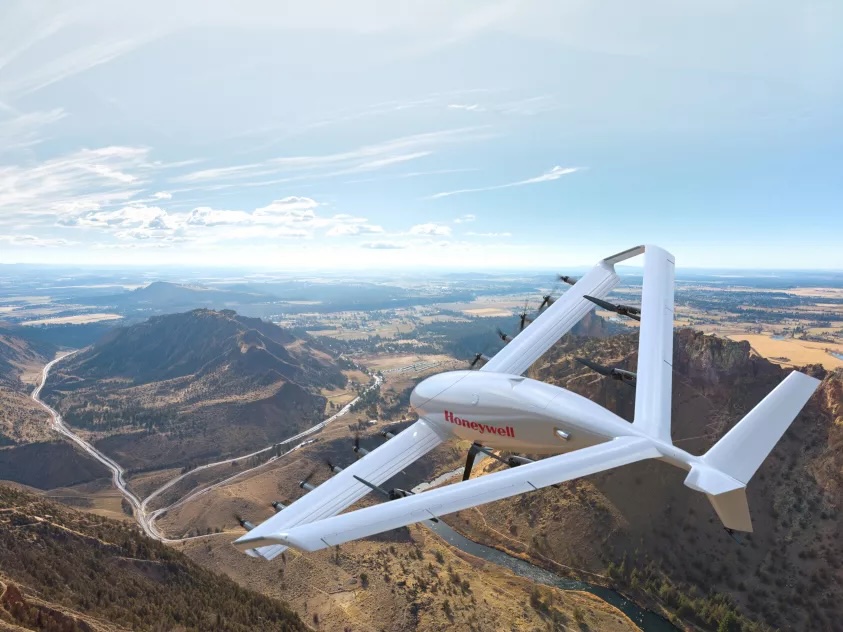
The effort builds on more than a year of joint development and systems integration work between the two companies. It focuses on adapting Honeywell’s Stationary and Mobile UAS Reveal and Intercept Autonomous Airborne platform for deployment on Odys Aviation’s long-range Laila unmanned aerial vehicle.
The collaboration aligns with broader U.S. national objectives to strengthen leadership in advanced aviation and accelerate the deployment of domestically built drone technologies. The system is intended for both defense applications and the protection of infrastructure such as refineries, pipelines and offshore production facilities.
The combined Laila-SAMURAI system is designed to create a new defensive layer between ground-based sensors and higher-end missile defense systems. This approach is intended to reduce reliance on more costly kinetic defenses while extending coverage across wide operational areas.
“SAMURAI delivers critical counter-UAS capabilities with proven reliability, scalability and seamless integration into existing defense architectures. By leveraging Honeywell’s long history in avionics, sensors and defense systems, we are enabling C-UAS capabilities that protect farther, respond faster and operate with minimal downtime.” said Matt Milas, president, Defense and Space, Honeywell Aerospace.
James Dorris, CEO of Odys Aviation, said the changing nature of drone threats is reshaping air defense requirements. “Drone threats have fundamentally changed the economics and operational requirements of air defense,” Dorris said.
“Critical infrastructure and forward-operating locations require persistent protection across large areas and the ability to engage threats at the horizon long before they’re at the doorstep. By combining Honeywell’s SAMURAI system with the endurance, runway independence and onboard power capability of Laila, we’re introducing a new airborne defense layer designed for today and into the future.”
Laila is set to become the first airborne platform to deploy the SAMURAI system and features a hybrid propulsion system compatible with Jet A, Jet A-1 and JP-8 fuels. The aircraft can remain airborne for up to eight hours and cover a range of approximately 450 miles.
The platform is designed to operate without dedicated charging infrastructure, enabling rapid deployment in remote, expeditionary and offshore environments. This capability supports flexible use in areas where traditional logistics may be limited.
The SAMURAI system is built using model-based systems engineering and offers a modular, turnkey solution. It incorporates a range of customer-selected sensors and effectors while adhering to Modular Open Systems Approach standards to ensure interoperability and long-term sustainment.