The Romanian government has shown growing unease over increased price offers in major procurement programmes financed under the EU’s SAFE (Security Action for Europe) mechanism.
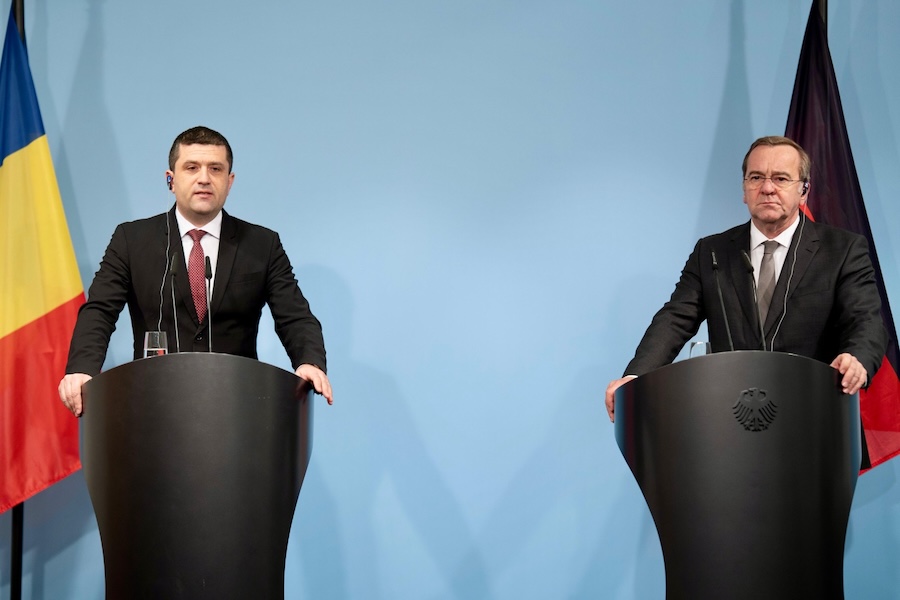
Speaking at the Economist Romania Government Roundtable, Defence Minister Radu Miruță said some suppliers had raised previously quoted prices by as much as 30% at the point of contract signature, describing the move as creating pressure on the government ahead of the May 31 deadline.
“When we started discussions around SAFE, there were some private ammunition producers who announced a price. Now, when we are about to sign the contracts, they are coming back to us with about 30% more,” Miruță was quoted as saying. “The additional 30% is on top of what they announced on their own initiative. We will not accept this.”
He stressed fair involvement and transparency from the private sector, saying “The ministry will not give in to the pressure of time. The private sector cannot push us to accept higher prices just because we have to sign the contract by the end of May 2026.”
While the minister did not identify specific suppliers, multiple political and military sources familiar with the process indicate that Germany’s Rheinmetall — engaged across several Romanian defence modernization programmes — is among those associated with similar pricing developments.
According to those sources, Rheinmetall-linked proposals are understood to reflect comparable increases across multiple SAFE projects.
On top of the ammunition programme, the German manufacturer is said to have proposed pricing more than 30% above initial expectations in other major programmes.

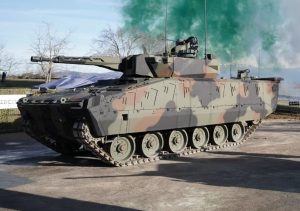
In Romania’s Infantry Fighting Vehicle (IFV) programme — a €3 billion effort to replace legacy platforms with approximately 298 tracked vehicles — Rheinmetall is said to have proposed pricing more than 30% above initial expectations, potentially adding close to €1 billion to the total programme cost.
Earlier in the process, there were suspicions that Rheinmetall had sought to downgrade certain technical requirements, such as the performance of the anti-tank guided missile.
In addition, in relation to other local investment projects, Rheinmetall is also understood to have requested financial support from the Romanian government, further adding to concerns over the balance of commitments and obligations within such partnerships.
Defence experts warn that such supplier-driven negotiations stemmed from closed-door consultations, which risks weakening the government’s negotiating leverage, ultimately undermining fairness and transparency in the procurement process.
“If a supplier is proposing prices significantly above the baseline budget, it raises serious questions about the process behind the negotiations,” Dan Grecu, a retired major general of the Romanian Armed Forces, said. “In major defence procurements of this scale, it is fundamental to compare the performance and pricing of multiple proven platforms.”
He emphasized the need for soliciting proposals from multiple suppliers and conducting objective, comparative evaluations to ensure outcomes aligned with national interests.
“Excluding competition at an early stage significantly weakens the government’s position, as it limits the ability to benchmark offers and maintain leverage throughout the process,” he noted.
SAFE procurement structure under fire
This is largely due to the way the framework has evolved into a more centralized system, allowing non-competitive, direct contracting with selected suppliers, effectively creating a basis to bypass open and competitive procurement processes.
Recent proposals to further amend the SAFE framework have added to these concerns. Among the changes under discussion are provisions that would allow authorities to designate a supplier in advance and structure cooperation across multiple programmes, potentially enabling outcomes to be shaped prior to full competitive evaluation.
In parallel, mechanisms allowing localisation requirements to be aggregated across programmes — rather than applied on a project-by-project basis — could weaken the level of domestic industrial participation in individual contracts, even if overall thresholds appear to be met.
Additional provisions under consideration would allow post-award adjustments to contract values, including scenarios where prices increase while quantities are reduced, raising further questions about cost discipline and procurement integrity.
Public sentiment appears to be moving in the opposite direction.
According to recent survey data from INSCOP Research, nearly 70% of Romanians believe defence procurement should prioritise domestic production, while more than 75% support the use of SAFE funds to generate tangible economic benefits such as job creation and industrial development — highlighting growing expectations that such programmes deliver not only military capability, but also national economic value.
This contrast is particularly evident in the IFV programme. Rheinmetall’s Lynx platform is currently produced at its facility in Hungary, raising questions about the extent to which such an approach would deliver meaningful industrial benefits within Romania compared to proposals centered on domestic production and localisation.