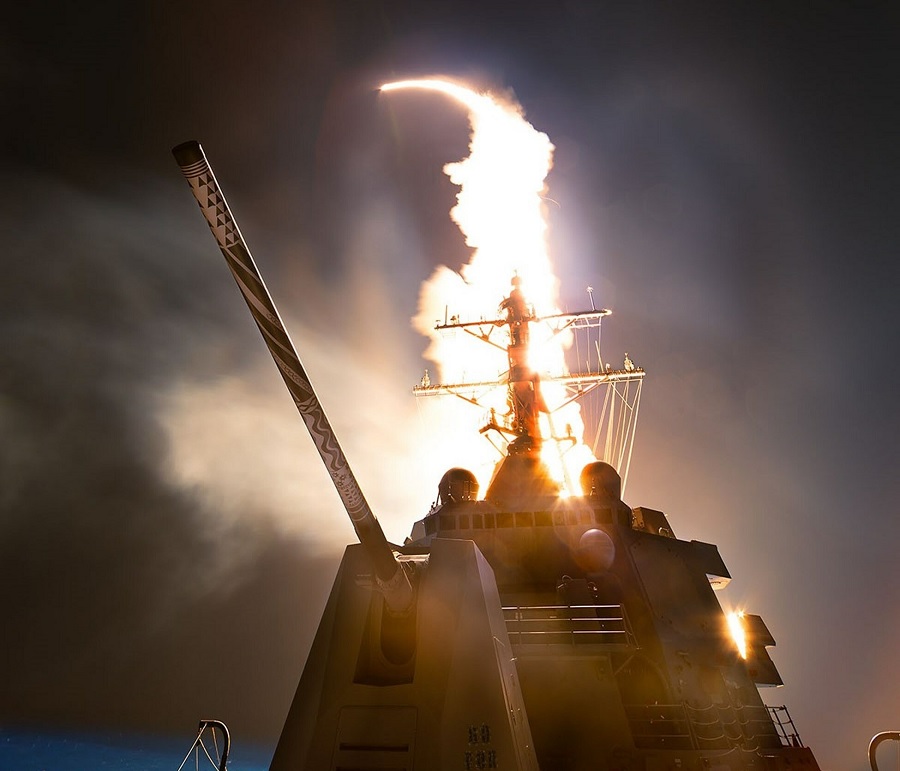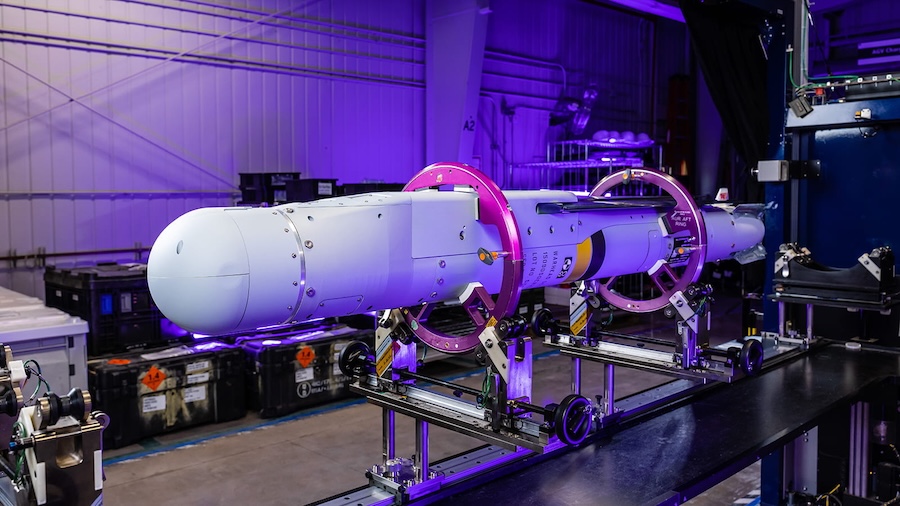



The interceptor is designed to engage targets in space under extreme conditions. “Imagine the precision needed to hit a bullet with a bullet – in space – while both weapons fly at hypersonic speeds,” the company stated, describing the operational concept behind NGI.
Lockheed Martin said the system combines speed, precision and adaptability to address evolving threats. It added that NGI integrates advanced technologies with a modular design intended to support long-term use.
A central feature of NGI is its sensor suite. The company said the interceptor offers “the sharpest ‘eye in the sky’ technology available anywhere in the world,” enabling it to detect and track threats with high accuracy.
These sensors are integrated with ground-based radar and command-and-control systems to form a layered defence network. “Using advanced algorithms and on-board processing power, the system distinguishes between a real threat and a decoy autonomously, successfully guiding kill vehicles to lethal targets,” the company said.
Lockheed Martin noted that this capability improves response times and reliability. The system is designed to remain ahead of increasingly complex missile threats.
The NGI is also engineered for long-term readiness within launch silos. “NGI’s advanced capabilities don’t start in the air, they begin underground,” the company stated, highlighting its in-silo operational concept.
According to Lockheed Martin, the interceptor can remain mission-ready for decades due to advanced power systems, thermal management and robust structural design. This allows for rapid launch capability while enabling upgrades without removing the system from its silo.
The company said this approach reduces sustainment costs and extends operational effectiveness. It also allows engineers to maintain and improve the system over time.
Another key element is the use of a digital twin design. Lockheed Martin said it adopted a “born digital” approach, creating a virtual replica of the interceptor to support development and testing.
“With the NGI Simulator (‘NGISim’) we deliver an incredible digital simulator capable of anticipating system performance to be used by the ground segment for years to come by our customers,” the company stated. This allows operators to simulate real-world performance before physical testing takes place.
The digital model also provides detailed data on each component. Lockheed Martin said this enables continuous lifecycle analysis, improving maintenance and sustainability.
The interceptor’s kill vehicle technology is another defining feature. The system uses multiple kill vehicles to engage threats with kinetic energy rather than explosives.
“Sheer kinetic energy, not explosives, allows NGI to intercept threats at hypersonic speeds and neutralize them with pinpoint precision,” the company said. “It’s a real-life example of a ‘bullet hitting a bullet.’”
Unlike earlier systems that relied on a single interceptor, NGI can deploy multiple kill vehicles. Lockheed Martin said this enhances effectiveness against complex threats while maintaining cost efficiency.
The system is also designed for integration with broader missile defence networks. Lockheed Martin said NGI’s modular architecture enables compatibility with advanced radars, command systems and layered defence assets.
This integration is intended to provide a coordinated response to threats across multiple domains. The company added that NGI is built to support future defence frameworks without requiring major redesign.
“It’s not just a next-generation solution – it’s a future-proof one,” Lockheed Martin said. The company stated that NGI is intended to adapt to evolving threats while supporting long-term missile defence strategies.
Lockheed Martin said NGI is central to its approach to addressing emerging security challenges. The company added that the system combines advanced engineering with operational flexibility to strengthen missile defence capabilities.