
Initially known as the Special Projects Office, the programme shifted early from liquid-fuel missile concepts to solid propellant systems. This transition enabled the development of submarine-launched ballistic missiles and laid the foundation for future deterrence capabilities.
Under the leadership of Admiral William “Red” Raborn, the Navy adopted a strategy of deploying missiles aboard nuclear-powered submarines. This led to the conversion of USS Scorpion into USS George Washington, the first ballistic missile submarine.
The introduction of the “41 for Freedom” submarines established a dedicated fleet for strategic deterrence. These vessels were named after prominent figures in U.S. history and formed the backbone of early sea-based nuclear capability.
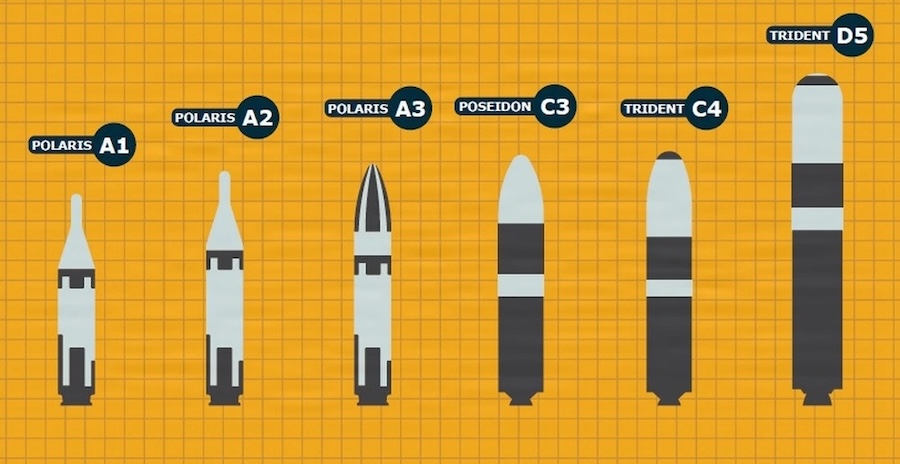
The first successful underwater launch of a ballistic missile occurred in 1960 near Cape Canaveral. This milestone followed the rapid development and deployment of the Polaris A1 missile within five years of the programme’s creation.
William Carritte, a former federal employee supporting the programme, highlighted the significance of the achievement. “This was new technology at the time – we had a new capability that was pretty spectacular,” he said.
“In five years, we had gone from not being able to produce a solid propellent missile to actually launching one [a missile] off a submerged submarine – something never done before,” Carritte added. He noted the pace of innovation during the early years.
The Polaris programme continued to evolve during the Cold War, driven by competition with the Soviet Union. Successive missile variants improved range, navigation and payload capabilities.
In 1962, the United States conducted Operation Frigate Bird, the only test involving a live nuclear warhead launched from a submarine. The test demonstrated the operational effectiveness of the Polaris missile system.
Subsequent developments introduced Poseidon and later Trident missile systems. These programmes sustained and expanded the Navy’s strategic deterrence capabilities over decades.
Carritte said changing national priorities influenced programme development during later phases. “The Polaris program was very well supported and funded,” he said.
“When C3 – the Poseidon – came along, things had changed around the country,” Carritte added. He noted that other priorities, including the Vietnam War and space programmes, competed for resources.
By the 1970s, many of the early ballistic missile submarines were upgraded to carry Poseidon missiles. This transition extended the operational life and capability of the fleet.
Carritte recalled the broader impact of the deterrence mission on society. “I remember in school there were some duck and cover drills,” he said.
“We’d go underneath our desks and cover our heads with our hands,” he added. He also referenced tensions during events such as the Cuban Missile Crisis.
Today, Strategic Systems Programs maintains the Trident II D5LE Strategic Weapon System aboard Ohio-class submarines. The programme is also preparing for its integration into the next-generation Columbia-class submarines.
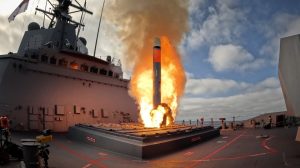
In addition, SSP is advancing new capabilities, including the sea-launched cruise missile and conventional prompt strike systems. These developments aim to enhance both nuclear and non-nuclear deterrence options.
The programme continues to focus on sustaining and modernising U.S. naval deterrence. Officials said its mission remains critical as the global security environment evolves.
Over seven decades, SSP has remained central to U.S. maritime strategy. Its work continues to support national defence through the development and maintenance of advanced strategic systems.