

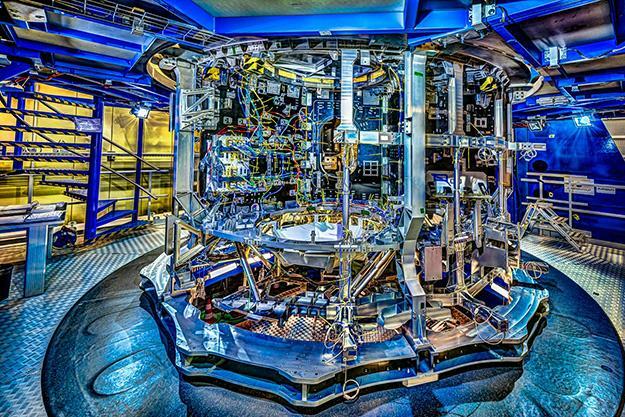
The Artemis II mission is scheduled to launch from Kennedy Space Center and will carry astronauts Reid Wiseman, Victor Glover, Christina Koch and Canadian Space Agency astronaut Jeremy Hansen on a 10-day journey around the Moon. Unlike the uncrewed Artemis I mission, this flight will rely directly on European-built systems to sustain human life in space.
“The transition from Artemis I to Artemis II is the shift from a test vehicle to a living space,” said Marc Steckling, Head of Earth Observation, Science and Space Exploration at Airbus. “When Reid Wiseman and his crew throttle up the ESM’s engines to leave Earth orbit, they are also trusting the work of hundreds of engineers across ten European nations to take them to the Moon and bring them home safely.”
The ESM-2 will provide propulsion, electrical power, thermal control and essential life-support resources, including oxygen and water, for the crew. Airbus said the module represents the operational debut of these life-support capabilities following structural validation during Artemis I.
The system carries 90 kilograms of oxygen and 240 kilograms of drinking water, which are supplied to the crew module to sustain astronauts during the mission. Its thermal control system is designed to regulate cabin conditions amid extreme temperature variations in deep space.
Power will be generated by four solar arrays producing 11.2 kilowatts, supporting both spacecraft systems and high-speed communications. A total of 33 engines will provide propulsion and manoeuvrability for the Orion spacecraft throughout the mission.
Artemis II will also introduce new technologies that rely on the ESM’s performance, including a high-speed laser-based communications system. The Orion Optical Communications System will enable data transmission rates of up to 260 megabits per second, allowing near real-time streaming of ultra-high-definition video from the Moon.
The mission will also include a manual piloting demonstration in Earth orbit, during which the crew will control the spacecraft using hand controllers. Commander Reid Wiseman and Pilot Victor Glover will operate the ESM’s reaction control thrusters to assess performance under human command before proceeding towards the Moon.
The spacecraft’s distance from the lunar surface will vary depending on launch timing, ranging between 6,400 and 9,000 kilometres. During the mission, the crew is expected to surpass the distance record from Earth set during the Apollo 13 mission when Orion passes behind the Moon.
Airbus said future modules are already in development to support upcoming Artemis missions. ESM-3 will test rendezvous and docking capabilities in 2027, while ESM-4, intended for Artemis IV, is undergoing final integration at Kennedy Space Center after its delivery in late 2025.
Additional modules, ESM-5 and ESM-6, are currently in production at Airbus facilities in Bremen, Germany, with planned deliveries in 2027 and 2028. The company said this production schedule supports NASA’s long-term plans for a sustained human presence on the Moon.
The European Service Module is a cylindrical structure approximately four metres in height and diameter, incorporating a main engine derived from the Space Shuttle programme, eight auxiliary engines and 24 thrusters for attitude control. Airbus serves as the prime contractor for ESA, with final assembly carried out in Bremen.