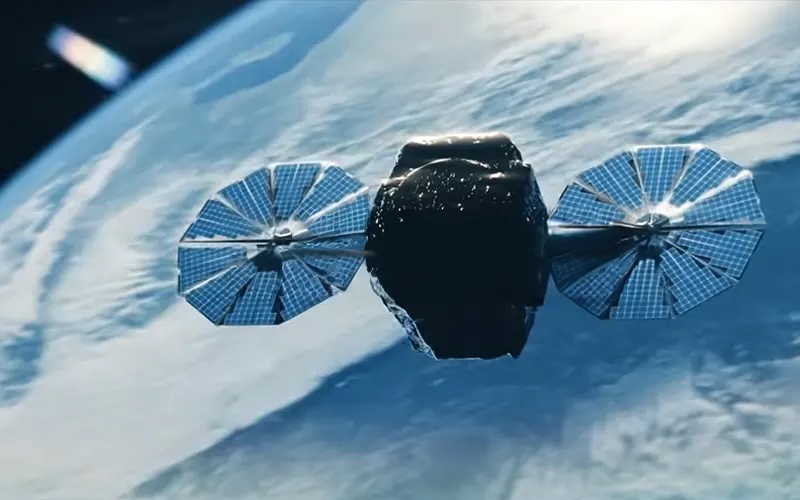
With the Pléiades Neo Next programme, Airbus is reinforcing its Earth observation capabilities and services to remain at the forefront of geospatial technologies. The programme will deliver new satellite assets and capabilities, including 20-cm-class native resolution.
“The Pléiades Neo Next programme builds on the success of our existing Pléiades Neo constellation which serves government and commercial customers around the world,” said Eric Even, Head of Space Digital at Airbus Defence and Space. “This programme will further enhance our standard of excellence in terms of quality, performance, and reliability to deliver images as well as geo-intelligence services and applications.”
The Pléiades Neo Next programme is funded, manufactured and operated by Airbus Defence and Space, with full image capacity available for sectors including defence and intelligence, agriculture, environment, maritime, disaster response, mapping, location-based services, civil engineering, urban planning and utilities. Users will continue to be able to task Airbus satellites up to a few dozen minutes before overflight, with images delivered shortly after collection via Direct Receiving Stations or the OneAtlas digital platform.
Operating together, the Pléiades Neo and Pléiades Neo Next satellites will provide higher revisit rates anywhere on Earth, up to several times per day, combined with high spatial resolution and geolocation accuracy. Airbus said the development will also enhance the ground segment, Direct Receiving Stations and the OneAtlas platform, increasing imagery request capacity and reducing the time between request, capture and reception.
Alongside Pléiades Neo Next, Airbus noted that its Earth observation fleet includes both optical and radar satellite constellations, enabling complementary services across resolutions and all-weather, day-and-night operations. In parallel, the company is developing additional capabilities based on stratospheric platforms.