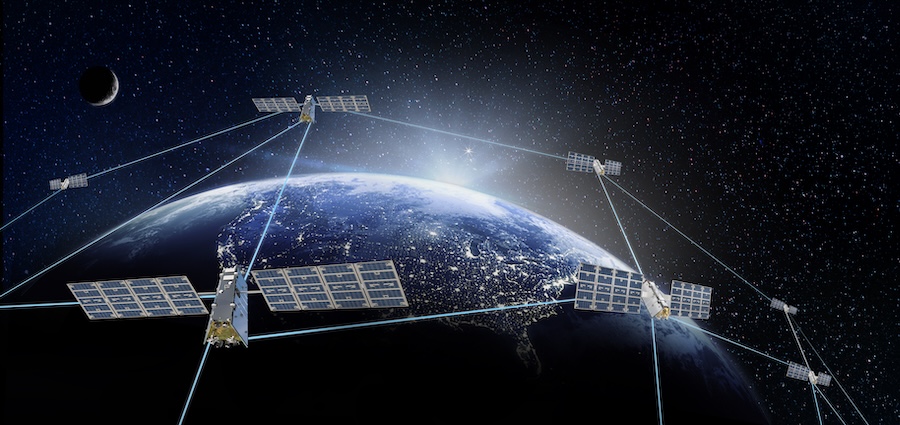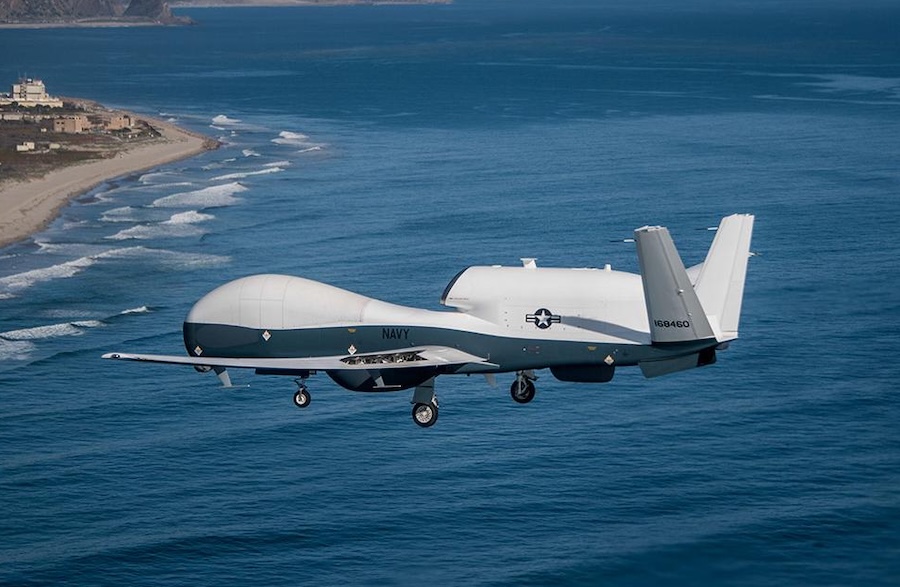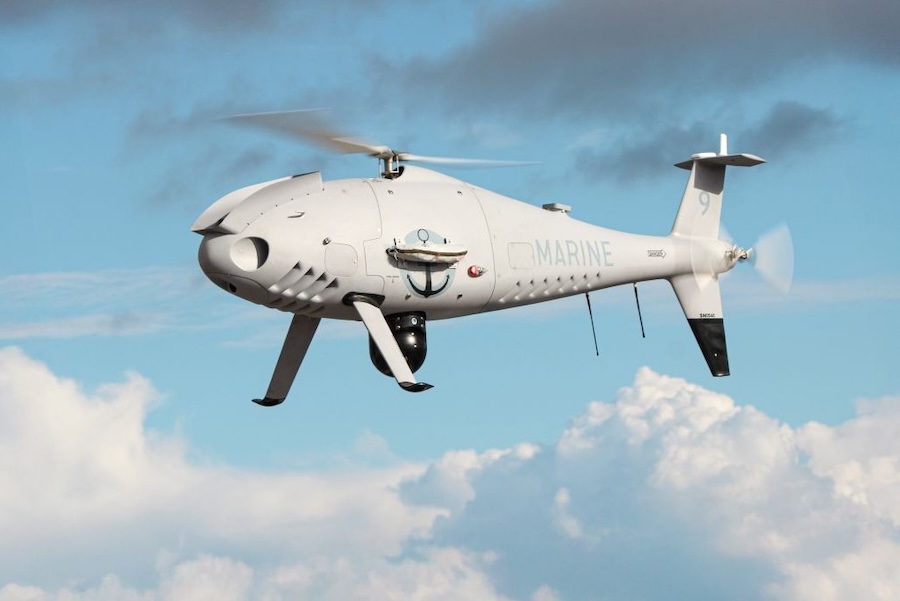


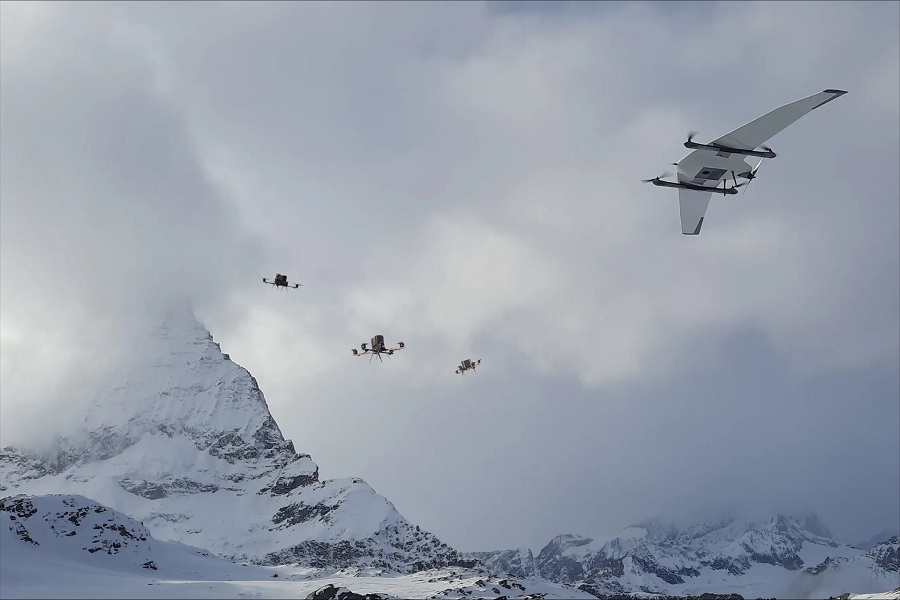
The demonstration involved eight short-range FPV munitions and two medium-range fixed-wing platforms connected through Auterion’s swarm engine and guided by human operators. The swarm completed the full find, fix and finish sequence, including a coordinated vision-guided terminal approach and synchronised strike effects.
“This is the moment when swarming autonomy stops being a concept and becomes an operational reality,” said Lorenz Meier, CEO and founder of Auterion. “For the first time, FPVs and fixed-wing loitering munitions from different manufacturers flew, hit, and finished together as a unified swarm. This is the architecture that future warfare will be built on.”
Unlike traditional drone operations based on manual piloting, the demonstration showed a coherent swarm acting on shared logic across different airframes. FPV drones carried out rapid low-altitude engagements while fixed-wing systems performed ISR and longer-range strikes, with each drone understanding the mission, target set and timing.
According to Meier, this change is critical for modern combat operations. “The modern kill chain is simply too fast for manual coordination. Software has to do the heavy lifting, while humans make the decisions. This is how you maintain control without slowing down the fight.”
The event also marked the first time unmanned systems from three different manufacturers operated together as a single combat swarm. Auterion’s operating system enabled full interoperability, removing the need for bespoke integrations and allowing diverse systems to operate under one architecture.
“Interoperability is not a slogan anymore. It’s a battlefield requirement,” Meier said. “We need to overpower our near-peer adversaries with mass.”
The hybrid swarm operated under Auterion’s Nemyx engine, providing autonomous real-time coordination and integration of live feeds and mission data into ATAK and standardised cursor on target feeds. This integration reflects the shift toward software-defined, network-native kill chains that provide operators with full situational awareness and positive control.
Auterion stated that the demonstration illustrates a broader move from isolated unmanned tools to distributed, intelligent formations with significant implications for deterrence, attrition and survivability. “We’re watching the battlefield evolve from manned platforms with unmanned support, to unmanned formations with humans in command,” said Meier. “Today’s demonstration shows what comes next: mass autonomy that scales across nations and manufacturers. The future fight will be defined by swarms, not individual drones.”



![CENTCOM chief says U.S. forces remain ready after ‘generational’ defeat of Iran despite fragile ceasefire [VIDEO]](https://defence-industry.eu/wp-content/uploads/2026/04/centcom-chief-says-us-forces-remain-ready-after-generational-defeat-of-iran.jpeg)
![Team Lynx details XM30 infantry fighting vehicle concept as U.S. Army program nears key decision [VIDEO]](https://defence-industry.eu/wp-content/uploads/2026/04/team-lynx-details-xm30-infantry-fighting-vehicle-concept.jpeg)