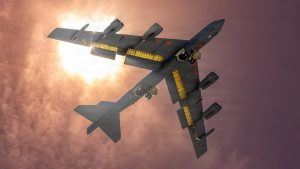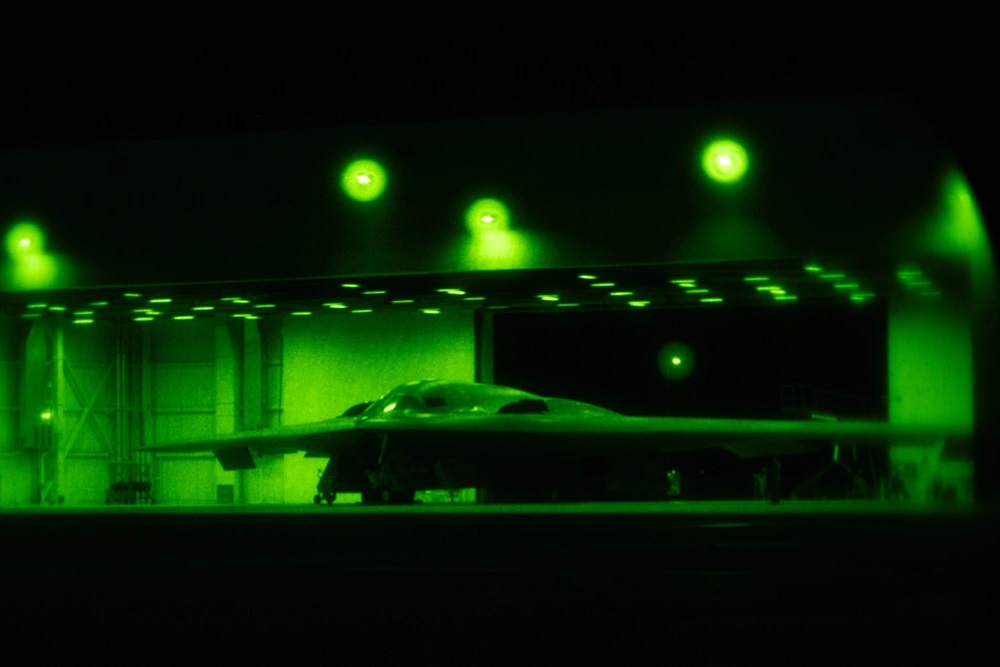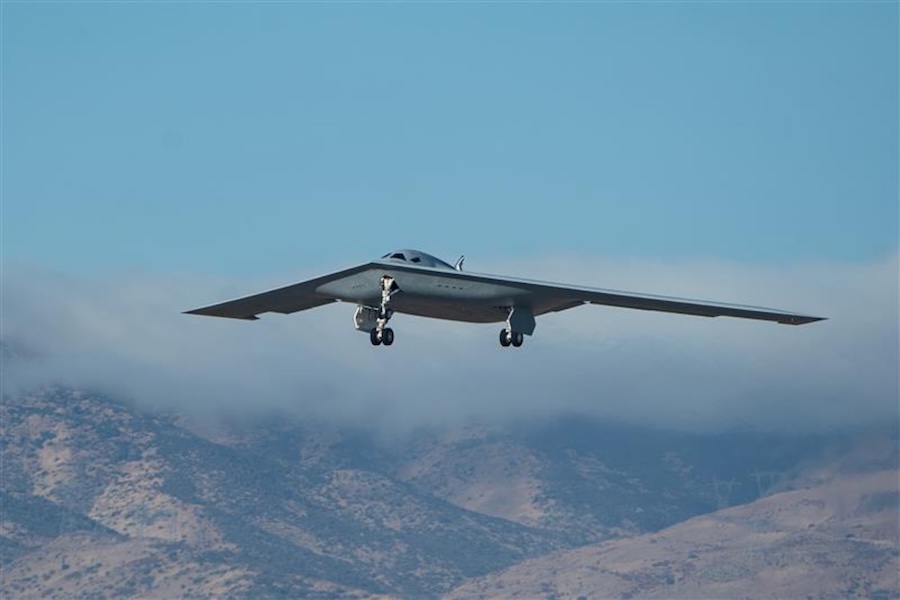


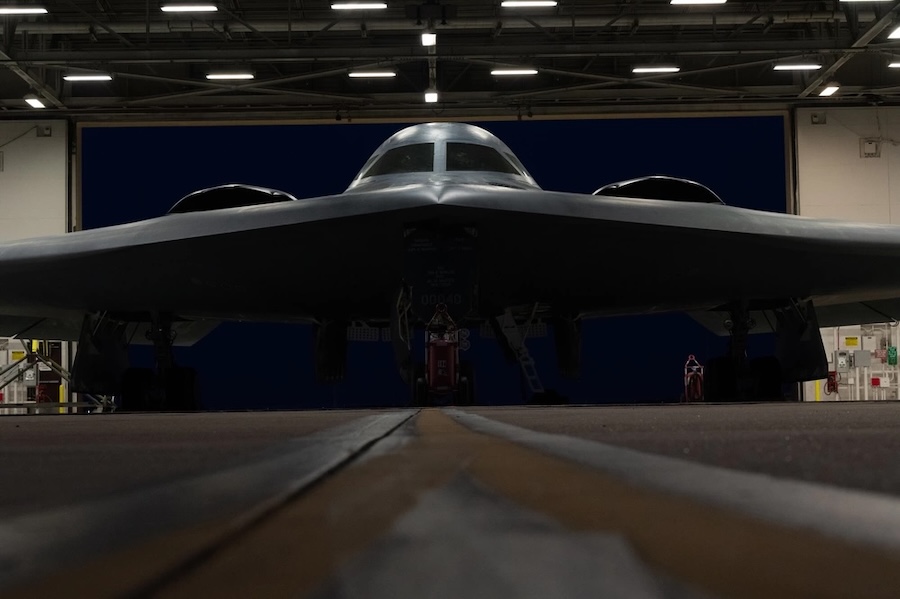
The bombers departed from Whiteman Air Force Base in Missouri, home of the 509th Bomb Wing, which manages the entire B-2 fleet. En route to the Middle East, the aircraft refueled over the central Atlantic from four KC-46 tankers that had been stationed at Lajes Air Base in the Azores, then carried out the strike and returned to the United States.
According to Centcom, the B-2 stealth bombers were equipped with 2,000-pound bombs during the latest operation. “No nation should ever doubt America’s resolve,” CENTCOM said.
The Northrop B-2 Spirit, in addition to its low-observable stealth characteristics, has another unique capability. It is the only aircraft capable of carrying the heaviest bombs in the U.S. arsenal, the GBU-57 Massive Ordnance Penetrator.
The MOP has a diameter of 80 centimeters, a length of 625 centimeters, and weighs approximately 13,600 kilograms. It is designed to destroy deeply buried underground facilities and shelters and is believed capable of penetrating up to 60 meters into the ground or breaching eight meters of reinforced concrete before detonation.
Iran has previously faced the use of MOP bombs. On the night of June 21 to 22, 2025, B-2 bombers used them against Iran’s underground nuclear facilities during Operation Midnight Hammer.
Last night, U.S. B-2 stealth bombers, armed with 2,000 lb. bombs, struck Iran’s hardened ballistic missile facilities. No nation should ever doubt America’s resolve. pic.twitter.com/6JpG73lHYW
— U.S. Central Command (@CENTCOM) March 1, 2026
The most recent strikes targeted ballistic missile launchers hidden in rock formations or underground tunnels. These sites are considered particularly difficult to destroy due to internal networks of interconnected passages forming so-called missile cities.
The collapse of one or several exits does not permanently block the launchers, as alternative routes can often be cleared or used. In such circumstances, it can be assessed that a larger number of smaller munitions, such as one-ton JDAMs with BLU-109 warheads, may be more suitable than single MOPs to carefully collapse tunnels through repeated strikes.