
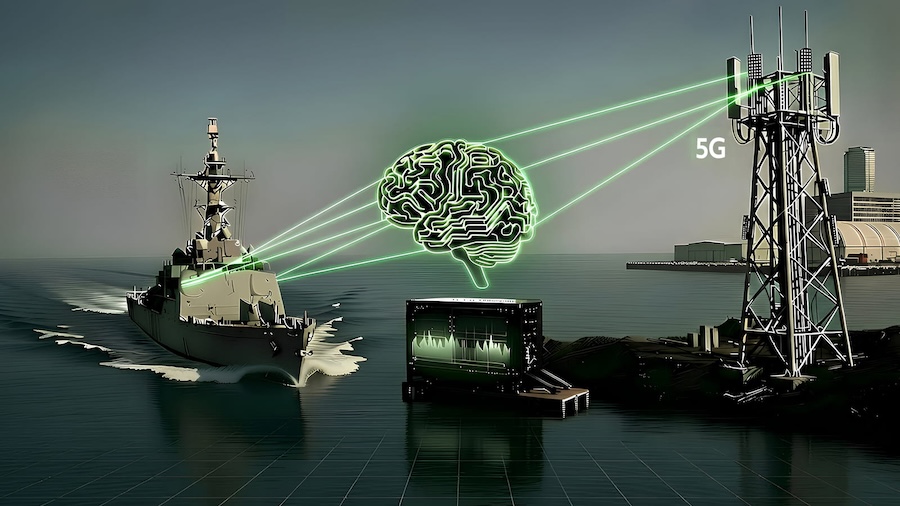
RTX said current spectrum management tools can take tens of minutes to detect interference and reconfigure systems, creating risks for both radar operations and 5G users. Under the program’s first phase, a BBN-led team will develop a basic “smart spectrum manager” designed to detect radar activity, predict interference, and shift 5G traffic automatically within seconds.
The second phase will expand the system into an advanced prototype using automated optimization tools that allow radars and 5G networks to share frequencies seamlessly with minimal human oversight. Once complete, the platform could be deployed on operational radar and 5G systems to enable safe, secure, and efficient coexistence.
“Lives are put at risk when a radar misses a target, whether it’s a ship navigating waters or a rescue team tracking a storm,” said Chris Vander Valk, BBN principal investigator for the effort. “Our work ensures those radars stay reliable, even as 5G frequencies become increasingly congested, so public and private shared use of the spectrum is optimized for all users.”
The project brings together multiple partners, including Raytheon Advanced Technology, Ericsson Federal Technologies Group, Purdue University, and Federated Wireless, to contribute radar data, 5G expertise, and advanced signal processing and machine learning. BBN will integrate these capabilities into a system intended for future government use, with work carried out across several U.S. locations including Massachusetts, Texas, Virginia, Indiana, and New Hampshire.