The contract is structured as an indefinite delivery, indefinite quantity arrangement and supports the development of next-generation capabilities. The work focuses on enhancing Earth observation and space domain awareness systems.
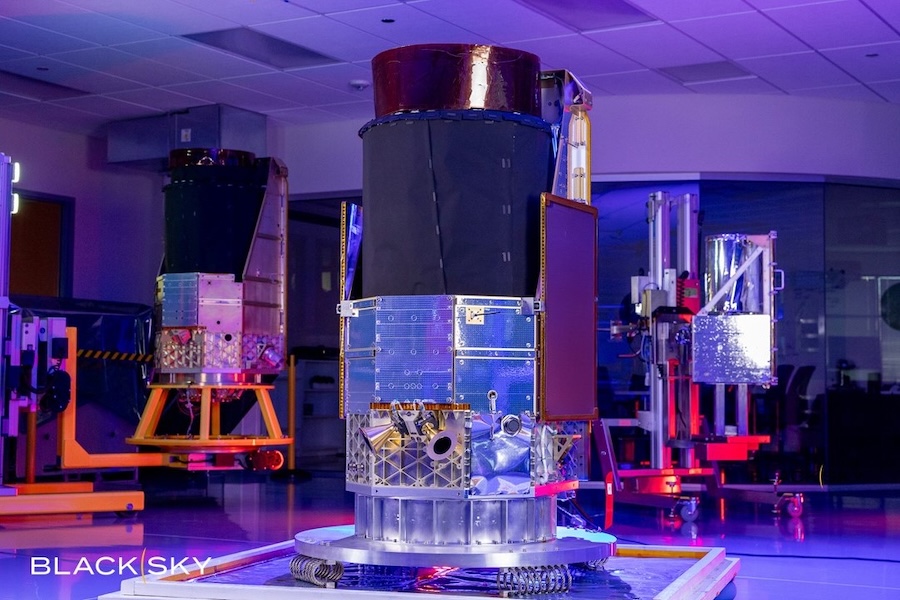
The effort is intended to expand beyond the company’s existing Gen-2 and Gen-3 satellite systems. It will also complement future initiatives such as the AROS broad area search system.
“This award validates and leverages our investments in leap ahead space technologies that feature next generation space architectures as part of our long-term constellation roadmap,” said Brian O’Toole.
“With U.S. government collaboration, we can accelerate these critical technologies as part of multi-year advanced technology development program,” he added.
“In order to demonstrate the scale and impact of these new technologies we’ll be focused on quickly fielding advanced systems that combine future-generation payloads with an evolution of our proven Gen-3 space architecture,” O’Toole said.
The contract, awarded by the Air Force Research Laboratory, is designed to advance optical imaging and platform capabilities. It also aims to support new applications in high-frequency Earth monitoring and observation across multiple orbital domains.
The systems under development are expected to operate across low Earth orbit, geostationary orbit and cis-lunar space. Officials said this will enable broader situational awareness and improved monitoring capabilities.
“We will leverage the unique, highly scalable core technology of Gen-3 into every incremental advancement along our roadmap looking at the AROS broad area search system as the next step into the more expansive very large-aperture optical imagery capabilities covered by this contract,” O’Toole said.
“These advancements will enable very high-resolution imaging and collection performance combined with low latency space-based communications,” he added.
The satellites developed under the program are expected to function as data storage and processing hubs. They are also designed to be compatible with emerging on-orbit data centers and AI-enabled communication networks.
Officials said the systems will integrate with current and future launch vehicles. This flexibility is intended to support rapid deployment and scalability.
BlackSky said its architecture builds on earlier satellite generations and emphasizes real-time monitoring capabilities. The company combines software-driven systems with vertically integrated manufacturing to accelerate deployment of space-based intelligence assets.
The contract reflects growing demand for advanced satellite capabilities to support national security missions. It also underscores ongoing efforts to expand AI-enabled space infrastructure and data processing in orbit.