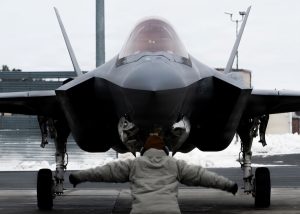
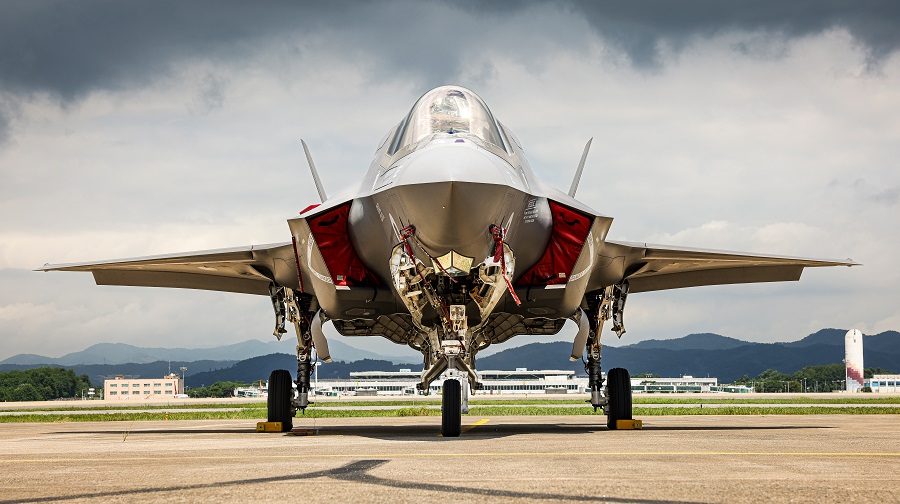
According to sources, the new expenditures cover so-called long-lead items, components that must be ordered well in advance of final aircraft assembly. Canada was required to make the payments to retain its position in the long-term production schedule and avoid being displaced in the delivery queue, the sources said, adding that CBC News granted confidentiality to those not authorized to speak publicly on the matter.
The fact that Ottawa has started paying for long-lead items for 14 additional jets has not been publicly disclosed. In response to questions, the Department of National Defence declined to confirm that new funds had been committed, stating that the review of the proposed purchase is “still underway.”
The review was launched last year by the Carney government in response to annexation threats and tariffs imposed by the Trump administration on Canadian steel, aluminum, and automotive exports. At the end of January, Defence Minister David McGuinty cited the review when pressed on plans to replace Canada’s aging CF-18 fleet.
“We have acquired 16 F-35 fighter jets,” McGuinty said on Jan. 28. “The question of further acquisition of that fleet remains under review.” The Department of National Defence reported in late 2025 that it had spent an additional $476 million on the CF-18 replacement program, but did not clarify whether any of that funding was earmarked for more aircraft and declined to provide a detailed breakdown.
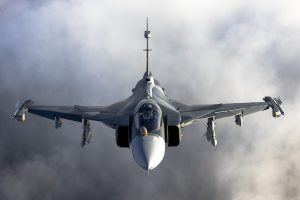
Canada has several options, including proceeding with its long-term plan to acquire 88 F-35s or opting for a mixed fleet that could include a European aircraft such as Sweden’s Gripen. Ottawa is reviewing a proposal from Saab to assemble Gripen jets in Canada, a move that could generate thousands of jobs as the government seeks to leverage defense spending to bolster the domestic industrial base.
Reducing the overall F-35 order in favor of a mixed fleet would likely heighten tensions with Washington. For now, one expert says Carney appears to be using the potential F-35 purchase as leverage in broader trade and diplomatic negotiations with U.S. President Donald Trump.
“Each week, Trump adds another reason not to move forward with the F-35 and he is the one creating a negative spiral. This puts the Carney administration in a difficult position,” said political scientist and defense specialist Justin Massie, a professor at Université du Québec à Montréal. He added that expenses linked to 14 additional F-35s were unsurprising given Ottawa has not formally altered its procurement policy despite the ongoing review.
“The longer the decision is delayed, the harder it will be to back down,” Massie said. “Because once you’ve made financial commitments and signed contracts for the next batch, it’s always more complicated to go back.” Jody Thomas, former deputy minister of national defence and national security advisor to the Trudeau government, said the payments reflect sound planning in the absence of a final decision.
“In the absence of a decision on the fate of the F-35, this planning is crucial to ensuring that Canada has a CF-18 replacement,” Thomas said. “It is, in short, prudent and responsible.”
Source: CBC News.