

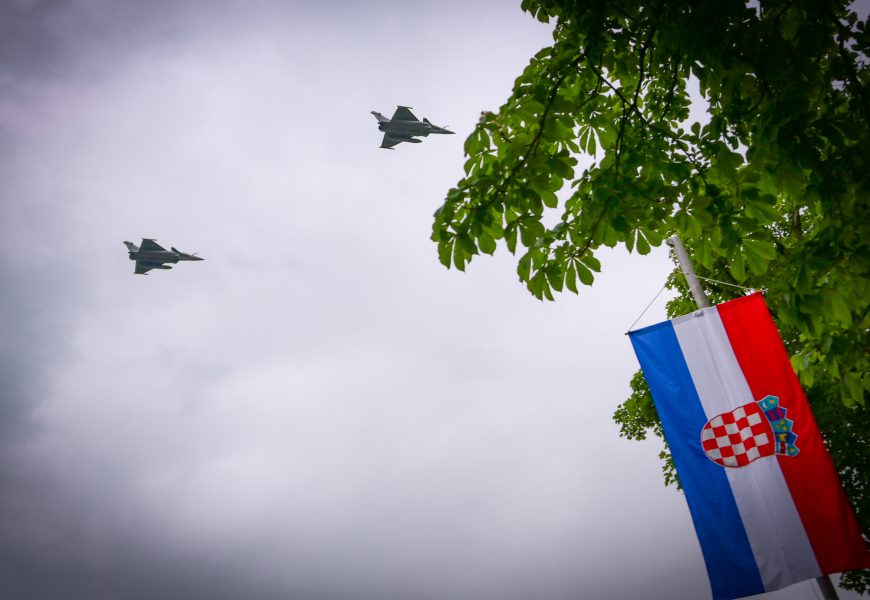
The change has been made possible by the completion of all required training by personnel of the 191st Fighter Squadron, which has recently been fully equipped with Rafale aircraft. The unit is currently the only combat aircraft squadron within the Croatian Air Force.
The acquisition of the Rafale aircraft, costing €999 million, represented the largest single investment in the history of the Croatian Armed Forces. For personnel, it marked a leap of almost two generations from the Soviet-era MiG-21 fighters that remained in service until 2024.
In recent years Croatia operated one squadron with 12 MiG-21 aircraft, of which six were kept operational while the remainder were used for spare parts. Persistent technical problems, including the loss of one aircraft in an accident on 5 December 2022, accelerated the decision to withdraw the type.
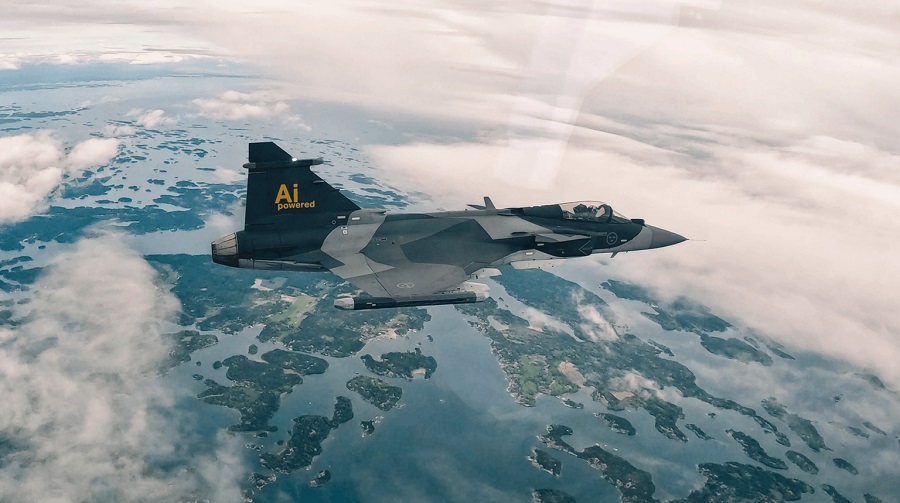
Between the retirement of the MiG-21s and the Rafale reaching operational readiness, Croatia’s airspace was monitored with assistance from Hungary using JAS 39 Gripen fighters and from Italy using Typhoons. Croatia incurred no financial costs for this temporary arrangement, which was conducted by allied aircraft operating from bases in Italy and Hungary.
The contract for 12 Rafale aircraft was signed in France in November 2021, with delivery accelerated by sourcing aircraft from units of the French Air and Space Force. Built between 2005 and 2013, the first six aircraft arrived in Croatia on 25 April 2024, with subsequent deliveries made in batches of one or two.
The final aircraft, a single-seat Rafale EC with serial number 159, landed in Zagreb on 25 April this year. The 191st Fighter Squadron now operates ten single-seat Rafale EC aircraft, numbered 150 to 159, and two twin-seat Rafale DC aircraft, numbers 170 and 171, all delivered in the F3R standard known in Croatia as C3R.
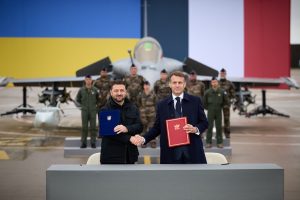
With the aircraft expected to remain in service for at least 20 years, the Croatian authorities have already decided to pursue an upgrade. A letter of intent was signed on 8 December 2025 during a visit by Defence Minister Ivan Anušić to the Élysée Palace, expressing Croatia’s intention to upgrade the fleet to the current F4 standard.
It remains unclear which specific F4 variant will be selected, as France has adopted a phased development approach to the standard. To date, only the F4.1 version, primarily an upgrade package for older aircraft, and the F4.2 version, applied to newly built aircraft from 2025, have entered serial service, while the final F4.3 variant is scheduled for completion in 2027.
An official statement following the Paris meeting said the upgrade would enhance the Rafale’s combat capabilities in terms of armament, self-defence systems and sensors for data collection and processing. It is also known that Croatian F3R aircraft differ in some respects from French counterparts, including the absence of infrared sensors for the SPECTRA self-defence system and the television camera window of the OSF electro-optical system.
As revealed during recent parliamentary debates by French MP Jacques Ferrari of the Republican Party, “Rafale sold to Greece are equipped with active electronically scanned array radars, unlike the aircraft intended for Croatia.” This suggests the upgrade may include the installation of missing systems and a limited standard enhancement, although even in their current configuration the Croatian Rafales are regarded as the most capable combat aircraft in the Balkans.