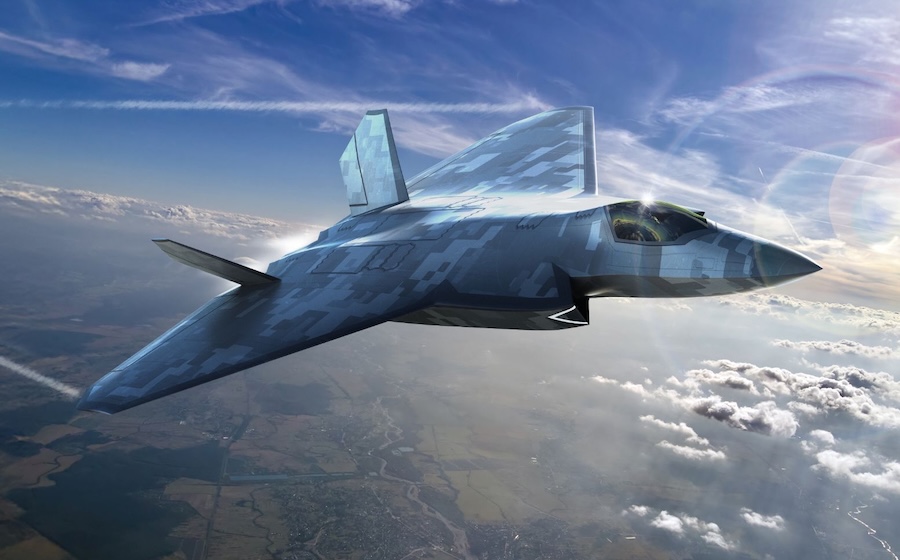
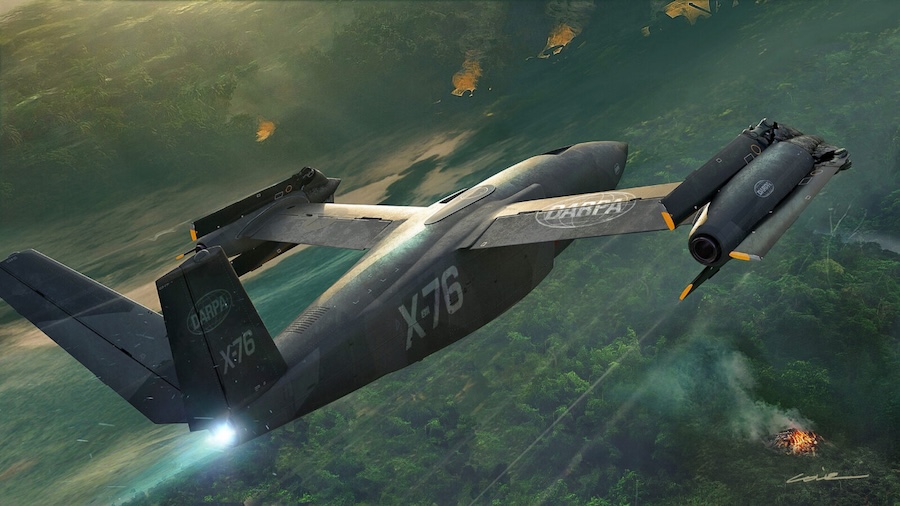
The SPRINT initiative aims to develop an aircraft that combines very high speed with the ability to operate without a conventional runway. The concept seeks to overcome a long-standing challenge in military aviation between the speed of fixed-wing aircraft and the flexibility of vertical takeoff platforms.
The X-76 designation places the aircraft within the historic series of American experimental X-planes used to test advanced aviation concepts. The number also symbolically references the year 1776, aligning with the United States’ upcoming 250th anniversary.
The program is a joint effort between DARPA and U.S. Special Operations Command. Its objective is to explore technologies that could enable vertical-lift aircraft with cruise performance closer to that of jet-powered platforms.
The X-76 is being developed as a technology demonstrator to test these capabilities. The aircraft is intended to operate without a runway while maintaining speeds normally associated with conventional aircraft.
DARPA says the demonstrator will support the development of technologies capable of achieving cruise speeds above 400 knots. The aircraft is also expected to hover in austere environments and operate from unprepared surfaces.
SPRINT entered Phase 2 in May 2025 after Bell Textron was selected as the main contractor for the aircraft. With the Critical Design Review completed, the program has moved into manufacturing, integration, assembly and ground testing of the demonstrator.
Phase 2 is intended to mature the technologies required to combine high-speed flight with runway-independent operations. The program will eventually transition to flight testing once the aircraft has been completed.
“For too long, the runway has been both an enabler and a tether, granting speed but creating a critical vulnerability,” said Cmdr. Ian Higgins, U.S. Navy, who serves as DARPA’s SPRINT program manager.
“With SPRINT, we’re not just building an X-plane; we’re building options. We’re working to deliver the option of surprise, the option of rapid reinforcement, and the option of life-saving speed, anywhere on the globe, without needing any runway,” Higgins added.
The next stage of the program will involve flight testing under Phase 3. According to DARPA, the flight test campaign for the X-76 demonstrator is planned to begin in early 2028.
Through the SPRINT program, DARPA aims to demonstrate new operational concepts for future military aircraft. The results are expected to inform potential applications for next-generation high-speed vertical-lift platforms.