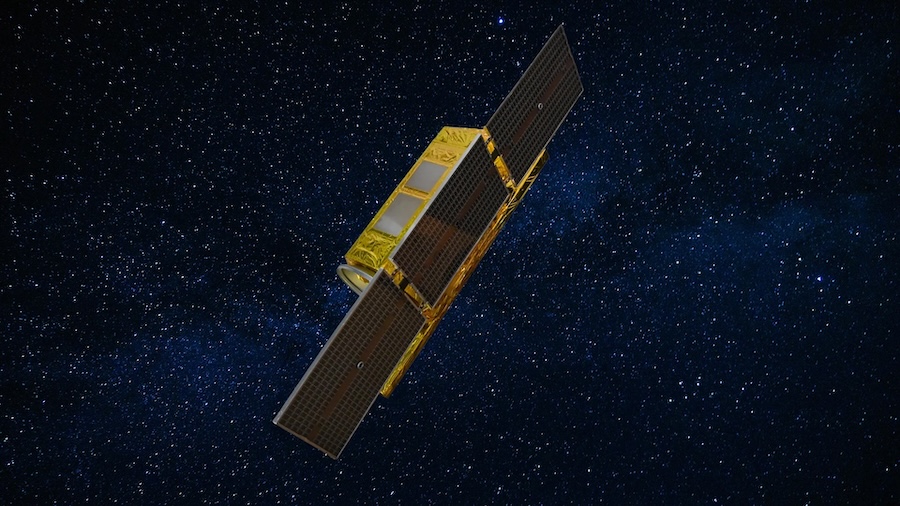
The project, known as VLEO-DEF, aims to design the first European military satellite concept specifically intended to operate in Very Low Earth Orbit. This orbital region lies approximately 250 to 350 kilometres above Earth and offers significant advantages for intelligence, surveillance and reconnaissance missions.
Satellites operating closer to Earth are able to capture far more detailed imagery than those positioned at higher altitudes. The shorter distance also allows information to be transmitted more rapidly to military commanders, improving operational responsiveness.
The programme will run for 36 months and forms part of broader European efforts to strengthen defence-related space capabilities. Although satellites already play a crucial role in modern military operations, the project explores how these systems could operate even closer to the planet to enhance their effectiveness.
Operating in VLEO presents considerable technical challenges because the atmosphere at this altitude still generates strong drag on satellites. As a result, maintaining orbit requires advanced propulsion technologies, specialised materials and new satellite designs capable of operating in such demanding conditions.
The project will therefore focus on developing the technologies needed for sustained operations in VLEO. Among the objectives is the preparation of a future flight experiment to demonstrate key technologies in orbit, including propulsion systems designed specifically for this environment.
The initiative brings together five participating Member States: Spain, France, Luxembourg, Portugal and Slovenia. It also includes a consortium of 17 European industrial and research organisations led by the Spanish aerospace engineering company SENER.
Other participating organisations include DEIMOS, Airbus Defence and Space and SATLANTIS from Spain; INEGI, GEOSAT and OMNIDEA from Portugal; INTEGRASYS, SPARC, LIST, RAFINEX, EMTRONIX, GRADEL and GOMSPACE from Luxembourg; EXOTRAIL and Thales Alenia Space France from France; and SKYLABS from Slovenia.
The VLEO-DEF programme builds on earlier work carried out by the agency in this field. In 2024, EDA launched the LEO2VLEO project with Austria and the Netherlands to develop a constellation of three satellites capable of manoeuvring between traditional Low Earth Orbit and Very Low Earth Orbit.
While the LEO2VLEO programme focuses on demonstrating orbital manoeuvres between different altitudes, the new VLEO-DEF project concentrates on designing a satellite optimised specifically for continuous operation in Very Low Earth Orbit. Together, these initiatives aim to expand Europe’s technological capabilities in an emerging area of strategic importance for defence space operations.







![CENTCOM chief says U.S. forces remain ready after ‘generational’ defeat of Iran despite fragile ceasefire [VIDEO]](https://defence-industry.eu/wp-content/uploads/2026/04/centcom-chief-says-us-forces-remain-ready-after-generational-defeat-of-iran.jpeg)
![Team Lynx details XM30 infantry fighting vehicle concept as U.S. Army program nears key decision [VIDEO]](https://defence-industry.eu/wp-content/uploads/2026/04/team-lynx-details-xm30-infantry-fighting-vehicle-concept.jpeg)