
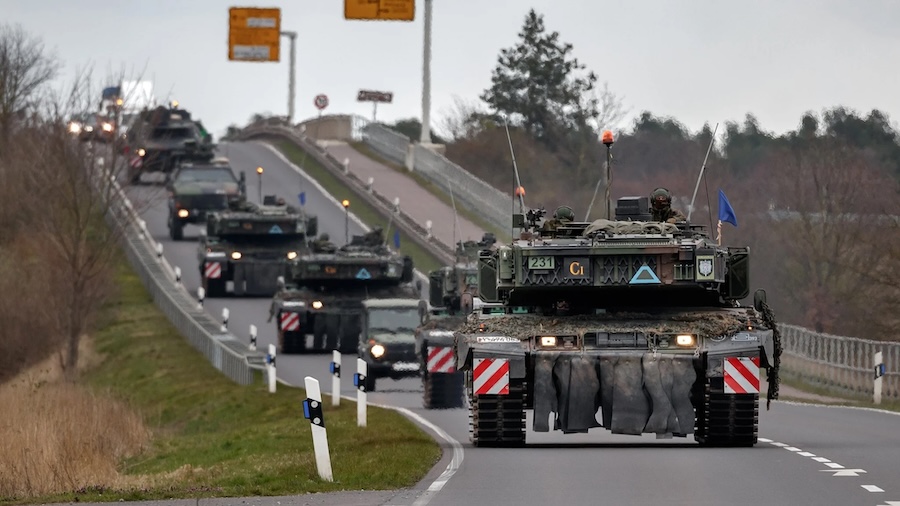
The initiative aims to create an EU wide military mobility area by 2027 and is described as a step towards a ‘Military Schengen’. It sets out harmonised EU rules for cross border military transport, including a maximum three day processing time and simplified customs procedures.
A new European Military Mobility Enhanced Response System will provide fast track arrangements and priority access to infrastructure for forces operating in EU or NATO contexts. The package also includes measures to upgrade key corridors to dual use standards and protect strategic routes through a new resilience toolbox that targets cybersecurity, energy security and infrastructure readiness.
Further elements include a Solidarity Pool for shared capabilities and the option to establish a Military Mobility Digital Information System. Governance will be reinforced through a Military Mobility Transport Group and an enhanced TEN T Committee, with national coordinators appointed in every Member State.
Alongside mobility reforms, the Commission presented the EU Defence Industry Transformation Roadmap aimed at accelerating disruptive innovation and supporting emerging defence actors. It focuses on investment, rapid technology development, wider access to capabilities and skills needed to maintain Europe’s technological edge.
Russia’s war against Ukraine has highlighted the rapid pace of technological change and the growing role of AI, quantum systems, drones and space technologies. The Commission says Europe must adapt its defence ecosystem by linking established industry with new entrants to deliver capabilities more efficiently.
High Representative Kaja Kallas said: “The fast movement of Europe’s militaries is essential for Europe’s defence. Defence readiness fundamentally depends on whether you can get your tanks and troops to where you need them, when you need them. Today, we are proposing an emergency system for cross-border military transport and an initiative to pool member countries’ transport to make moving troops easier across the continent. Europe is facing unprecedented security threats. The case for better military mobility couldn’t be clearer.”
Commissioner for Defence and Space Andrius Kubilius said: “A strong Europe needs both an adaptive and innovating defence industry and the ability to move its forces and assets at scale and speed. The Defence Industry Transformation Roadmap accelerates Europe’s shift towards a more modern, dynamic and innovative defence ecosystem. The military mobility Regulation in the package proposes ways to substantially reduce bureaucratic burden and timeframes for military troops movement and offers new solutions for the dual use mobility assets accessibility at scale when will be needed. This is how we turn industrial strength into operational readiness — and make sure Europe can move as one, with the speed and coordination of our security demands. Our aim is to achieve an EU-wide military mobility area by 2027 – a ‘Military Schengen’, which would allow an effective movement of military transport, sharing of its assets by Member States and helping each other in emergency situations.”
The Regulation will now be submitted to the Council and the European Parliament for adoption under the ordinary legislative procedure. The Commission will start implementing the Roadmap immediately to begin the transformation of Europe’s defence industrial ecosystem.
The measures build on the White Paper for European Defence – Readiness 2030 and the ReArm Europe Plan, both launched in March 2025. They also draw on lessons from the revised Action Plan 2.0 and the 2024 Military Mobility Pledge, with input from the EEAS and the European Defence Agency to ensure coherence with NATO standards.
Source: European Commission.