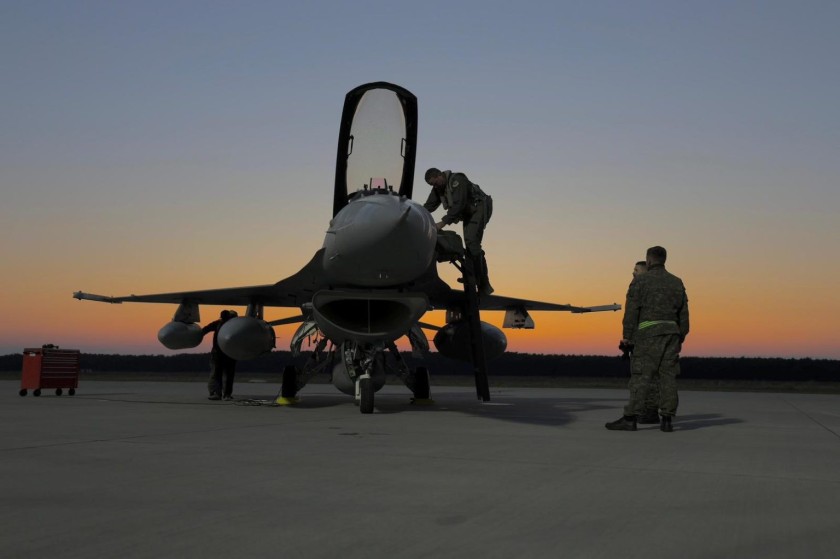
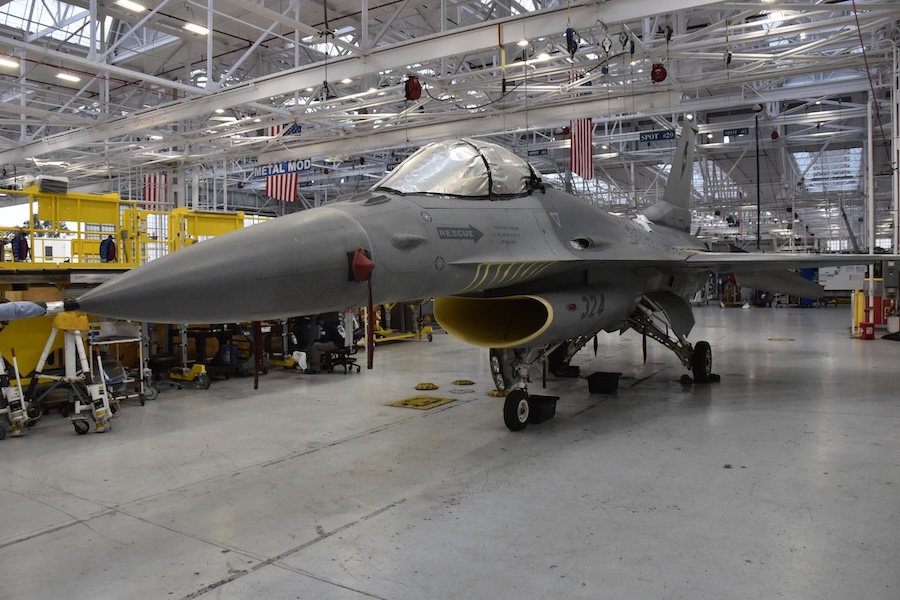
The initiative began when PMA-226, the program office for the F-16, approached FRCSW with an urgent requirement after other facilities were unable to take on the workload. FRCSW agreed to assume responsibility, supporting the Navy’s mission to maintain readiness for service members.
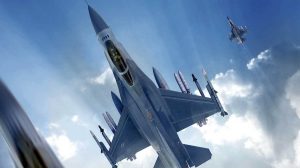
FRCSW is now the primary depot location for F-16 repairs, with a focus on Programmed Sustainment and Structural Repairs, a maintenance effort comparable to the Navy’s F/A-18 High Flight Hour Inspection. The work is essential to ensuring the F-16 remains ready to serve as an adversary aircraft in Navy pilot training exercises.
Captain Jason Pettit, Program Manager for PMA-226, described the achievement in clear terms. He stated, “The strategic collaboration between FRCSW and PMA-226 to establish F-16 Depot Maintenance capabilities for U.S. Navy Aggressor F-16s has delivered accelerated readiness for the warfighter. In just 18 months, both teams worked tirelessly to procure, train, and install the necessary equipment to stand up the F-16 Programmed Sustainment and Structural Repair (PSSR) capability, an unprecedented pace for depot line activation. Congratulations to all team members for this successful achievement on delivering the first Navy F-16C Viper out of FRCSW!”
The effort required the purchase of new equipment, the design and installation of specialized tooling, and the development of training programs. One key accomplishment was the adaptation of legacy F/A-18 wing removal and installation stands for F-16 use, helping keep maintenance on schedule.
Engineers worked with the team to ensure safety and structural integrity when adapting F/A-18 inner wing stands for the F-16, creating a more efficient and cost-effective servicing process. When critical bolts could not be sourced through the Navy supply system, the team identified a method to refurbish existing bolts and secured engineering approval for their continued use.
The first aircraft to complete the new program reflected extensive coordination and technical problem-solving. Working with the PMA-226 engineering team, FRCSW lead engineer Jake Weintraub supported approval of engineering changes, including the introduction of the first Local Engineering Specification document for the U.S. Navy on this aircraft.
The program also relied on cooperation beyond FRCSW and PMA-226. Personnel from Hill Air Force Base provided hands-on training after a trainer aircraft was procured and sent to FRCSW, covering wing removal and installation, tire and wheel servicing, and other maintenance tasks.
FRCSW personnel also worked with Lockheed Martin and the U.S. Air Force on specialized radar-absorbent coatings and structural repairs. This collaboration ensured the depot had the knowledge, equipment, and expertise required to maintain the aircraft to established standards.
At the center of the program is the FRCSW workforce, many of whom have decades of experience working on F/A-18 aircraft. Their transition to F-16 maintenance required adaptability and technical skill, qualities that proved essential in meeting program demands.
Brian Trout, FRCSW Deputy Program Manager for the F-16 program, emphasized the significance of the opportunity. He said, “The chance to apply our skills to a new aircraft is exciting. We’ve spent decades working on F/A-18’s, and now we get to contribute to the readiness of the Navy and Marine Corps in a new way.”
FRCSW received its first F-16 in January 2025, completing the first PSSR repair in February. The depot is expected to perform PSSR work on more than half of the fleet’s F-16 aircraft, with additional efforts planned including Special Structural Inspections, canopy longeron repairs, and radar low observable coating work.
The program’s progress reflects sustained collaboration among FRCSW, PMA-226, Hill Air Force Base, and Lockheed Martin. As the effort expands, FRCSW will continue supporting Navy and Marine Corps readiness through depot-level maintenance of the F-16 Viper fleet.