

The announcement was made in Brussels on March 18 and reflects the company’s continued commitment to the European aerospace sector. According to GE Aerospace, the investment will focus on advanced production technologies and testing capabilities across several key manufacturing locations.
“This significant investment reflects our long-term commitment to the European aerospace industry, a crucial market for many of our key customers,” said Riccardo Procacci, President and CEO, Propulsion & Additive Technologies at GE Aerospace. “By expanding advanced manufacturing and testing capabilities across Europe, we are better positioned to meet growing customer demand while supporting the communities and economies where we operate.”
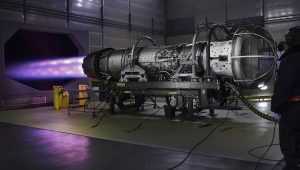
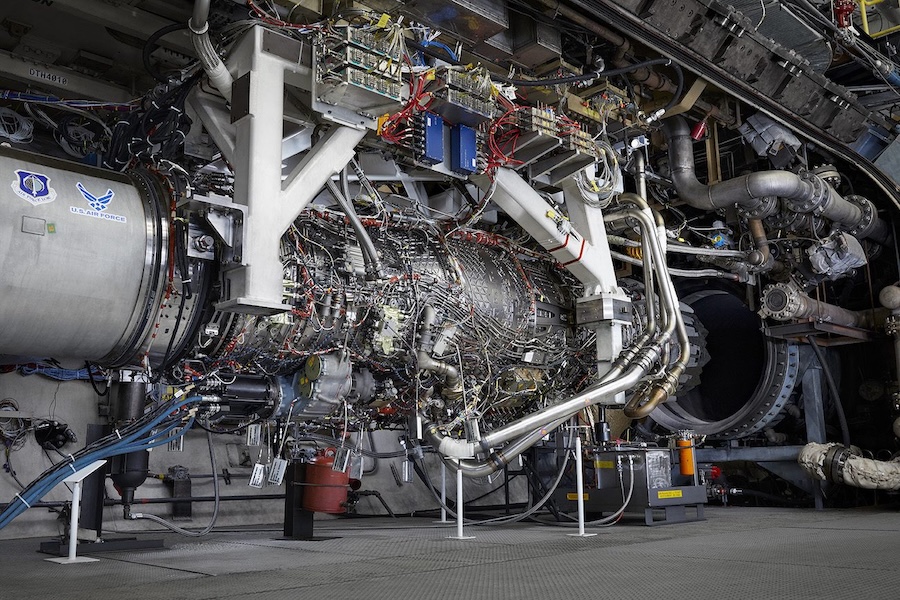
A large share of the funding will be directed toward engine test cells, advanced machining systems and additive manufacturing expansion. The upgrades will also include improvements to buildings and infrastructure to support commercial narrowbody and widebody engine programs, as well as military fighter jet and helicopter engines.
Italy will receive the largest portion of the investment, with €77 million allocated to expand manufacturing and testing capabilities across multiple sites. Additional investments include €15 million in Poland for grinding and machining equipment and €8 million in the Czech Republic for precision machining, inspection technologies and assembly tooling.
The United Kingdom will receive €10 million to upgrade manufacturing and testing equipment and expand electronics and component production capabilities. Romania will receive €3 million to support metal-cutting machines, tooling and facility improvements.
In addition to manufacturing expansion, GE Aerospace plans to invest approximately €40 million in 2026 in its European maintenance, repair and overhaul (MRO) and component repair facilities. This investment forms part of a broader global program valued at $1 billion for MRO facilities first announced in 2024.
The company is also investing in workforce development to address skills shortages in high-technology industries. These initiatives include training grants to vocational schools in the United Kingdom and Italy expected to reach more than 800 students this year, as well as an expansion of the Next Engineers program in Warsaw, Poland, which aims to reach more than 4,000 students.
“Our commitment extends beyond facilities and equipment; it is equally focused on our people. In an evolving industry, investing in skills, training, and talent pipelines across Europe is not just a tactical necessity but a strategic imperative,” said Christian Meisner, Chief Human Resources Officer at GE Aerospace. “We are dedicated to ensuring that the European aerospace sector has the skilled workforce required to innovate, grow, and deliver exceptional value to our customers for decades to come.”
GE Aerospace has maintained a strong presence in Europe for nearly a century and today operates in 18 countries across the region. The company employs around 13,000 engineers, innovators and skilled manufacturing workers across assembly, engineering, additive manufacturing and maintenance operations.