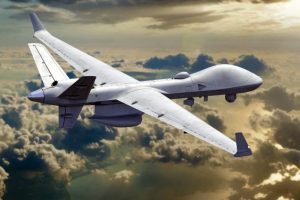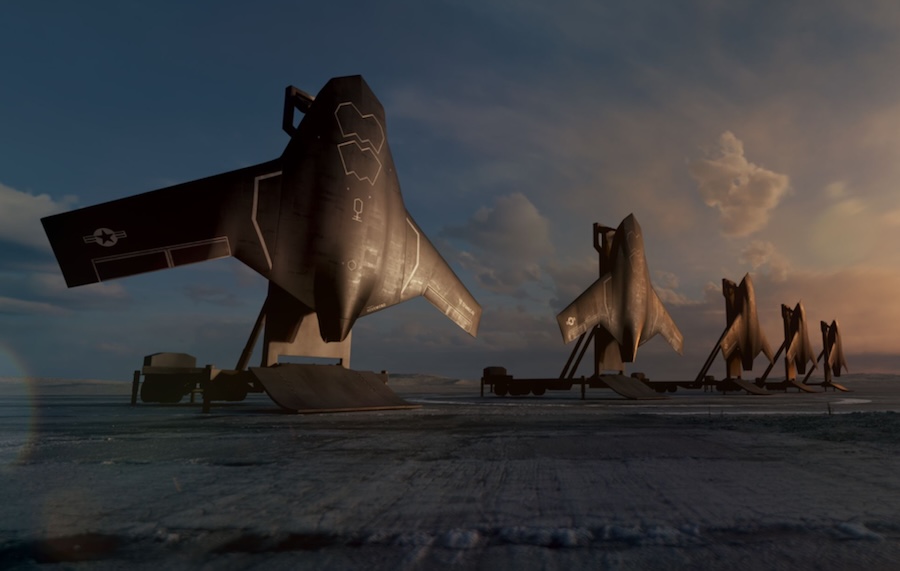
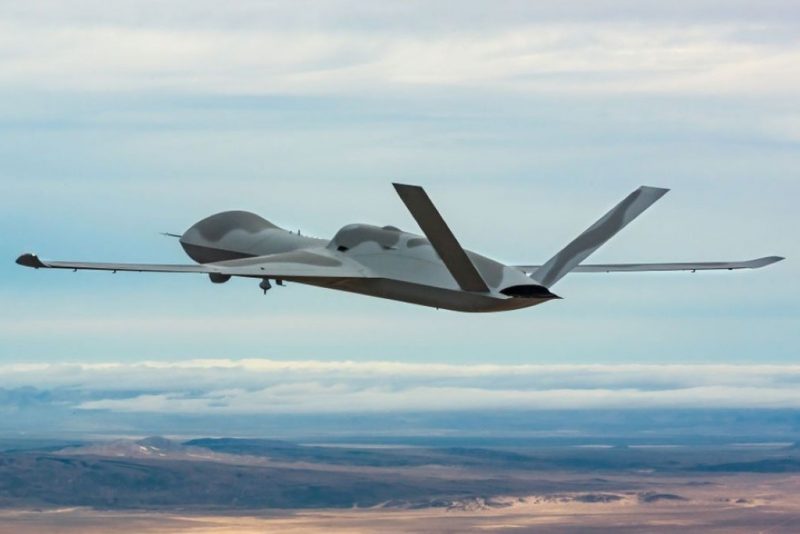
The MQ-20 Avenger has served as a surrogate platform for Collaborative Combat Aircraft development for more than five years, both before and after the introduction of GA-ASI’s purpose-built XQ-67A and YFQ-42A aircraft. The recent demonstration began with mission planning through the Human-Machine Interface, followed by mission upload and confirmation of positive transfer between mission and flight autonomy systems once airborne.
During the flight, the MQ-20 demonstrated compliance with operator-assigned Keep-Out Zones and Keep-In Zones throughout all mission phases. The aircraft dynamically adapted to mission requirements while flying precisely within approved areas and avoiding restricted airspace.
A key element of the demonstration was the use of a live Infrared Search and Track sensor from Anduril Industries to passively range a live target aircraft. Using this sensor data, the autonomy system independently established a track, calculated an intercept solution, and simulated a weapon engagement that, if real, would have destroyed the target.
Additional mission activities included flying a pre-designated route to a standard instrument hold before proceeding to subsequent objectives. The MQ-20 also executed routes commanded through heading, speed, and altitude inputs while continuing to avoid designated keep-out zones.
The demonstration underscores GA-ASI’s focus on advancing Human-Machine Teaming and developing autonomous systems capable of executing complex mission profiles using onboard sensors and decision logic. It also reflects the company’s continued investment in experimentation and capability development for U.S. warfighters, building on recent partnerships and demonstrations conducted between 2023 and 2025.