
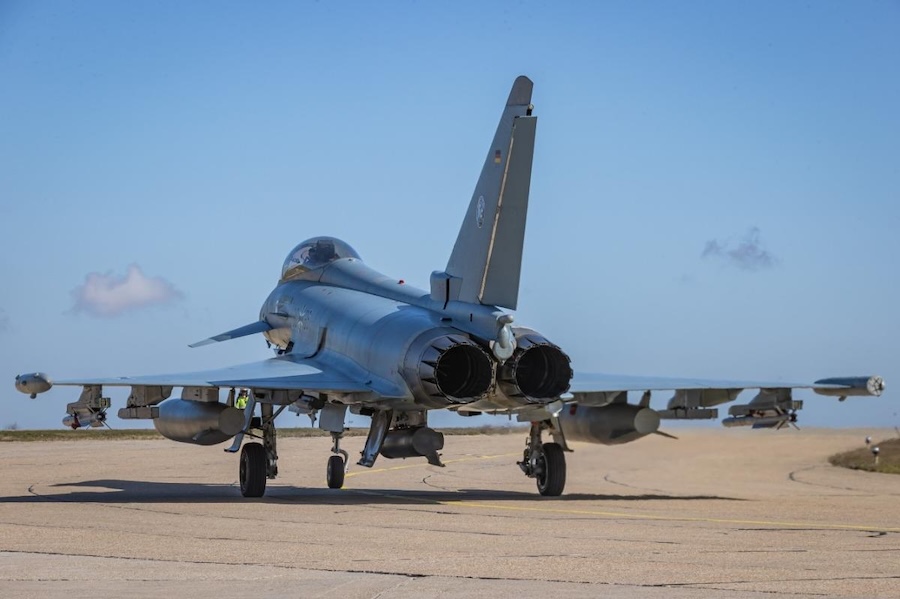
German Eurofighter Typhoon aircraft had been deployed since summer 2025 to support NATO’s air defence mission on the south-eastern flank. Operating from the Black Sea region, the detachment maintained continuous readiness under NATO’s Integrated Air and Missile Defence framework.
During the deployment, German aircraft logged more than 600 flying hours and conducted over 470 sorties. Officials said the sustained operational tempo ensured a persistent and responsive presence in a strategically important area.
“For our personnel, this mission has been both demanding and meaningful,” said Andreas Beckmann, German Air Force detachment commander. “Holding Quick Reaction Alert on NATO’s south-eastern flank, close to the Black Sea, brings a real sense of responsibility.”
“I am proud of how our team worked alongside our Romanian Allies every day to ensure the security of NATO airspace,” he added. The mission included more than 25 Alpha Scrambles, highlighting NATO’s ability to respond rapidly to potential airspace threats.
The Quick Reaction Alert mission remains a core element of NATO Air Policing, ensuring continuous protection of Allied airspace. In addition, the German detachment carried out eight Flexible Deterrence Options under the Alliance’s Eastern Sentry posture.
These activities are designed to demonstrate NATO’s readiness and ability to respond to evolving security challenges. Officials said they contribute to a flexible and scalable deterrence posture across the region.
German Eurofighters also operated alongside Romanian F-16 aircraft during the deployment. The joint operations enhanced interoperability and strengthened NATO’s integrated air defence network.
The handover to the Royal Air Force ensures uninterrupted air policing coverage over Romania. NATO said such rotations demonstrate the Alliance’s ability to sustain forward-deployed air power and maintain stability along its south-eastern flank.