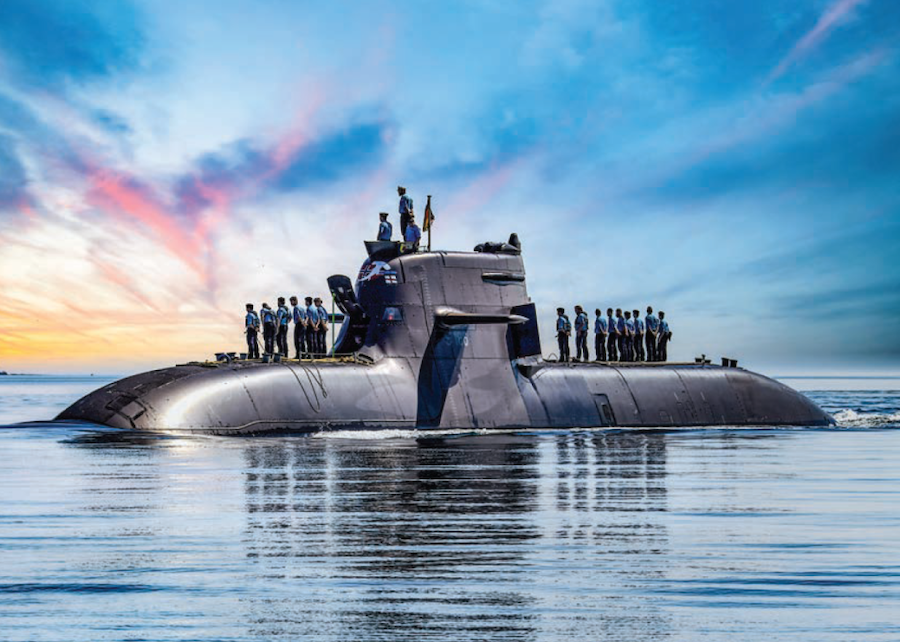


The 2.2 million square foot facility will operate as a highly automated “factory of the future,” producing parts, assemblies and finished products identified as key drivers of submarine production timelines. Increased output is expected to reduce bottlenecks and enable faster delivery of submarines.
The project is funded through a public-private partnership combining $900 million in U.S. Navy investment with more than $1.5 billion in private capital. The total investment of over $2.4 billion reflects efforts to strengthen the maritime industrial base and expand production capacity.
The facility is also expected to create up to 1,000 high-paying jobs, supporting regional economic growth while addressing workforce shortages in the defence sector. Hadrian said its automated manufacturing platform will enable faster workforce training and improve production efficiency.
The opening comes as the Navy seeks to address long-standing capacity constraints in submarine construction. By shifting component manufacturing to dedicated facilities, shipyards can focus more resources on assembling submarine modules.
“Both chambers of Congress delivered the generational investment required to rebuild our shipbuilding capacity, bring those jobs back to Alabama and put American skilled laborers back at the center of American strength,” said Secretary of the Navy John C. Phelan. “I look forward to building on this progress together in the months ahead, because we are just getting started. This factory is the first of three facilities designed to address the most critical bottlenecks in the maritime industrial base.”
Officials described the approach as part of a broader strategy to increase production rates through distributed manufacturing. “We call this distributed shipbuilding, and it’s a key tenet of our plan to achieve required shipbuilding production rates,” said Jason Potter, performing the duties of Assistant Secretary of the Navy for Research, Development and Acquisition.
“These factories of the future might be several states away from the yards where the ships are ultimately built, but by taking on this work they reduce bottlenecks, having a profound effect on the speed of delivery,” he added.
Hadrian said the facility will reach full production capacity within 18 to 24 months, following qualification processes and initial production phases. By the third year, the site is expected to sustain operations through regular delivery of submarine components.
Company leadership said the project reflects a coordinated effort between government and industry to expand manufacturing capacity. “The Administration has set the strategy, Congress has cleared a path, the Navy has set the requirement, and Secretary Phelan has been unambiguous that private-sector partnership is foundational, not optional, to deter threats to national security. Industry has to answer that call with real execution, and the window to do it is now. We are proud to be part of the coalition building that capacity, and this factory is Hadrian’s commitment to meeting this moment,” said Chris Power, founder and CEO of Hadrian.
Lawmakers attending the opening highlighted the strategic and economic impact of the investment. “This investment marks a major step forward in strengthening our nation’s defense industrial base while bringing high-quality jobs and economic growth to Northwest Alabama,” said Representative Robert Aderholt.
Officials said the facility is part of a wider effort to modernise U.S. manufacturing and strengthen long-term defence readiness. The project is expected to play a key role in increasing submarine production capacity and supporting national security objectives.







![CENTCOM chief says U.S. forces remain ready after ‘generational’ defeat of Iran despite fragile ceasefire [VIDEO]](https://defence-industry.eu/wp-content/uploads/2026/04/centcom-chief-says-us-forces-remain-ready-after-generational-defeat-of-iran.jpeg)
![Team Lynx details XM30 infantry fighting vehicle concept as U.S. Army program nears key decision [VIDEO]](https://defence-industry.eu/wp-content/uploads/2026/04/team-lynx-details-xm30-infantry-fighting-vehicle-concept.jpeg)