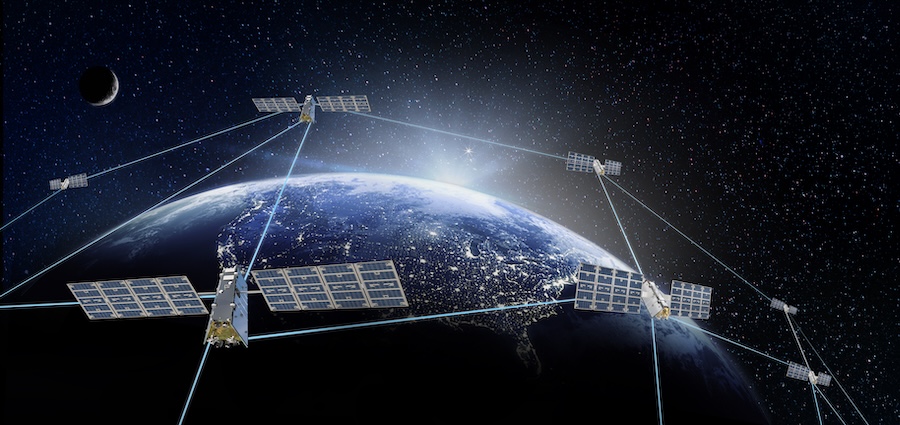



Levy writes that Golden Dome is intended to create “a comprehensive, multi-layered homeland defense architecture designed to protect the American people and to deter US adversaries from initiating conflict by credibly denying the effectiveness of ballistic missile attacks”. He notes that the concept integrates “capabilities ranging from left-of-launch measures, through space-based interception, to layered ground-based interceptors”.
According to the opinion piece, the initiative places emphasis on speed and operational readiness rather than theoretical solutions. Levy states that achieving its aims “will require proven systems, trusted partnerships, and technologies that have already demonstrated effectiveness under real-world operational conditions”.
The article highlights Israel Aerospace Industries’ long-standing role in air and missile defence, pointing to systems that are already deployed and in daily use. Levy writes that these systems “have been validated not only through rigorous testing but through repeated operational use against real threats” and have “saved countless lives and prevented billions of dollars in damage on the ground from thousands of attacks”.
A central focus of the article is exo-atmospheric interception, described as the ability to destroy missiles at very high altitudes. Levy notes that “operationally proven capabilities in this domain remain relatively scarce worldwide” but adds that IAI has “a demonstrated capability to intercept threats beyond the Earth’s atmosphere, directly aligned with the core objectives of Golden Dome’s strategic mission”.
He further argues that relying on mature technologies could reduce development time and risk for the United States. The article states that “by leveraging existing technology, the United States can significantly shorten the research and development cycle, reduce technological risk, and avoid the delays and cost overruns often associated with developing a novel, stand-alone system from scratch”.
Levy also links the proposed approach to political timelines, writing that “utilizing mature and fielded technology provides US President Donald Trump with a realistic opportunity to see the Golden Dome transition from concept to activation during his presidency”. He describes such an outcome as potentially “a defining American national security achievement for the 21st century”.
The opinion piece stresses the history of cooperation between IAI and US institutions, noting that missile defence systems were developed “in close cooperation with the US Missile Defense Agency over many years”. Levy adds that this collaboration has created “deep institutional familiarity, trusted professional relationships, and well-established technical and operational interfaces”.
Addressing concerns over sovereignty and control, Levy writes that IAI supports “a comprehensive Americanization process”, including domestic production and sustainment. He concludes that the goal is “a fully American system, delivered by a US prime contractor, operating under complete US control”, with IAI contributing “proven technology, operational experience, and technical expertise” rather than ownership or command authority.
Source: Jerusalem Post.










![CENTCOM chief says U.S. forces remain ready after ‘generational’ defeat of Iran despite fragile ceasefire [VIDEO]](https://defence-industry.eu/wp-content/uploads/2026/04/centcom-chief-says-us-forces-remain-ready-after-generational-defeat-of-iran.jpeg)
![Team Lynx details XM30 infantry fighting vehicle concept as U.S. Army program nears key decision [VIDEO]](https://defence-industry.eu/wp-content/uploads/2026/04/team-lynx-details-xm30-infantry-fighting-vehicle-concept.jpeg)