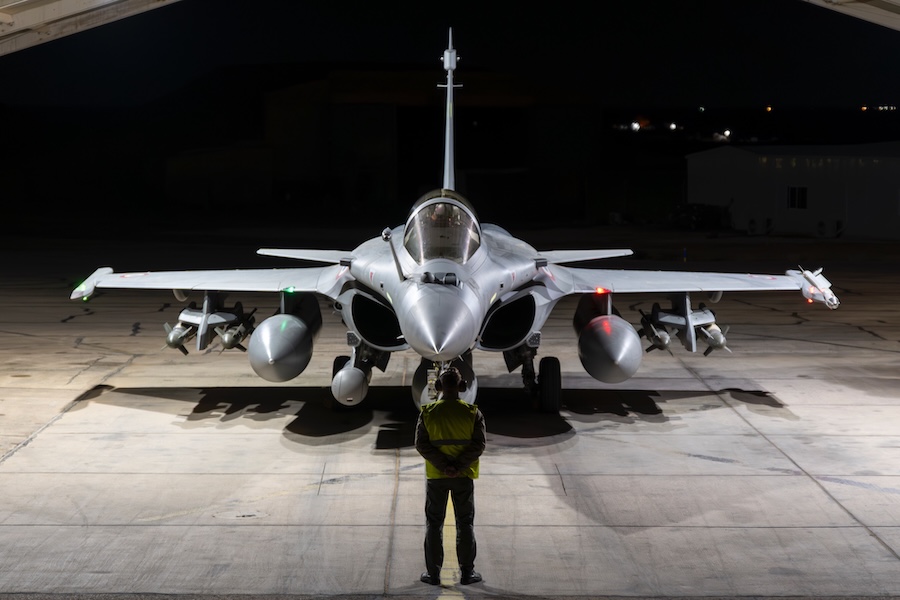


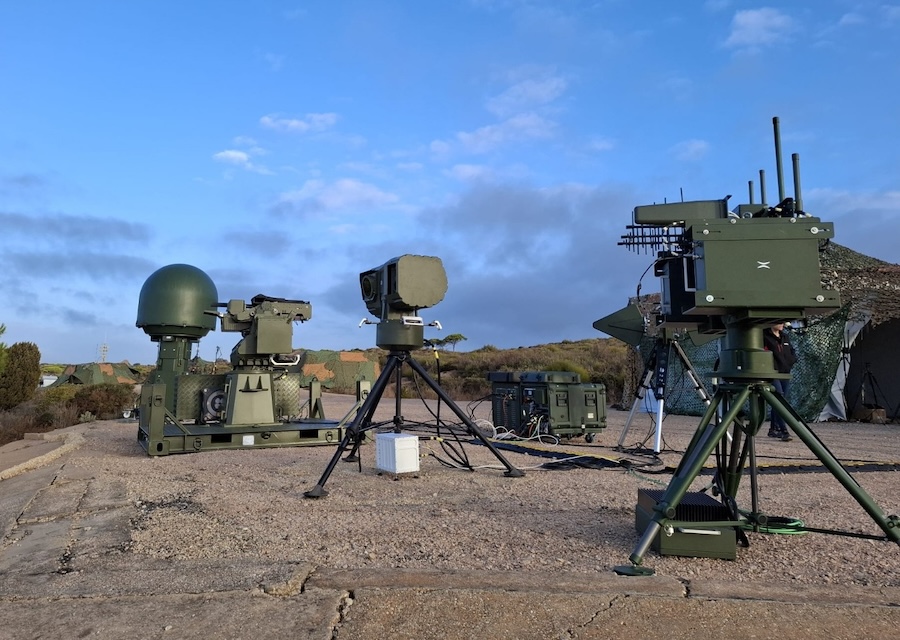
The system is protecting the Vilkas Tactical Air Detachment, which includes nearly 200 personnel along with 11 F-18 fighter aircraft and an A400M tanker aircraft. The deployment aims to defend the unit against frequent incursions by unmanned aerial systems and unidentified balloons originating from the Russian and Belarusian environment.
Spain’s Ministry of Defence decided in December to reinforce the protection of its mission in Lithuania by deploying Indra’s counter-UAS solution. Since then, the system has provided a surveillance and protection bubble covering the area where the Spanish forces operate.
The system continues to evolve as part of the ARACNE project developed jointly by Indra and EM&E Group. According to the company, this programme is focused on improving the technology and adapting it to increasingly complex operational scenarios.
In recent weeks, delegations from several countries in Northern and Eastern Europe have travelled to Lithuania to examine the system in operation. Indra engineers deployed alongside the Spanish Air and Space Force have supported these visits and demonstrations.
Interest in the system comes at a time when European nations are strengthening air defence capabilities along NATO’s eastern flank. The European Union has also launched a major initiative to deploy a counter-drone “drone wall” across more than 3,000 kilometres of border to reinforce protection across the region.
According to Indra, the success of such initiatives depends on the ability to integrate different types of surveillance systems, sensors and effectors. The company states that its solution is designed to combine these technologies seamlessly within a unified architecture.
A key feature of the system is its advanced command and control capability. This component enables robust threat identification and allows the integration of sensors, effectors and control systems from multiple manufacturers.
Indra emphasises that the development of effective counter-drone technology requires expertise across numerous technological domains. These include electro-optical systems, communications, electronic warfare, artificial intelligence, command and control systems and both soft-kill and hard-kill countermeasures.
The system currently operated by the Spanish Armed Forces is described by the company as one of the most advanced counter-drone solutions available in Europe. It is designed to operate in demanding environments and harsh climatic conditions.
The technology has also been deployed in other operational scenarios. Previous missions included a European Union deployment in Mali, where the system was used to protect military forces operating in the region.
In civilian settings, the same technology has been used to provide security for high-profile events. It was deployed during the NATO Summit held in Madrid in 2022 and later used to support security arrangements during the presidential transition in Chile.
Indra stated that the visits by NATO eastern flank countries reflect growing demand for effective counter-drone capabilities. The company noted that its system’s integration architecture allows a wide range of defence technologies to operate together in complex operational environments.