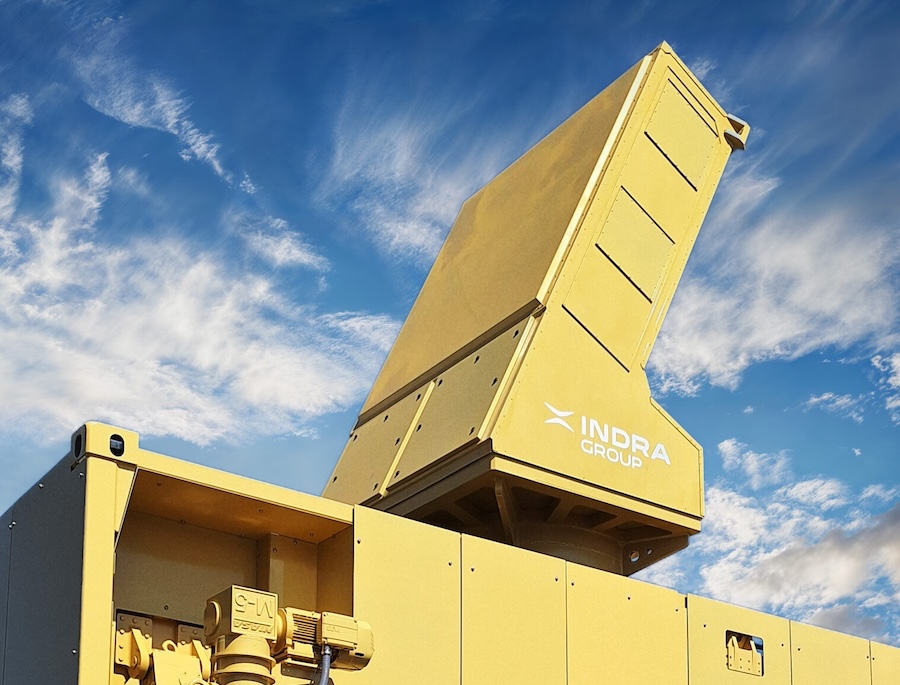
The partners will contribute to the development of a next-generation radar equipped with full active electronically scanned array (Full AESA) technology. According to the company, the system will provide the Spanish Armed Forces with a critical capability for operating in high-intensity conflict environments.
The programme will rely heavily on national industry and expertise. Indra’s industrial plan foresees that the radar’s design, development and manufacturing will be carried out entirely in Spain, with more than 80 percent participation from domestic companies.
Many of these partners are SMEs, including electromechanics firm Niasa, engineering company Teyde 2010 and AC Precisión, which specialises in air conditioning solutions for data centres and industrial installations. Their participation is intended to strengthen Spain’s defence industrial base while expanding technological collaboration across sectors.
Miguel Rodríguez Mora, Director of Indra’s Land Systems business unit, said: “The objective is to strengthen the defense industrial base and incorporate into these programs any company with technological capabilities that may be of interest, regardless of its previous experience in the defense sector.” He added that “the aim is to reduce excessive dependence on third countries and gain technological sovereignty over the systems developed.”
The project’s industrial activity will be distributed across several regions of Spain. Engineering and systems integration tasks will be carried out in Madrid, while the development of advanced sensors and gallium nitride (GaN)-based technologies will take place in Vigo.
In Córdoba, the programme will support the creation of an industrial hub specialising in radar technology, developed with the support of the local university to strengthen the regional industrial ecosystem. Mechanical and electromechanical subassemblies will be produced in facilities located in the Basque Country, Aragon and Catalonia.
Through this initiative, Indra aims to reinforce coordination across the national defence industry while making better use of existing technological capabilities. The company stated that this approach will help ensure an effective response to the operational requirements of the Armed Forces and improve competitiveness in international markets.
The programme is also expected to generate high-quality employment in several advanced technological fields. These include engineering, advanced electronics, software development, precision manufacturing and systems integration, alongside roles for vocational training specialists and highly skilled technical professionals.
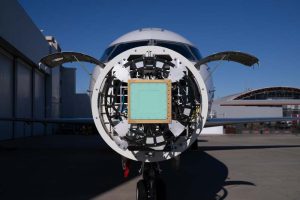
The radar being developed is a next-generation system designed specifically for the Spanish Army. It will use a full AESA architecture combined with gallium nitride semiconductor technology and software-defined radio communications.
This technological combination will provide extended detection range and high precision when identifying the origin of artillery, mortar or rocket fire. The system is also designed to offer strong resistance to electronic interference and allow rapid digital reconfiguration depending on operational requirements.
As a result, the Armed Forces will gain a system designed for high availability, simplified maintenance and operational flexibility. The radar will be capable of rapid deployment and redeployment to adapt to changing mission needs.
Experience from recent conflicts, including the war in Ukraine, has demonstrated the importance of early detection and counter-battery capabilities in modern warfare. The new Spanish system is also designed to provide highly automated operation and reduce the workload of personnel.
In addition, the radar will be fully integrated into command and control networks used by the Armed Forces. Beyond counter-battery missions, it will also support ground surveillance, protection of forward operating bases and coastal naval monitoring.
According to the company, these capabilities will allow the system to support a wide range of operational missions. The radar is therefore intended to provide the Armed Forces with a versatile solution for both land and maritime security tasks.